



The children starting school today will graduate into a world that looks very different from the one we grew up in.
Some of the jobs they’ll eventually do don’t even exist yet. Artificial intelligence is changing how people work. Automation is reshaping industries. And the skills that once guaranteed success are evolving faster than ever before.
For many parents, this naturally raises an important question: What future-ready skills will children need to succeed by 2035? Is it coding, math, or better grades?
The answer is bigger than academics alone.
According to the World Economic Forum’s Future of Jobs Report 2025, skills such as analytical thinking, resilience, creativity, and lifelong learning are expected to become even more essential across industries.
The good news is that these skills are not built overnight nor through pressure and perfection. They develop gradually through everyday learning experiences, both at school and at home, through conversations, challenges, play, and problem-solving.
Here are 10 future-ready skills children are likely to need by 2035 and why they matter.
| Adaptability | Communication and collaboration skills |
| Critical thinking and problem solving | Entrepreneurial thinking |
| Emotional intelligence and empathy | Resilience and growth mindset |
| Digital literacy | Cultural awareness and global citizenship |
| Creativity and innovation | Lifelong learning |
Let’s learn about these skills in detail.
10 Skills Children Will Need (2035)
At Citizens School, we’re ensuring children are prepared for the future by honing the following skills:
1. Adaptability: The Ability to Handle Change Confidently
Think about how quickly children had to adapt during recent years, online classes, changing routines, new technologies, unfamiliar learning environments. For many families, it was a reminder that the future will likely continue to bring constant change.
This is why adaptability matters.
Today’s children are likely to experience multiple career shifts, evolving industries, and technologies that don’t yet exist. In this kind of world, success will depend less on memorising information and more on the ability to adjust, relearn, and respond confidently to new situations.
Adaptability is not about having all the answers. It’s about helping children become comfortable with uncertainty instead of fearing it.
Parents can support adaptability by:
- Encouraging children to try unfamiliar activities
- Allowing flexibility in problem-solving
- Helping them see change as manageable rather than threatening
Children who adapt well are often more confident in unfamiliar environments.
2. Critical Thinking and Problem-Solving
Children today have access to more information than any generation before them. Information is everywhere. AI tools can now generate answers within seconds. But children still need to think independently.
But here’s the real challenge: knowing what to do with that information.
That’s where critical thinking becomes essential.
This skill develops when children are encouraged to:
- Ask “why” instead of simply accepting answers
- Explore multiple solutions to a problem
- Make decisions and reflect on outcomes
- Apply learning to real-world situations
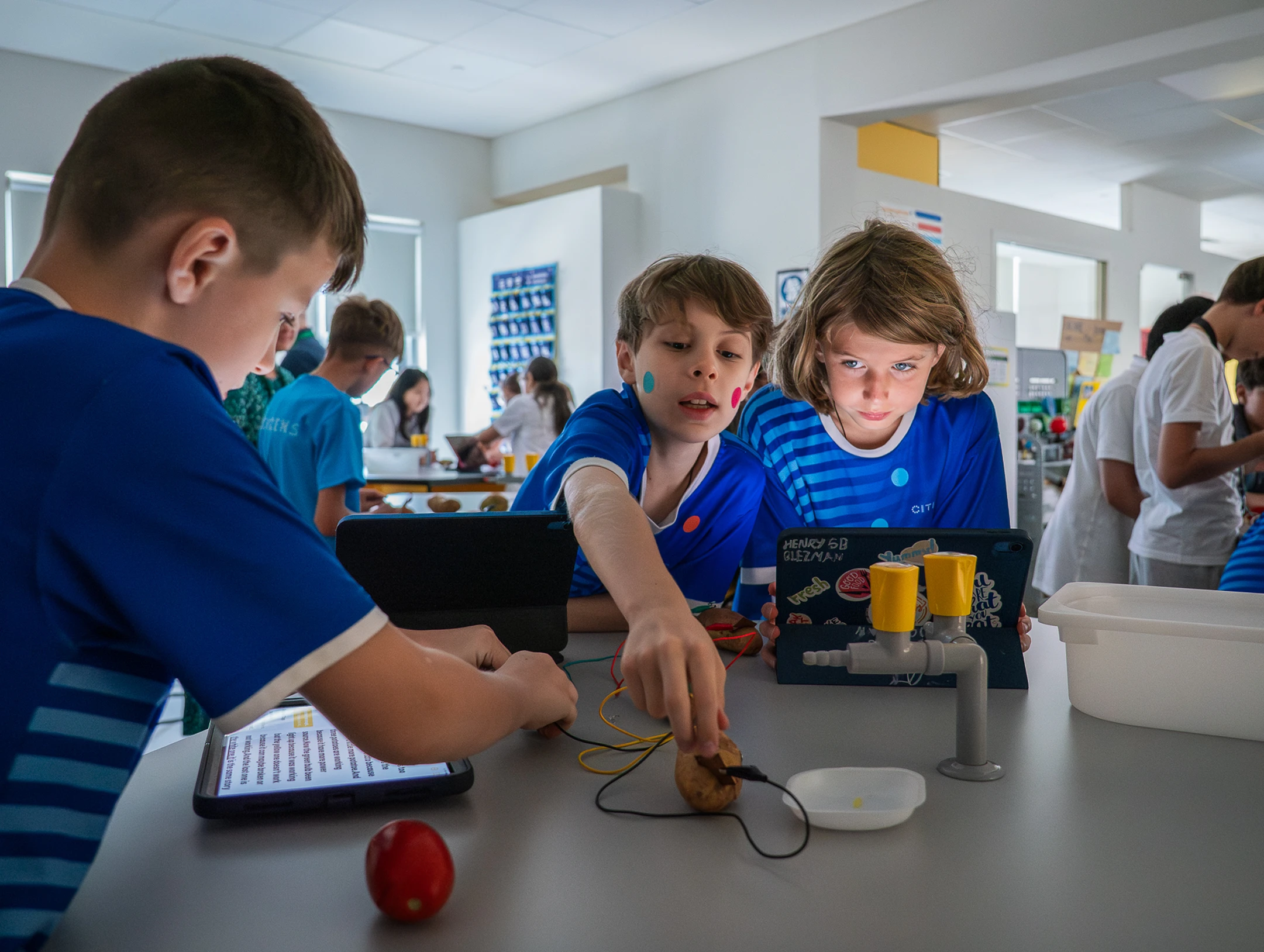
Project-based learning, inquiry-based tasks, and open-ended discussions help children move beyond memorisation into deeper understanding.
Research from the OECD highlights that problem-solving and analytical reasoning remain among the most valuable long-term competencies in modern education systems.
Children benefit most when they learn how to think, not simply what to remember.
3. Emotional Intelligence and Empathy
A child may excel academically, but if they struggle to manage emotions, communicate clearly, or work with others, challenges often follow both inside and outside the classroom.
That’s why emotional intelligence continues to matter so much, even in a technology-driven future.
Emotional intelligence helps children:
- Build healthy relationships
- Navigate disagreements calmly
- Communicate more effectively
- Show empathy and respect for different perspectives
Empathy is particularly important in leadership, teamwork, and collaboration. Children who can understand different perspectives often navigate social situations more effectively.
Simple daily conversations, active listening, and collaborative activities help strengthen these interpersonal skills over time.
Strong emotional intelligence supports both academic success and personal well-being.
4. Digital Literacy Beyond Screen Time
Most children today know how to use screens. They can navigate apps, watch videos, and switch between devices faster than many adults. However, digital literacy is about far more than simply being “good with technology.”
The real question is: Do children understand how to use technology thoughtfully, responsibly, and creatively?
As AI and digital tools become part of everyday life, children will need to know how to:
- Use technology safely and responsibly
- Understand online behaviour and digital citizenship
- Evaluate information critically
- Create with technology instead of only consuming content
According to UNICEF, digital literacy increasingly influences education, employability, and social participation globally.
Helping children develop healthy, informed relationships with technology is becoming essential.
5. Creativity and Innovation
Ask a group of children to solve the same problem, and you’ll often get wildly different answers. That natural curiosity and imagination are exactly what future-focused learning should protect.
Creativity is often misunderstood as something linked only to the arts, when in reality it matters across science, business, technology, and leadership.
Creative learners are more likely to:
- Experiment with ideas
- Think flexibly
- Explore different solutions
- Innovate under pressure
Importantly, creativity develops best in environments where children feel safe making mistakes and exploring ideas without fear of failure.
This is why open-ended projects, storytelling, design challenges, and inquiry-based learning matter so much in modern education. They encourage children to move beyond “right answers” and develop original thinking.
Future workplaces will increasingly value people who can generate new ideas rather than simply follow routines.
6. Communication and Collaboration Skills
No matter how advanced technology becomes, interpersonal relationships still play an important part.
Modern workplaces rely heavily on teamwork. Children, therefore, need opportunities to communicate clearly and collaborate effectively from an early age.
This includes:
- Speaking confidently
- Listening actively
- Respecting different perspectives
- Working through disagreements constructively
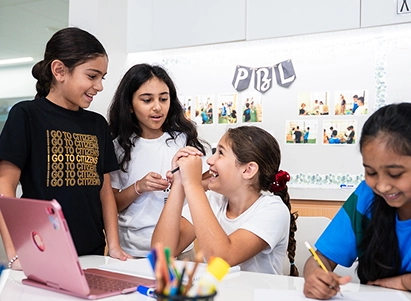
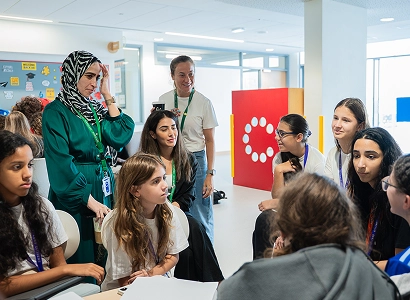
Collaboration also teaches children that different perspectives can strengthen outcomes. Group projects, classroom discussions, presentations, and team activities all help build these skills naturally over time.
Importantly, communication is not just about speaking well. It’s also about listening, understanding, and knowing how to contribute positively within a group.
The ability to contribute effectively will likely remain valuable regardless of how industries evolve.
7. Entrepreneurial Thinking
Entrepreneurial thinking is no longer limited to starting businesses. It is increasingly viewed as a mindset.
Children benefit when they learn how to:
- Take initiative
- Solve problems proactively
- Think independently
- Learn through experimentation
Importantly, entrepreneurial thinking also teaches resilience. Children begin to understand that setbacks are part of learning, not signs of failure.
Encouraging children to create projects, lead small initiatives, or make decisions independently can strengthen this skill significantly.
8. Resilience and Growth Mindset
Every child faces setbacks. A difficult assignment, a poor test result, a friendship issue, or simply struggling to learn something new.
That’s where resilience becomes essential.
Resilient children are more likely to keep trying, recover from disappointment, and view mistakes as part of growth rather than proof of failure.
A growth mindset helps children:
- View mistakes as learning opportunities
- Persist through challenges
- Build confidence gradually
- Focus on effort rather than perfection
Research by psychologist Carol Dweck has shown that children who develop growth mindsets are often more willing to embrace challenges and persist through difficulties.
Children who learn resilience early are often better prepared for both academic and personal challenges later in life.
9. Cultural Awareness and Global Citizenship
Today’s children are growing up in classrooms, communities, and workplaces that are more globally connected than ever before. They will likely study, work, and collaborate with people from very different cultures and backgrounds throughout their lives.
Global citizenship helps learners with:
- Cultural awareness
- Inclusion and respect
- Understanding global issues
- Adapting across different environments
These experiences help children communicate more effectively in diverse communities and workplaces.
Exposure to different perspectives through books, travel, language learning, and multicultural interactions can strengthen global awareness naturally.
In an increasingly connected future, the ability to understand people may become just as valuable as technical knowledge.
10. Lifelong Learning
Perhaps the most important future-ready skill is the ability to keep learning.
By 2035, industries, technologies, and career paths will likely continue evolving at a rapid pace. Children entering the workforce may need to reskill multiple times throughout adulthood.
Lifelong learners tend to:
- Stay curious
- Seek new information independently
- Adapt more easily to change
- Enjoy learning rather than fear it
The goal is not to create children who fear getting answers wrong. It’s to help them become learners who stay curious long after formal education ends.
Because in a fast-changing world, the ability to keep learning may become one of the most valuable skills of all.
How Parents Can Help Build Future-Ready Skills at Home
Future readiness is not built only inside classrooms. Everyday experiences at home also shape how children think, communicate, solve problems, and adapt.
Parents can support future-ready development by:
- Encouraging children to ask questions and think independently
- Allowing space for problem-solving before giving answers
- Praising effort, resilience, and curiosity rather than perfection
- Creating opportunities for responsibility and collaboration at home
- Supporting healthy technology habits and digital awareness
- Encouraging reading, creativity, and open-ended exploration
- Modelling adaptability, empathy, and lifelong learning as adults
Importantly, small and consistent experiences often matter more than highly structured activities.
Children learn a great deal from observing how adults respond to challenges, uncertainty, and change.
Conclusion
No parent can prepare children for every future career, challenge, or technological shift. The future will continue to evolve in ways we cannot fully anticipate.
However, helping children become adaptable, curious, emotionally intelligent, and confident learners gives them a stronger foundation for whatever comes next.
As industries and technologies change, future success will depend not only on what children know, but also on how they think, communicate, collaborate, and continue learning throughout life.
And perhaps that is the most important shift of all.