




What if one of the most valuable things children could learn at school isn’t something they can write in an exam?
Give a child a real problem and the chance to build a solution, and suddenly learning becomes active. They have to ask questions, make decisions, work with others, handle setbacks and explain why their idea matters.
That is the real value of venture building. The prototype or presentation is only the visible result; the bigger gain is the confidence, curiosity and practical skills developed along the way.
The previous guide explored what venture building is and how the process works. This article looks at what children take away from it: ten skills and mindsets that can serve them well far beyond their first venture.
1. They Learn to Ask Better Questions Before Solving Problems
Venture building encourages learners to look beyond the obvious. Instead of rushing towards an answer, they ask why something is happening, who is affected and what might be missing.
They learn to observe, research, listen and question assumptions. That habit of inquiry helps children become more thoughtful problem-solvers, which is a skill that extends well beyond the classroom.
At Citizens, this connects closely with our inquiry-based learning, where asking the right question can be just as valuable as finding the answer.
2. They Learn to Turn Creativity Into Solutions
Creativity is more powerful when it has a purpose.
Rather than stopping at the first idea, children are encouraged to explore different possibilities, combine perspectives and rethink familiar problems.
They learn that creative thinking means more than producing something original. It means finding a useful, relevant response to a genuine need.
Through creativity and design thinking, learners begin to see that there can be several ways forward, and that the most obvious solution isn’t always the best one.
3. They Learn to Take Ownership of Their Ideas
There is a big difference between completing a task and feeling that an idea is yours.
When children have ownership, they make decisions, manage responsibilities and see the consequences of their choices. They have a reason to take initiative rather than waiting for instructions.
Ownership also helps learners understand themselves: what they are good at, where they need support and how they work best with others. Reflecting on their role in a venture builds genuine self-awareness. Seeing an idea move from a thought to something tangible helps children recognise that their decisions and contributions can make a difference.
4. They Learn to Solve Problems When Things Go Wrong
Things rarely go according to plan. Learning what to do next is the real skill.
A venture may not work as expected. A prototype might fail, feedback may challenge an original idea, or a team may need to rethink its approach. These moments give children a chance to practise resilience rather than simply hear about it.
Instead of treating failure as a dead end, learners can ask: What happened? What did we learn? What should we change?
That process builds resilience, adaptability and problem-solving. Children become more comfortable with uncertainty and learn that progress often involves several attempts.
The value extends far beyond venture building. In a changing world, being able to adjust, learn from setbacks and keep moving forward can matter as much as getting the first answer right.
5. They Learn How to Work With Different People
Good ideas rarely get better in isolation.
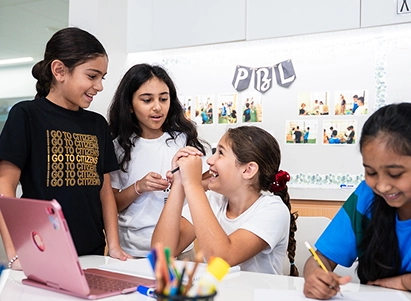
Working on a venture with others means listening, sharing responsibilities, negotiating and sometimes disagreeing. Children learn to recognise different strengths and understand that another person’s perspective can improve their own thinking.
They also practise empathy, learning to consider what teammates, users or other people affected by an idea may need.
Teamwork becomes more than dividing up tasks: learners discover how to build something better together.
6. They Learn to Communicate Ideas With Confidence
A good idea only goes so far if you can’t explain it.
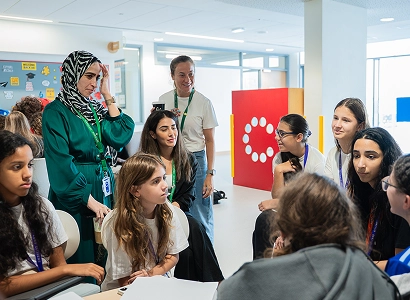
Venture building gives children opportunities to explain a problem, present their thinking, answer questions and listen to feedback. They learn to adapt how they communicate depending on who is listening.
Learners pitch their ventures to real audiences, including mentors and professionals, and learn to answer challenging questions with confidence.
Storytelling, visuals, evidence and presentations all become tools for making an idea understood.
Over time, learners become more comfortable expressing their ideas and standing behind their thinking.
7. They Learn to Make Decisions in Uncertain Situations
Some of the most important decisions don’t come with an answer key.
Children may need to choose between ideas, weigh limited resources or decide whether feedback means changing direction. They learn to consider evidence, assess trade-offs and make a reasoned choice.
Just as importantly, they learn that a decision doesn’t have to be perfect to be useful. What matters is being prepared to review it and adapt.
This develops critical and entrepreneurial thinking, the ability to act thoughtfully even when the outcome isn’t guaranteed.
8. They Learn How Different Subjects Work Together
Real problems don’t fit neatly into one school subject.
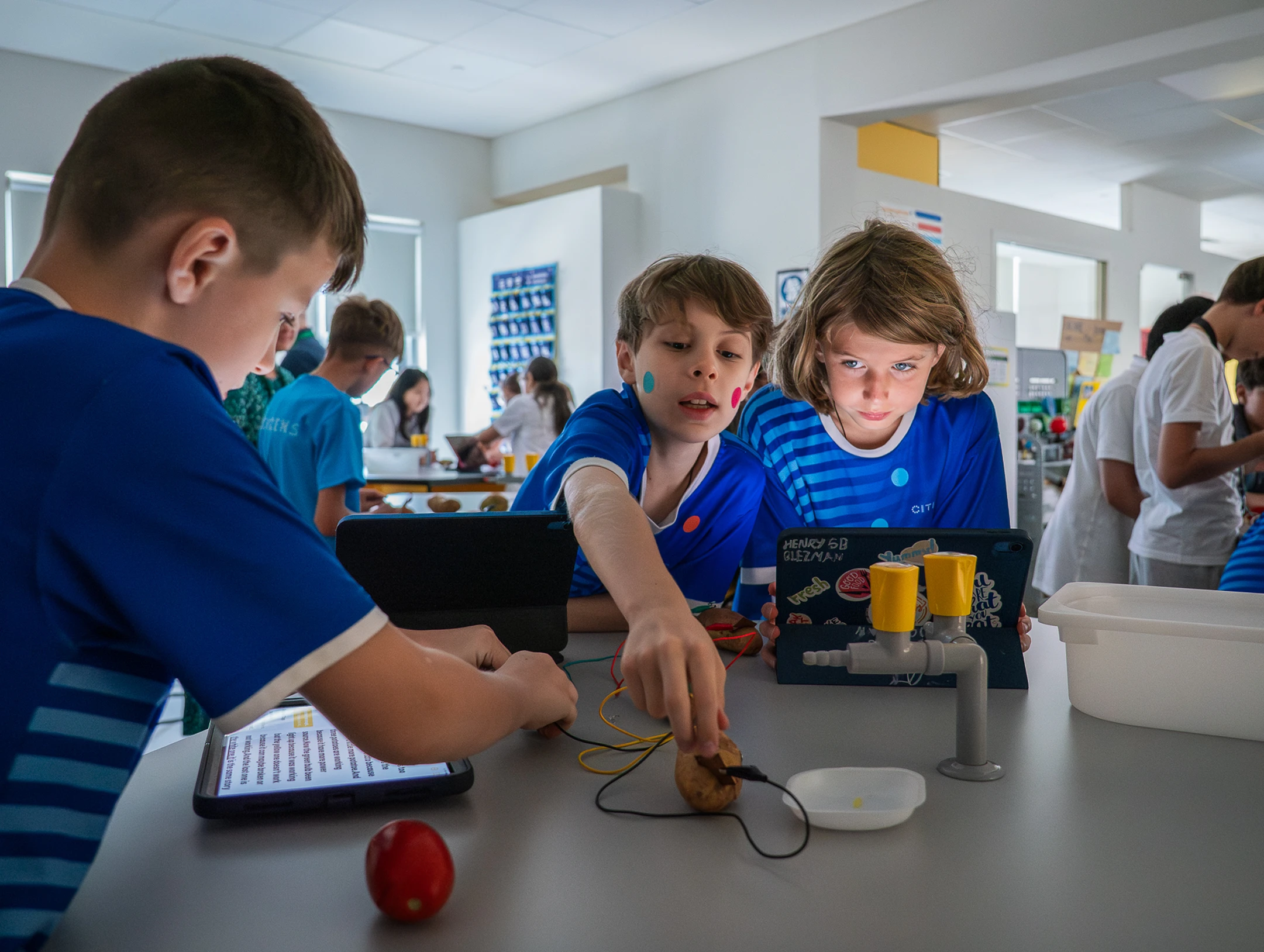
A single venture might involve analysing data, researching information, calculating costs, testing a scientific idea, designing a product or communicating a message.
Children begin to see why different kinds of knowledge matter and how they can combine them to tackle a problem.
This is the value of transdisciplinary learning at work: knowledge becomes something learners can use, connect and apply rather than simply remember for a test.
9. They Learn to Create Value for Other People
Perhaps the most important lesson is that a good idea should matter to someone beyond its creator.
Children learn to consider the people behind a problem: what they need, what frustrates them and whether a proposed solution would genuinely improve their experience.
That encourages empathy and a broader understanding of impact. A worthwhile venture doesn’t have to generate profit. It might make something more accessible, reduce waste, solve a community problem or simply make an everyday experience better.
This connects venture building with empathy, sustainability and global citizenship, encouraging children to think about how their ideas affect the world around them.
10. They Learn to Make Smart Decisions With Money and Resources
Every venture has limits. Learners assess whether an idea is feasible, what it would cost and how to make the most of limited resources. They weigh costs against benefits, and plan and manage their venture as it develops.
As they progress, learners begin to explore how an idea might grow through commercialisation or fundraising. This builds financial literacy and practical problem-solving that will serve them in any path they choose.
What Skills Will Matter Most for Future Careers?
The jobs children eventually enter may change. The capabilities they need to navigate them will matter regardless.
The World Economic Forum’s Future of Jobs Report 2025 identifies skills such as analytical thinking, resilience, flexibility and agility, creative thinking, curiosity and lifelong learning, leadership and social influence, empathy and active listening, and technological literacy among the capabilities employers increasingly value.
Venture building gives children a practical context in which to develop many of these capabilities.
- Analytical thinking: investigating a problem, weighing evidence and making informed decisions.
- Creative thinking: generating different ideas and looking beyond the obvious solution.
- Resilience, flexibility and agility: responding when an idea fails or circumstances change.
- Curiosity and lifelong learning: asking questions, researching and seeking new information.
- Leadership and social influence: taking ownership, communicating ideas and bringing others together.
- Empathy and active listening: understanding different perspectives and considering the needs of others.
- Technological literacy: using digital tools where they add genuine value to a solution.
The point isn’t to predict which career a child will choose. It is to help them develop capabilities that can travel with them as careers, industries and technologies evolve.
How Citizens School Builds These Skills Through Venture Building
At Citizens, these skills are built into the learning experience through three connected stages:
- Design Thinking, where learners understand a real problem and develop and test solutions;
- Entrepreneurship and Financial Literacy, where they assess feasibility and make informed financial decisions;
- Venture Development, where they build, manage and grow their venture.
Each stage develops the six Citizens Skills. Learners build Critical Thinking and Creativity by questioning assumptions and developing solutions; Empathy by understanding the people behind a problem and working in teams; Resilience and Problem Solving by adapting when ideas don’t work; and Self-Awareness by reflecting on their strengths and their role in the venture.
Their work also has an authentic audience. Learners present and pitch their ventures to mentors, professionals and real audiences, gaining feedback that challenges their thinking and gives their work real purpose.
The aim is to help learners develop the transferable capabilities, confidence and agency to navigate many possible futures, rather than prepare them for one particular job.
The venture may change. The skills stay with the learner.
Conclusion
A child may finish a venture with a prototype, presentation or solution. But that isn’t the whole story.
They learn to question, create, collaborate, communicate and make decisions. They learn that setbacks can provide useful information and that a good idea often needs more than one attempt.
That is why venture building matters. It helps them become resourceful, confident problem-solvers who can turn an idea into action.
And perhaps the most valuable thing they build isn’t the venture at all. It’s the confidence to build something again.
Want to know more about our approach to venture building in education? Reach out to us.