Citizens School



















 English


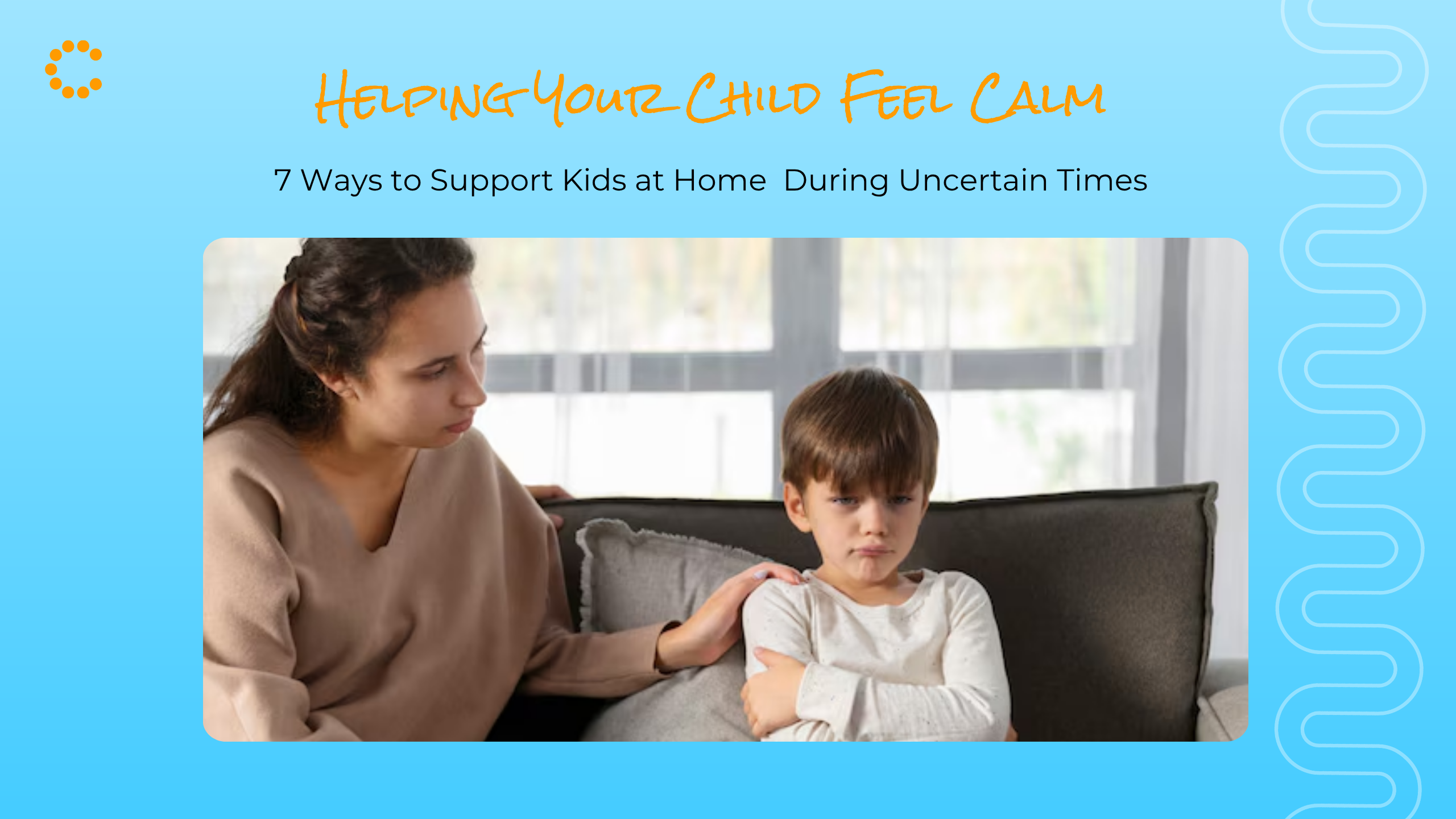
7 Ways to Help Your Child Feel Calm, Safe, and Supported at Home During Uncertain Times
For many families, recent events in the Middle East have increased unpredictability and disrupted daily life. Temporary school closures, changing routines and safety concerns create uncertainty for both adults and children. But what’s important to know is that what happens at home can often become your child’s anchor during these uncertain times.
Children are highly perceptive. They pick up on tension through shifts in adult behaviour, conversation, and emotional tone, even when they don’t fully understand what’s happening. When familiar routines change, like school attendance, playtime, and social interaction, it can trigger confusion, insecurity, or anxiety.
During these times, a child’s emotional stability is primarily anchored by their home environment. A calm, responsive home environment can significantly reduce the impact of outside uncertainty.
While the strategies in this guide are relevant in the current context, it also applies to any period of disruption, whether caused by relocation, health concerns, or unexpected life changes. Creating emotional safety at home is a long-term investment in a child’s resilience.
Understanding Why Children Feel More Anxious During Disruptions
A sudden change in their regular schedule can be overwhelming for the kids. Understanding why this happens helps you respond more effectively. Here are the key factors;
Sudden Changes to Routine
Children depend on predictable patterns. When school schedules shift or daily routines become inconsistent, it can create cognitive dissonance. According to the American Academy of Paediatrics, predictable routines help regulate emotional responses and reduce stress in children.
Without structure, children may struggle to anticipate what comes next, leading to restlessness or behavioural changes.
Exposure to Adult Conversations and Media
Even indirect exposure to news or adult discussions can heighten anxiety. Children may overhear fragments of conversations or see distressing visuals without having the contextual understanding to process them.
Research by the American Psychological Association highlights that repeated exposure to distressing news can increase anxiety levels in children, even when they are not directly affected.
Reduced Social Interaction
School environments provide more than academic instruction. They offer social engagement, peer interaction, and a sense of belonging. Children may experience isolation or disengagement when these disruptions occur.
Need for Reassurance and Predictability
Children rely on caregivers to interpret complex situations. In uncertain times, they look for cues of safety. When adults appear anxious or inconsistent, it can amplify a child’s own concerns.
7 Practical Ways to Create a Calm and Supportive Home Environment
Emotions predominate even in controlled settings. As a result, parents may find it difficult to create a peaceful atmosphere. These are some strategies that carers can use to foster a loving atmosphere at home.
1. Build Consistent Daily Routines
Consistency provides a sense of control. Establishing predictable times for meals, study, play, and sleep helps children understand what to expect.
A structured routine reduces ambiguity. It allows children to mentally organise their days, which lowers stress levels and improves focus.
Even simple routines, such as a regular breakfast time or a set bedtime, can create stability.
2. Create Safe Spaces for Open Communication
Children need to feel heard and understood. Create an environment where they can express their thoughts freely, without judgment or the pressure to immediately solve problems.
Simple and regular check-ins that work:
- “How are you feeling today?”
- “Is there anything worrying you?”
- “What was the best part of your day today?”
The key is active listening. This involves maintaining eye contact, putting your phone away, acknowledging feelings, and responding without immediate judgement. Resist the need to immediately fix or explain, and make sure to ask follow-up questions.
Your goal should not be to provide all the answers but to ensure that children feel understood.
3. Model Calm Behaviour During Stressful Moments
Children often mirror adult responses. When caregivers remain composed, the children feel safe.
Although this does not mean suppressing emotions entirely, instead, it involves demonstrating controlled responses such as speaking calmly, maintaining routines, and avoiding visible panic.
According to Harvard’s Centre on the Developing Child, children learn emotional regulation through observation and interaction.
4. Set Clear and Consistent Boundaries
Boundaries aren’t about control; they are about stability. Clear expectations around behaviour, screen time, and daily routines help them understand what is acceptable and what’s not.
The key is how these boundaries are enforced and maintained. Calm, consistent reinforcement builds trust and reduces ambiguity, whereas inconsistency creates confusion and insecurity. When expectations shift unpredictably, children may struggle to regulate their behaviour.
When implemented thoughtfully, structure is not experienced as control; it is understood as stability. It gives children a reliable framework within which they can function confidently.
5. Encourage Independence and Responsibility
Fostering independence allows children to develop a sense of agency during uncertain times. Age-appropriate responsibilities, such as organising their study space, assisting with daily tasks, or managing simple routines, rebuild their confidence and decision-making abilities.
Resist the urge to overmanage. Allowing children to solve small problems independently fosters confidence and resilience.
6. Prioritise Quality Time and Connection
Emotional connections act as a stabilising force during periods of uncertainty. When routines are disrupted, children often seek reassurance through attention and presence rather than words alone.
Even brief, intentional moments of connection can have a meaningful impact. What matters most is the quality of attention, being fully present, without distractions.
This does not require elaborate planning. Simple, consistent interactions can be highly effective, such as:
- reading together
- playing a game
- having an uninterrupted conversation
These moments reinforce a sense of security and belonging.
7. Support Healthy Sleep and Downtime
Sleep is fundamental to emotional regulation, cognitive functioning, and overall wellbeing.. The Sleep Foundation notes that inadequate sleep can increase irritability and anxiety in children.
Maintaining a consistent sleep schedule helps regulate the body’s internal rhythm, making it easier for children to rest and recover. Reducing screen exposure before bedtime is equally important, as it supports better sleep quality and reduces overstimulation.
Over time, these habits create a predictable wind-down pattern, helping children feel more settled and emotionally balanced.
Common Mistakes Parents Should Avoid During Stressful Times
During periods of uncertainty, even well-intentioned responses can sometimes have unintended effects on children. Being aware of common pitfalls can help parents create a more stable and reassuring environment.
- Over-Explaining or Sharing Too Much Information
Providing excessive detail about uncertain situations can overwhelm children. Information should be age-appropriate and focused on reassurance rather than complexity. - Ignoring Children’s Questions or Feelings
Avoiding difficult conversations may lead children to form their own interpretations, which can increase anxiety. Addressing questions calmly and honestly helps build trust. - Removing All Structure
In an attempt to reduce pressure, some families remove routines entirely. However, the absence of structure often leads to increased restlessness and emotional instability. - Projecting Adult Anxiety
Children are sensitive to emotional cues. Children can internalise visible stress, frequent worries, or inconsistent behaviour. If you are stressed, your child will pick up on it and internalise it as their own. It is important to manage your own stress first. - Trying to solve every problem for the child
Parents have a natural tendency to step in quickly and manage difficulties, thinking it’s protecting children. Allowing them to navigate manageable challenges independently supports resilience and builds confidence over time.
Managing personal stress is therefore not only beneficial for adults but also essential for children’s emotional well-being.
Conclusion: Creating Stability When the World Feels Uncertain
Uncertainty is an inevitable part of life, but its impact on children can be moderated through intentional parenting. You don’t need to be perfect, you just need to be present, calm and consistent.
When adults are stable and responsive, children are better able to adapt. Maintaining routines, listening intently, modelling calm behaviour, and making small, consistent changes can all have a long-lasting impact. When adults are stable and responsive, children adapt.
The goal is not to eliminate uncertainty but to create an environment where children feel safe despite it.
Even during challenging periods, a supportive home can foster resilience, confidence, and emotional strength, preparing children to return to normal routines with a sense of readiness and stability.
Footer

From Nursery to Year 10
Admissions
Open Now
Fill out the form below to find out more for the 2025-26 academic year.