





Choosing a British nursery in Dubai is often the first step in planning a child’s educational journey. Families can choose from established British EYFS settings to nurseries that blend the framework with Reggio Emilia, Montessori or Curiosity approach inspired learning.
However, following the same curriculum does not guarantee the same experience. The way educators interpret the framework, involve children in learning and respond to individual interests can shape what each day looks like.
This guide focuses on the learning itself: what EYFS means, how nurseries deliver it differently and what to ask on a visit.
What Does a British Nursery Actually Mean?
A British nursery typically follows the Early Years Foundation Stage (EYFS), the framework is used to guide the care, learning, and development of children from birth to five.
The EYFS covers seven areas of learning, divided into three prime areas and four specific areas.
The prime areas, which provide the foundation for relationships, communication and further learning are:
- Communication and Language
- Physical Development
- Personal, Social and Emotional Development
The specific areas are:
- Literacy
- Mathematics
- Understanding the World
- Expressive Arts and Design
Children develop these areas through play, exploration and age-appropriate activities. Early literacy might begin with listening to stories, recognising sounds or experimenting with mark-making. Mathematical understanding can emerge through sorting objects, noticing patterns and comparing quantities.
EYFS does not require young children to spend their days in formal academic lessons. Instead, educators plan experiences that support development while allowing children to explore and practise new skills.
Parents can read more in the UK government’s EYFS statutory framework.
British EYFS Is a Framework: What Makes Each Nursery Different?
Two nurseries can follow EYFS and still offer very different learning experiences. The difference often lies in how educators use the framework.
In one setting, children might take part in more adult-guided activities, with educators introducing specific concepts. In another, children may have greater freedom to choose activities, explore materials and develop ideas around their interests.
Neither approach tells the whole story. The important question is how educators balance guidance with opportunities for children to make decisions.
Imagine a child who becomes fascinated by how objects move. An educator might introduce vocabulary and demonstrate a simple concept while also providing materials for the child to experiment independently. The child’s interest becomes a starting point for learning across different areas.
Six British EYFS Nurseries to Consider in Dubai
Each nursery below offers a different perspective on British early-years education. Parents should confirm current programmes, age ranges, fees and availability directly with the providers.
1. Citizens School: From first steps to Year 10 on one campus
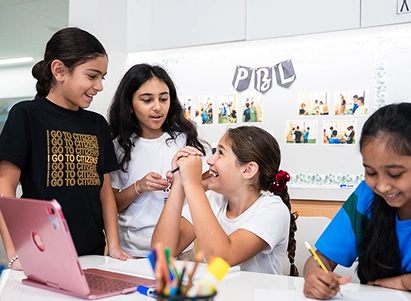
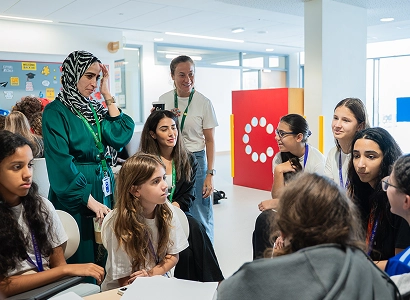
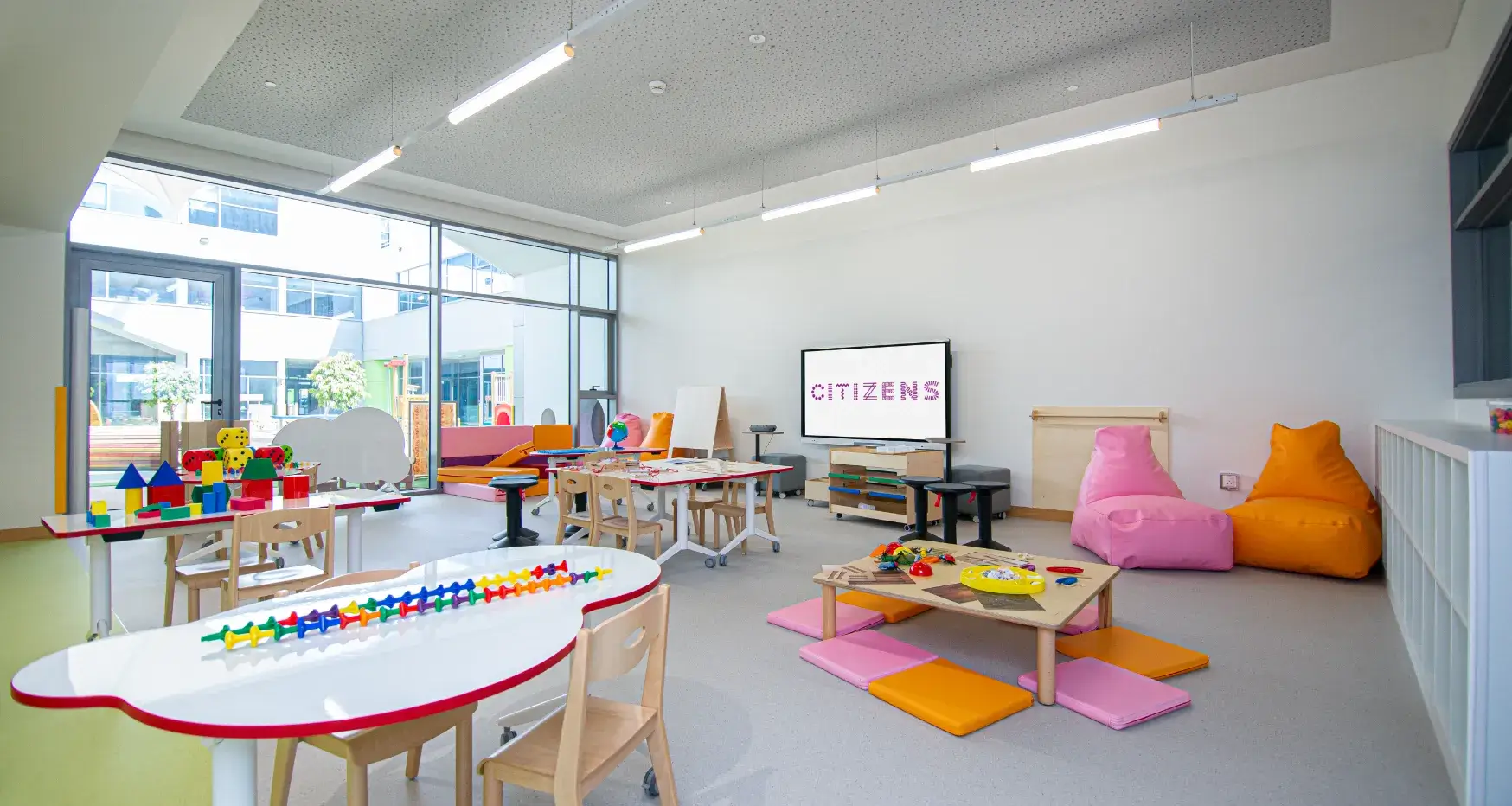
Citizens Nursery welcomes children from three months to three years and sits on the same campus as Citizens School in Al Safa. For families, that means one drop-off and a familiar setting as children grow.
Learning follows the UK EYFS framework through play, sensory exploration and early problem-solving. Educators build on what each child is curious about, helping them grow in confidence and independence at their own pace.
Because the nursery is part of a Nursery to Year 10 British curriculum school, children can later continue into FS1 in surroundings they already know. As they move up, the Citizens Future Framework adds real-world learning and venture building to their British curriculum journey.
Book a visit to Citizens School Nursery.
2. British Orchard Nursery: An Established Network
Following the British EYFS framework, British Orchard Nursery operates across multiple Dubai locations. Families can compare branches based on accessibility, learning environments and enrichment opportunities to find the best fit for their daily routine.
The key consideration: Which branch combines practical accessibility with the learning environment your child needs?
3. Sandcastle Nursery: British EYFS Within a UAE Context
Sandcastle Nursery follows EYFS and states that its programme incorporates UAE values and KHDA expectations. Its approach offers parents an opportunity to explore how British early-years education is delivered within the local cultural context.
The key consideration: How are UAE values reflected in everyday learning, and how does the nursery balance these with the EYFS framework?
4. Creative Nest Early Childhood Centre: EYFS Meets Reggio-Inspired Learning
Creative Nest combines EYFS with Reggio Emilia inspiration, using children’s interests to shape learning experiences. Its approach emphasises exploration, hands-on activities and environments that respond to children’s developmental needs.
The key consideration: How do educators use children’s interests to shape activities and adapt the learning environment?
5. Step by Step Nursery, Mirdif: Child-Led Learning Within EYFS
Step by Step Nursery combines the British EYFS framework with a Reggio-inspired approach. Children have opportunities to explore their interests, while educators guide learning through thoughtfully planned experiences and an enabling environment.
Parents should also ask about educator qualifications and how staff use observations to guide learning.
The key consideration: How much freedom do children have to direct their activities, and how do educators ensure that learning continues to progress?
6. Numu Nursery, Town Square: Personalised Learning
Numu Nursery describes its Town Square offering as British EYFS with personalised, play-based learning. Its approach focuses on children’s individual interests and developmental needs, making it worth exploring for parents who value tailored learning experiences.
The key consideration: How does the nursery adapt learning experiences to each child’s interests and developmental stage?
From British Nursery to FS1: How the Move to School Works
Many families don’t realise that EYFS does not end at nursery. In British curriculum schools, FS1 and FS2 also follow the EYFS framework, so a child moving from a British nursery into FS1 continues with the same seven areas of learning.
That continuity helps. Children recognise the routines, the play-based style and the way educators observe and support them. What changes is the setting: larger groups, a longer day and new adults to get to know.
A British nursery following EYFS helps children develop foundations that support their next stage of learning. These include communicating their needs, listening to others, participating in group experiences and gradually managing age-appropriate tasks independently.
Early literacy and numeracy also develop over time. Children may begin to recognise sounds, enjoy stories, notice quantities or identify patterns through everyday experiences.
Readiness for FS1 involves more than academic knowledge. Feeling comfortable with routines, building relationships and engaging with educators can also help children settle into a school environment.
If you already have a school in mind, ask the nursery how it prepares children for that move and whether it shares progress records with the school. Attending a specific nursery does not guarantee admission to a school or a particular academic outcome.
How to Compare British Nurseries Beyond the EYFS Label
Parents already know to ask about fees, timings and facilities. To understand the educational experience, ask more specific questions about how EYFS works in practice.
| What to compare | Questions to ask |
| EYFS implementation | What does the framework look like during a typical day? |
| Child agency | How much choice do children have in selecting activities? |
| Adult guidance | When do educators step in, and when do they allow children to explore independently? |
| Learning documentation | How are children’s interests, observations and developmental progress recorded? |
| Literacy and numeracy | How are early foundations introduced without unnecessary formalisation? |
| Learning environment | Can children access resources and investigate ideas independently? |
Look for clear explanations rather than broad assurances. If a nursery says it follows a child-led approach, ask how educators ensure that children encounter new experiences and continue to develop.
Likewise, if activities are carefully structured, find out how educators accommodate different interests and developmental needs.
Frequently Asked Questions
- What is EYFS?
The Early Years Foundation Stage is the UK framework for the learning, development and care of children from birth to five. Most British nurseries in Dubai follow it. - What age can my child start at a British nursery in Dubai?
It varies by nursery. Some, like Citizens Nursery, welcome babies from three months, while others start from toddler age. Check the age range with each nursery. - Is FS1 part of EYFS?
Yes. FS1 and FS2 in British curriculum schools follow the EYFS framework, so learning continues in a familiar way after nursery.
Conclusion: Choose the Experience, Not Just the Label
Every nursery on this list follows the British EYFS framework, yet each one brings it to life differently. Some lean towards structured experiences, while others give children more room to lead their own exploration.
When you visit, look past the curriculum name. Watch how educators respond to children’s interests, ask how progress is recorded and see how the space encourages independence. The most revealing question isn’t whether a nursery follows the framework, but how children experience it.
Ready to see EYFS in action? Book a visit to Citizens Nursery and see how early learning connects to a Nursery to Year 10 journey on one campus.