



The challenges of the 21st century are more than the ability to recall facts. From climate change, rapid automation, and shifting global economies, today the world needs adaptable thinkers, innovators who can approach problems with empathy, courage, and creativity. Traditional education models that prioritise memorisation leave critical gaps in preparing children for this reality.
This is where design thinking comes into play. It’s a human-centred, iterative process to understand challenges and develop practical, meaningful solutions. By encouraging learners to ask questions, test ideas, and refine their approach, design thinking transforms classrooms into hubs of creativity and purposeful action.
In Dubai, where the government actively promotes innovation and future-ready education, schools are adopting design thinking to ensure children are not only academically capable but also equipped to lead and sustain in a world that is constantly evolving.
What is Design Thinking in Education?
Design thinking is a structured yet flexible approach to problem-solving built around five key stages:
- Empathise: Learners start by understanding the needs, feelings, and perspectives of others. They observe, listen, and ask questions to grasp the real problem.
- Define: Using their insights, learners narrow down the challenge to a clear, actionable problem statement.
- Ideate: Learners brainstorm multiple ideas, exploring bold and unconventional solutions without fear of failure.
- Prototype: Teams build simple models or mock-ups to test how their ideas might work in practice.
- Test: Gather feedback, refine their designs, and repeat the process to improve their solution.
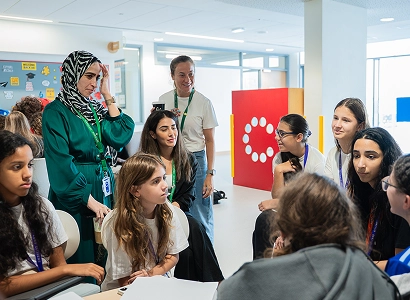
This method fits naturally into how children actually learn – hands-on, collaboratively, and purpose-driven. By encouraging students to work in teams, consider multiple perspectives, and iterate their ideas, design thinking strengthens critical thinking, resilience, collaboration, and creativity, skills that the World Economic Forum’s Future of Jobs 2025 Report highlights as essential for the future workforce.
How Dubai Schools Are Embracing Design Thinking
Dubai has positioned itself as a global hub for innovation and education reform. The UAE’s National Innovation Strategy and initiatives such as the Dubai Future Foundation emphasise the need to develop a generation of problem-solvers who can lead in an unpredictable economy. According to the UAE Ministry of Education’s FY24-25 roadmap, innovation and entrepreneurship are key priorities in school curricula.
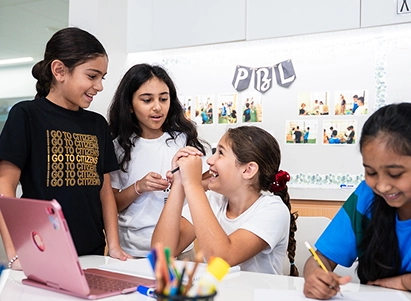
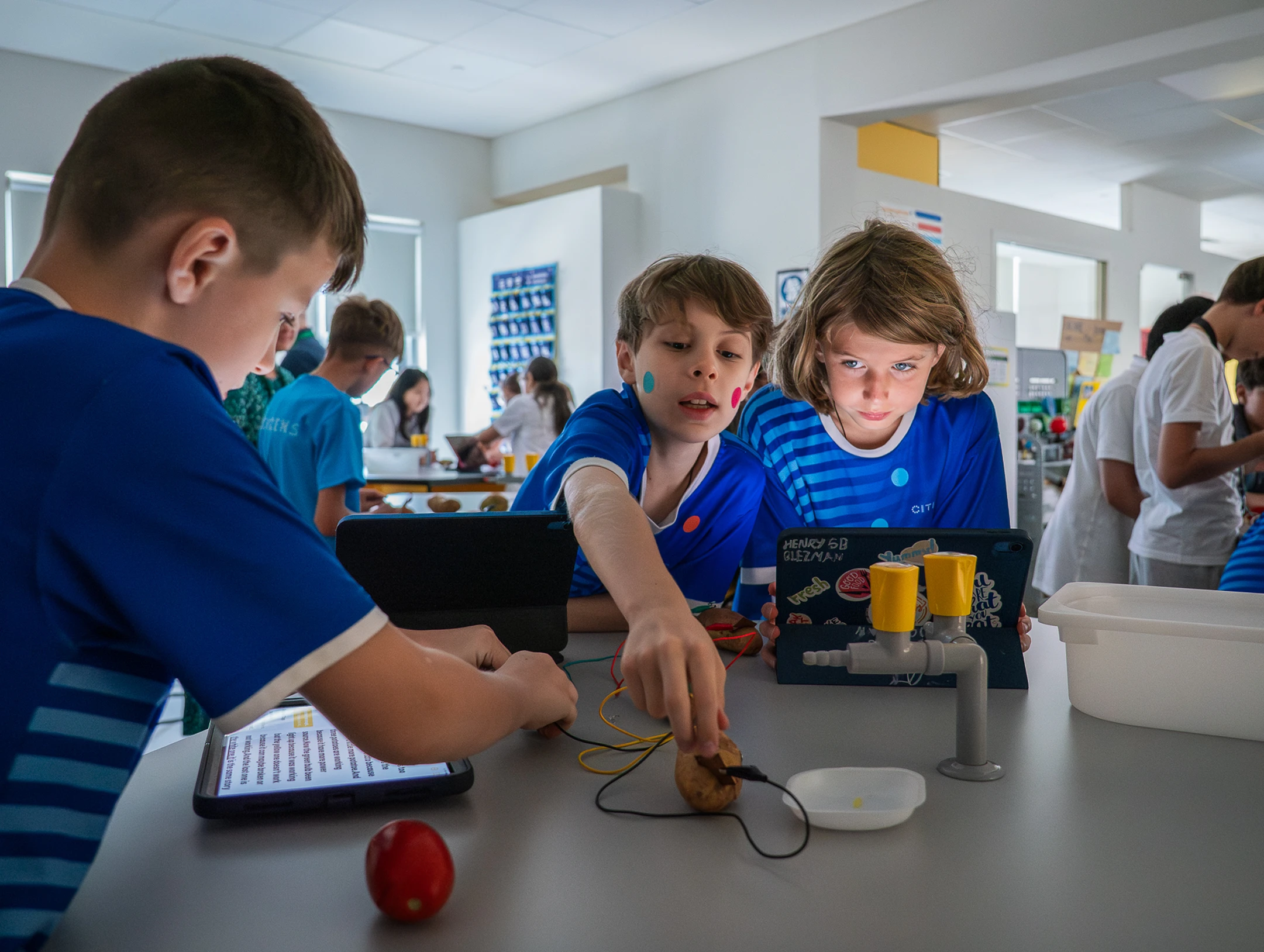
At Citizens School, design thinking is embedded within project-based learning (PBL). Learners explore real-world problems through hands-on inquiry and structured creativity, often leading to inspiring examples of ideas turning into real-world solutions. For example, Year 1 learners are currently working on the project Safe and Strong: Designing Shelters for Extreme Weather. The challenge asks: How might we build shelters to help keep people safe?
- Empathise: Learners explore how different types of weather affect people and recognise that different communities have unique needs.
- Define: They identify and explain what a shelter must provide – safety, warmth, or shade.
- Ideate: Children ask “what if?” and “why?” questions, share imaginative ideas for shelter shapes and features, and consider which materials might work best.
- Prototype & Test: They create small-scale models, experimenting with materials and testing for strength and durability.
This structured yet creative process not only strengthens critical thinking and collaboration but also shows learners how their ideas can have a tangible impact.
The Citizens School Approach: Innovation Through Learning
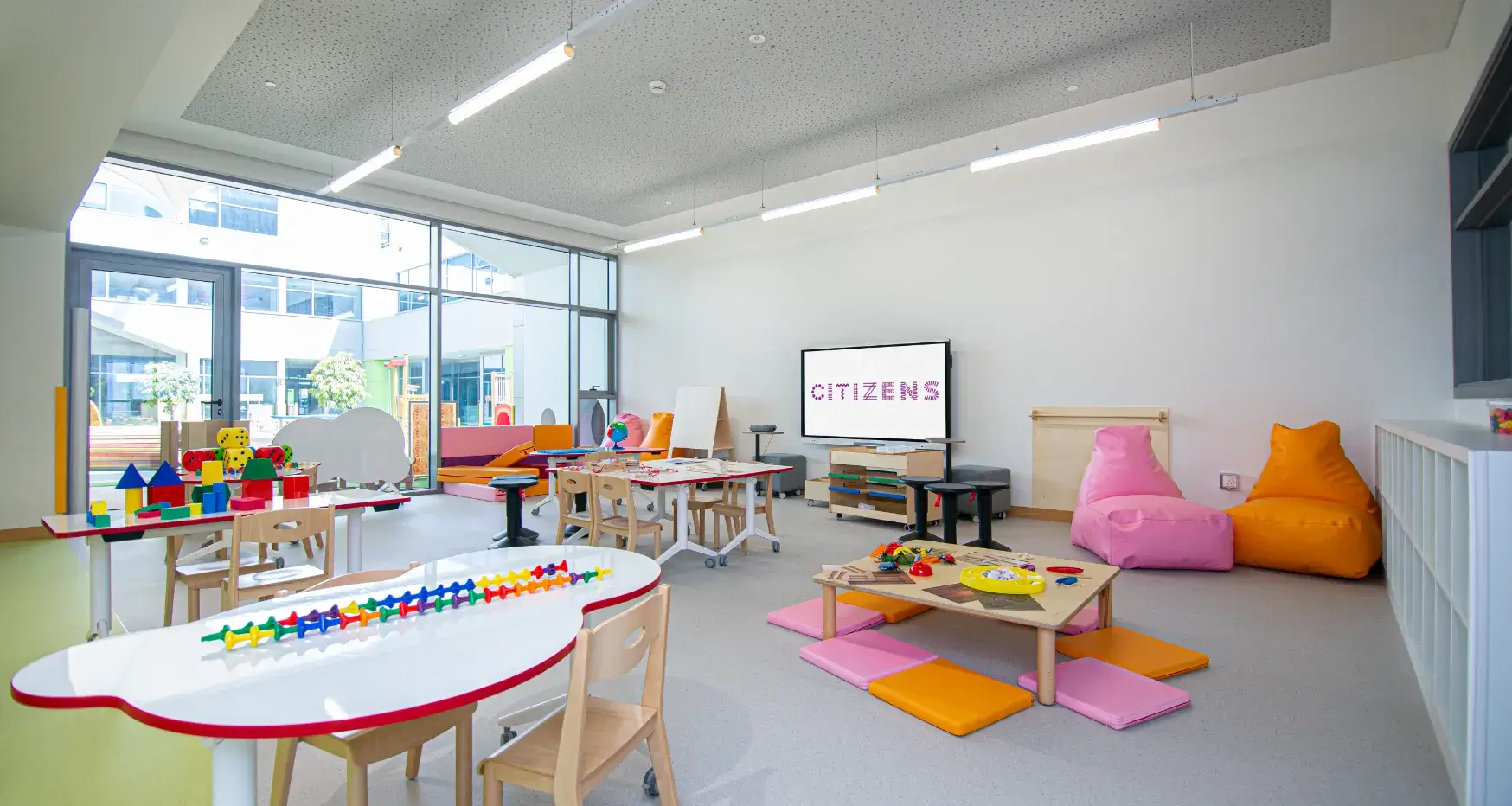
Citizens School integrates design thinking into everyday learning through its dedicated learning environment, where curiosity drives action. Embedded with Citizens’ 5 pillars, learning here goes beyond a traditional classroom teaching method, giving learners access to tools, technologies, and guidance to transform ideas into tangible outcomes. Here, experimentation is encouraged, and mistakes are viewed as valuable steps toward progress, fostering a culture where iteration and problem-solving become second nature
Citizens’ Five Pillars
Design thinking aligns seamlessly with Citizens School’s Five Pillars, which guide every aspect of its curriculum:
- Entrepreneurship: Learners transform ideas into actionable solutions, developing a business mindset early on.
- Project-Based Learning: Learners work on meaningful, real-world challenges that require creative and analytical thinking.
- Digital Literacy: Technology is used as an enabler to support innovation, not just as a subject to study.
- Inquiry-Based Core Curriculum: Curiosity drives the learning process, encouraging independent thought.
- Everyone Known & Known Well: Each learner receives personalised support, creating a safe environment to take risks and explore unconventional ideas.
Projects at Citizens School demonstrate how design thinking empowers learners to address authentic, real-world challenges. Through inquiry, collaboration, and experimentation, students explore solutions that create meaningful impact within their communities and beyond. Each project nurtures critical thinking, creativity, and a sense of responsibility, helping learners transform ideas into purposeful actions.
Building Future-Ready Learners
Design thinking nurtures competencies that define a ‘future-ready individual’ – empathy, creativity, resilience, collaboration, etc. It prepares children for challenges and careers that don’t exist yet and for a life where learning is continuous.
Conclusion
Design thinking is reshaping education in Dubai by shifting the focus from memorisation to meaningful problem-solving. Through innovative spaces, unique teaching methodologies, and a curriculum grounded in inquiry, Citizens School Dubai exemplifies how this approach can transform learners into adaptive, creative, and empathetic leaders. As global challenges grow more complex, the ability to think critically and design solutions will set today’s students apart in tomorrow’s world. By blending empathy with innovation, Citizens School ensures every learner understands not just what to think, but how to think — creatively, critically, and compassionately.