




“I’m bored.”
For many parents, those words arrive just a few days into the summer holidays. The school routine disappears, screens become increasingly tempting, and suddenly the pressure is on to keep children engaged.
But here’s the good news: children don’t need packed schedules or endless activities to keep learning.
In fact, some of the most meaningful learning happens during moments of curiosity. A question asked during breakfast, a museum visit, a cooking experiment, or even an afternoon with “nothing to do” can spark creativity and confidence in ways a worksheet never could.
Living in Dubai offers families a unique advantage. From cultural landmarks and interactive museums to parks, libraries, and community spaces, there are countless opportunities to explore without turning summer into another school term.
The goal isn’t to keep children busy every minute. It’s to help them stay curious about the world around them. Here are ten simple activities that encourage questions, creativity, and discovery throughout the holidays.
1. Become a Tourist in Your Own City
What if your next family adventure was only 20 minutes away?
Children notice things adults often overlook. A familiar city can suddenly feel brand new when you slow down and explore it together.
Instead of planning a big trip, become tourists in your own city. Visit places like:
- The historic lanes of Al Fahidi Historical Neighbourhood
- The Etihad Museum to learn how the UAE came together
- The Museum of the Future to spark conversations about innovation and tomorrow’s possibilities
- Local galleries, cultural centres, and seasonal exhibitions
Encourage children to ask simple questions:
- Who lived here before us?
- Why was this building created?
- How might Dubai look in another fifty years?
Curiosity often starts when children realise that every place has a story waiting to be uncovered.
2. Start a Family “Question of the Day” Challenge
Children ask extraordinary questions when given the chance.
What if asking questions became a family tradition this summer? Try a simple “Question of the Day” challenge. Each person brings one question to the table, and together, you investigate the answer.
It could be:
- Why do camels have long eyelashes?
- How do aeroplanes stay in the sky?
- Why do some countries drive on different sides of the road?
You can:
- Keep a family curiosity journal
- Look up answers together
- Visit libraries or museums for clues
- Celebrate interesting questions, not just correct answers
The aim is to make kids understand that learning doesn’t begin with having all the answers. It begins with wondering.
3. Turn Recyclables Into Inventions
Children are natural inventors. Give them a few everyday materials, and suddenly they’re building robots, designing cities, or solving problems nobody asked them to solve.
Encourage them to:
- Create models using boxes, bottles, and packaging
- Build something that makes daily life easier
- Design artwork from reused materials
- Experiment without worrying about the final result
It’s also a great opportunity to talk about sustainability. Questions like “What else could this become?” or “How can we waste less?” help children see possibilities where others see rubbish.
Sometimes, creativity begins with simply looking at ordinary things differently.
4. Plan a Mini Family Project
Children develop confidence when they take ownership of real responsibilities.
Instead of planning every holiday activity yourself, hand over the reins for a small project. It could be:
- Organising a family games night
- Planning a picnic
- Creating a neighbourhood kindness initiative
- Hosting a themed movie evening
Encourage children to set goals, make decisions, solve problems, and reflect on what worked and what didn’t.
The project itself matters less than the process. When children feel ownership, they build initiative, resilience, and the confidence to turn ideas into action.
5. Turn Cooking Into a Discovery Experience
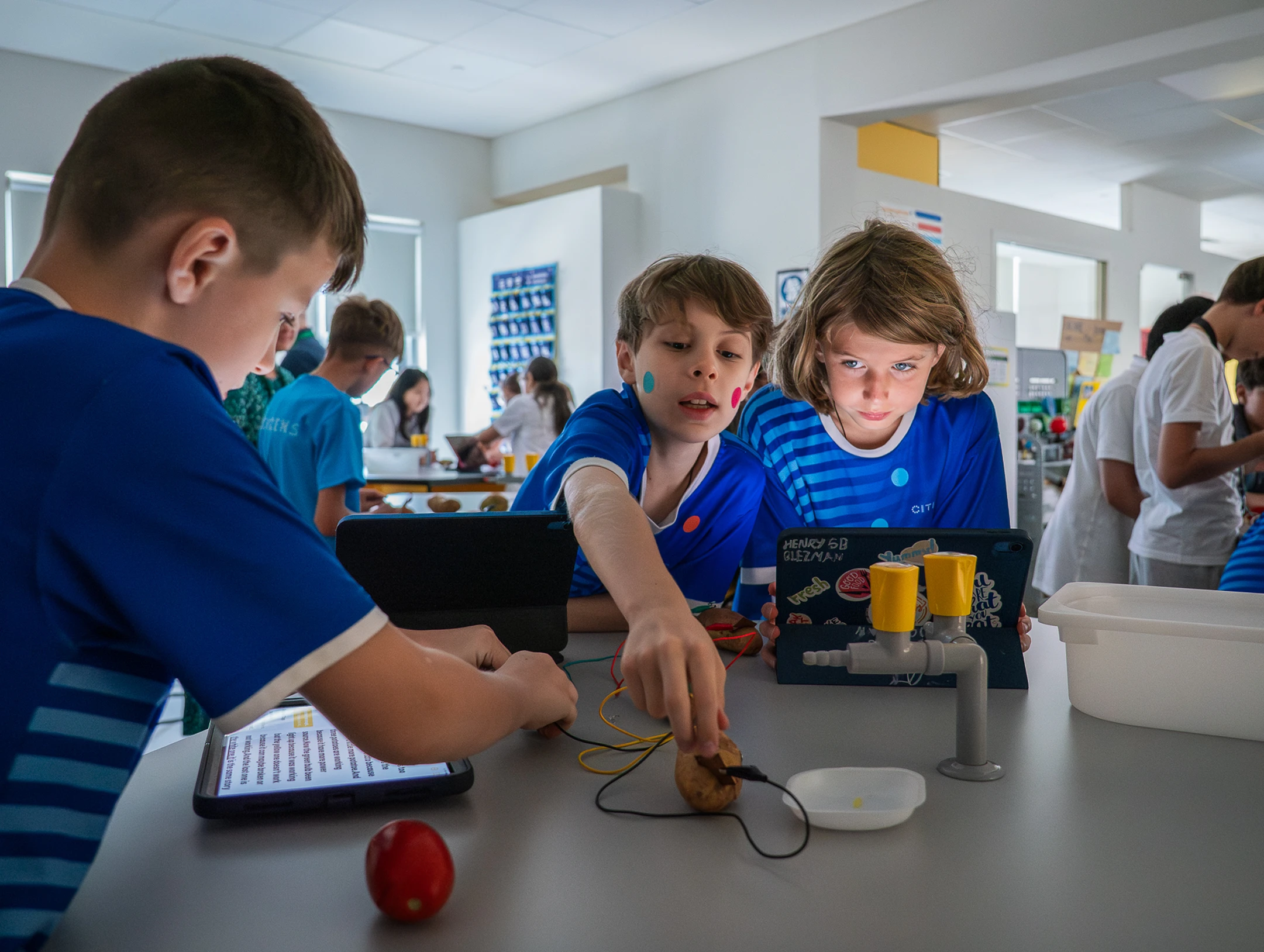
The kitchen might be one of the most underrated learning environments at home. Children measure, experiment, make choices, and occasionally learn from mistakes, all while having fun.
Invite them to:
- Try recipes from different cultures
- Help measure and prepare ingredients
- Explore where foods come from
- Add their own twist to familiar dishes
Simple questions can spark deeper conversations: Why do certain spices belong to particular regions? What happens when ingredients are heated? How do family recipes tell stories across generations?
The best part? Learning feels like a shared experience, not another task on the holiday schedule.
6. Try a Week of Creative Challenges
Sometimes all children need is a prompt and the freedom to take it wherever they want.
A small daily challenge can unlock big ideas without requiring elaborate plans or materials.
Try prompts like:
- Write a six-sentence story
- Invent a new game
- Design your dream playground
- Create a comic strip about your family
- Take photos that tell a story
Children quickly learn that creativity isn’t limited to art lessons. It appears in problem-solving, storytelling, design, and everyday thinking.
The key is to ask, “What could you create?” rather than “What should you make?”
7. Build a Holiday Reading Adventure
Reading during the holidays shouldn’t feel like homework.
Some children love novels. Others prefer graphic novels, magazines, sports biographies, fact books, or audiobooks. All of these count. The objective is to nurture a lifelong relationship with reading rather than complete a checklist.
Families can:
- Visit local libraries and independent bookshops
- Let children choose books based on personal interests
- Create family reading hours without screens
- Listen to audiobooks during journeys
- Share favourite passages during meals
The goal behind this activity is to help children associate reading with curiosity, comfort, and enjoyment.
8. Explore Nature, Even in the Middle of the City
You don’t need mountains or forests to develop an appreciation for nature.
Even in a city like Dubai, opportunities for exploration are everywhere. You just have to slow down enough to see them.
Families can:
- Visit parks such as Mushrif Park or Al Barsha Pond Park
- Keep a simple nature observation journal
- Identify local bird species
- Observe insects, trees, and seasonal changes
- Photograph interesting natural patterns and textures
Encourage children to ask:
- Why do some plants thrive in extreme heat?
- Which animals adapt best to city life?
- How do ecosystems exist in urban environments?
Nature encourages observation, patience, and curiosity. And sometimes, the most interesting discoveries happen close to home.
9. Learn Something Completely New
Summer provides a rare opportunity to explore interests without academic pressure.
That makes summer the perfect opportunity to try something completely new. It could be:
- Photography
- Drawing or digital art
- Basic coding
- Gardening
- Public speaking
- Learning a few phrases in another language
Trying new activities helps children build adaptability and confidence.
It also teaches an important lesson: being a beginner is perfectly acceptable. Growth often begins outside familiar routines and comfort zones.
10. Leave Room for Boredom
This may be the most important activity on the list.
Not every hour needs a plan.
Parents naturally want to keep children occupied, especially during long holidays. But filling every hour leaves little room for imagination to take over.
Given time and space, children often:
- Invent their own games
- Build projects
- Create stories
- Solve problems independently
- Explore the interests they chose for themselves
Of course, hearing “There’s nothing to do!” can test any parent’s patience.
But resisting the urge to fill every moment allows children to develop ownership over their time. They learn how to initiate activities rather than wait for instructions.
Sometimes, the best ideas emerge precisely because there was space for them to appear.
Conclusion
When parents look for ways to cut screen time or fill the holidays, the instinct is to schedule more. But children don’t necessarily need more to do — they need more room to wonder.
A museum visit, a cooking project, an invented game, or a quiet afternoon with no plan at all can build creativity, independence, and confidence in ways that last well beyond summer.
So if your child says “I’m bored,” it might not be a problem to solve right away. It could be the start of their next good idea.
Looking for the best school in Dubai? Contact Citizens School today.
FAQs
1. How can I keep my child entertained during the Dubai summer without relying on screens?
Focus on curiosity-led activities rather than constant entertainment. Museum visits, family projects, cooking, reading adventures, creative challenges, and indoor workshops can provide meaningful alternatives to screen time.
2. What are some educational summer activities for children in Dubai?
Families can explore places such as the Museum of the Future, Etihad Museum, Al Fahidi Historical Neighbourhood, public libraries, community art spaces, and local parks. Everyday activities like cooking and photography also offer valuable learning opportunities.
3. Is boredom actually good for children?
Yes. Unstructured time encourages creativity, independent thinking, and problem-solving. When children are not constantly occupied, they often invent their own games, projects, and interests.
4. How much structure should children have during school holidays?
Children generally benefit from a balance. Basic routines provide security, while free time supports curiosity, imagination, and self-directed exploration.
5. What if my child isn’t naturally interested in reading?
Reading doesn’t have to mean traditional novels. Graphic novels, magazines, audiobooks, sports books, and non-fiction titles based on personal interests can all help children develop a positive relationship with reading.