




What if a classroom problem could become the starting point for a real solution?
That is the idea behind venture building in education.
Parents often hear terms such as entrepreneurship, innovation, design thinking, and project-based learning. Venture building brings many of these ideas together, but it goes beyond teaching children how to start a business.
Learners learn to spot a problem, understand why it matters, explore possible solutions, build an idea, test it, and improve it based on what they discover. They then take it further: assessing whether the idea is feasible, making financial decisions, and developing it into a real venture.
In simple terms, venture building helps children move from “I have an idea” to “I can do something about it.”
What Is Venture Building in Education?
Venture building is a learning process in which learners take an idea from an initial problem or opportunity through research, ideation, creation, testing, and refinement.
The important distinction is between having an idea and doing something with it.
A learner might notice that younger children struggle to navigate a particular part of school. Venture building asks what happens next. Why is this happening? Who experiences the problem? What information is needed? Could there be several solutions? Which one is worth testing?
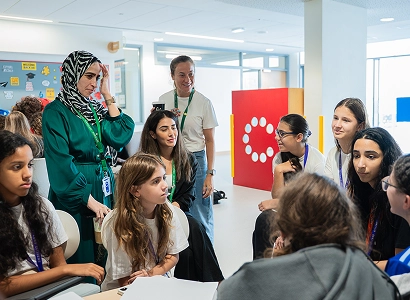
Mentors become facilitators rather than simply delivering answers. They challenge assumptions, ask probing questions, provide expertise, and help learners make informed decisions.
The outcome of a venture could be a product, service, campaign, digital tool, community initiative, or another practical response to a genuine need. It does not have to be a commercial business.
Where Does a Venture Begin? With a Real Problem
Children are naturally observant. They notice things that adults sometimes overlook: wasted food, confusing systems, difficulties faced by classmates, environmental concerns, or something in their community that simply does not work very well.
Venture building encourages learners to pause before jumping to a solution.
They investigate the problem, speak to people affected by it, gather information, and consider different perspectives. This develops empathy alongside research skills. A learner is no longer solving a problem based solely on what they think people need.
The starting question is simple: ‘What problem can we understand well enough to help solve?’”
From Question to Idea: How Children Find Possible Solutions
Once learners understand a problem, they can explore several possible responses rather than immediately committing to one. Brainstorming, discussion, experimentation, and divergent thinking help them look at the challenge from different angles.
They then consider which ideas are both useful and feasible.
This is where learning across subjects becomes valuable. A solution might require scientific knowledge, data analysis, design, technology, communication, or financial thinking.
They begin to see that good ideas are rarely fully formed. They are shaped through questions, evidence, collaboration, and experimentation.
That shift is important: children are not simply being asked to be creative. They are learning how to turn creativity into something purposeful.
Build, Test, Improve: Learning Through Iteration
An idea becomes much more useful once it meets the real world.
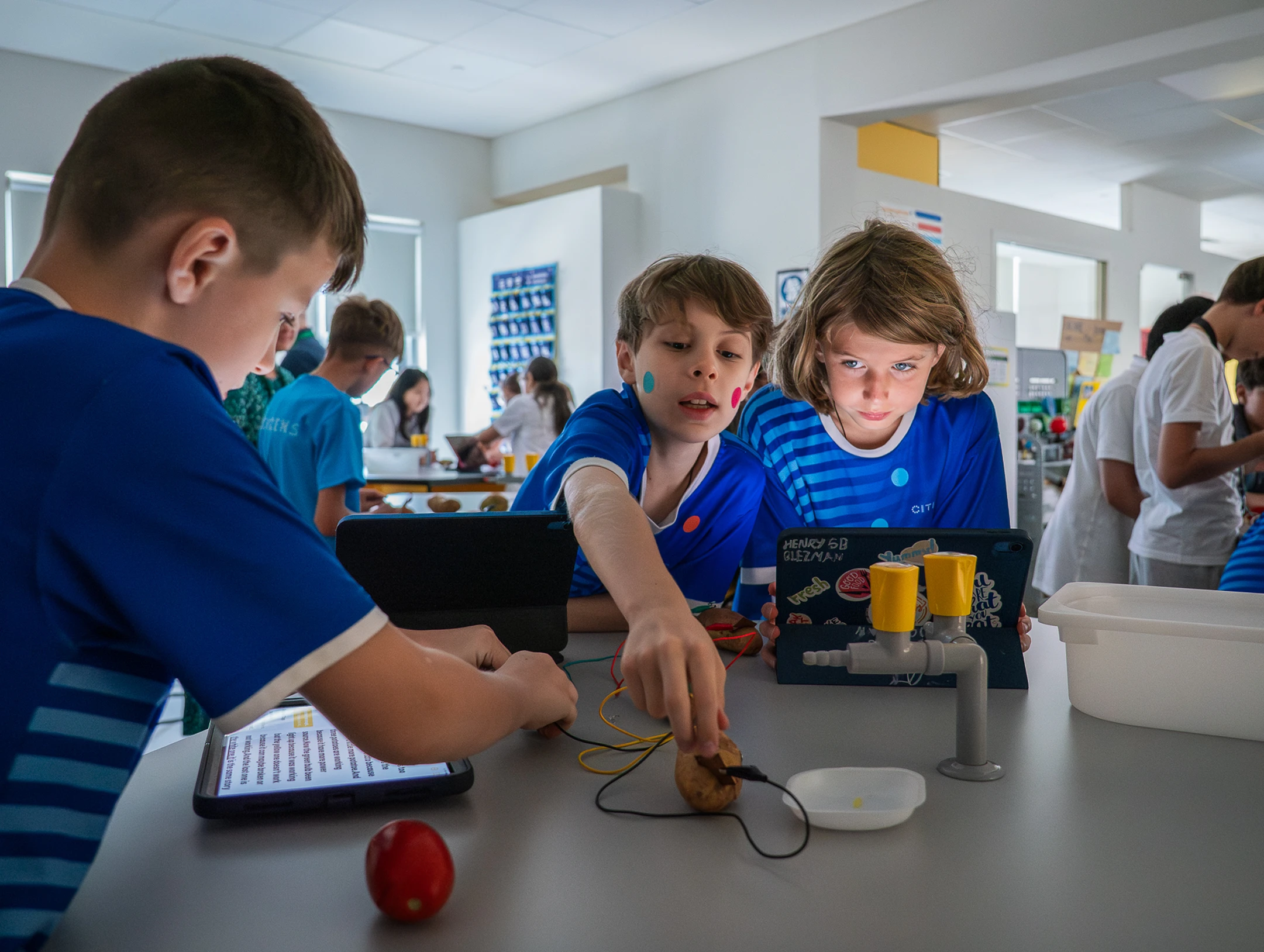
Learners can create an early prototype, demonstrate it to potential users, gather feedback, and identify what needs changing. The first version is not expected to be perfect.
In fact, iteration is part of the learning.
A prototype might reveal that an idea is too complicated, too expensive, difficult to use, or simply solving the wrong problem. Instead of treating this as failure, learners use the evidence to make a better decision.
This creates a different relationship with mistakes. Feedback becomes information, and setbacks become part of the design process.
Using the cycle of Build → Test → Listen → Improve → Test again can make the experience far more memorable than being told that resilience matters.
From Idea to Venture: Making It Work in the Real World
A tested idea is only the beginning. Venture building then asks a harder question: could this actually work?
Learners assess feasibility: what their idea would cost, what resources it needs, and whether people would genuinely use it. They make financial decisions, weigh costs against benefits, and plan how to use limited resources wisely.
They also learn to manage their venture: setting goals, sharing responsibilities, tracking progress and adjusting their plans when things change.
Just as importantly, they learn to communicate and pitch their ideas clearly and persuasively, explaining the problem, their solution and why it matters to an audience that asks real questions.
As learners progress, they begin to explore how a venture might grow, including commercialisation and fundraising. This is where venture building moves beyond a classroom project and starts to reflect how real ventures are built.
What Do Children Learn When They Build Something Real?
As learners investigate problems and develop solutions, they build empathy, self-awareness, critical thinking, problem-solving, resilience, and creativity.
They also learn to work with others, make decisions, communicate ideas, take responsibility, and respond when things do not go according to plan.
Over time, these experiences can strengthen an entrepreneurial mindset, the confidence to take initiative, spot opportunities, and create value.
These skills are relevant to almost any future path. A scientist may need… The transferable skill is knowing how to move from ‘Something could be better’ to ‘Here’s what I can try’.
How Does Venture Building Connect Different Areas of Learning?
A learner exploring food waste might need science to understand the issue, mathematics to analyse data, design to develop a solution, technology to create a prototype, and communication skills to present the idea.
That is what makes venture building naturally interdisciplinary.
Learners draw on:
- Research and literacy to investigate and explain a problem
- Mathematics and data to measure, compare, and make decisions
- Science to test ideas and understand causes
- Design and creativity to develop solutions
- Technology to research, prototype, or communicate
- Financial literacy to assess costs, resources, feasibility and value
- Communication to present ideas to an audience
- Social and environmental awareness to consider wider impact
Instead of learning each subject in isolation, learners see how knowledge connects when there is a genuine problem to solve.
What Does Venture Building Look Like at Citizens School?
For parents, it can help to see venture building as a journey. At Citizens, we describe it in three steps
Identify needs → Design solutions → Build ventures
• Identify needs: learners spot a real problem, research it and speak to the people it affects.
• Design solutions: they generate ideas, build prototypes, test them and improve them based on feedback.
• Build ventures: they assess whether the idea is feasible, make financial decisions, and then plan, manage and pitch their venture.
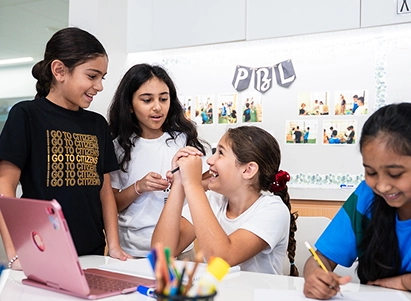
Mentors help learners frame the problem, ask better questions, and access the knowledge they need. Learners might work independently or in teams, depending on the project.
Real-world experts can add another layer of authenticity by sharing professional insight or challenging learners’ assumptions. Learners may then pitch their ideas, demonstrate a prototype, or explain how their thinking evolved.
Reflection is part of the process too. What worked? What failed? What changed after feedback?
That final reflection helps learners recognise not just what they created, but how they learned while creating it.
Why Does Venture Building Matter for the Future?
Technology is changing how people work, while new industries and roles continue to emerge. Preparing children for that reality is less about predicting a particular career and more about helping them become comfortable with change.
The World Economic Forum’s Future of Jobs Report 2025 identifies skills including analytical thinking, creative thinking, resilience, flexibility, and agility among important workplace capabilities.
Venture building gives learners a practical setting in which to develop these capabilities. They learn to work with uncertainty, consider different perspectives, make decisions, respond to feedback, and keep improving.
Future readiness is not about knowing exactly what comes next. It is about being ready to navigate it.
How Citizens School Brings Venture Building to Life
At Citizens School, venture building follows our this model: Identify needs → Design solutions → Build ventures, delivered through three connected stages:
- Design Thinking, where learners understand a real problem and develop and test solutions;
- Entrepreneurship and Financial Literacy, where they assess feasibility and make informed financial decisions;
- Venture Development, where they build, manage and grow their venture.
Along the way, learners develop the six Citizens Skills: Empathy, Self-Awareness, Creativity, Critical Thinking, Problem Solving and Resilience.
Crucially, their work has an authentic audience. Learners present and pitch their ventures to mentors, professionals and real audiences, gaining feedback that challenges their thinking and makes their work matter beyond the classroom.
Venture building also complements Citizens’ transdisciplinary approach, as learners bring together knowledge from different subjects to tackle a single challenge.
For Citizens, the venture itself is only part of the story. The bigger goal is to help learners become curious, resourceful, and capable of turning ideas into meaningful action.
Conclusion
Give children a real problem, and you may be surprised by what they learn while trying to solve it.
The real value of venture building lies in helping learners become curious, confident, and resourceful individuals who are willing to question, experiment, listen, and try again.
They learn that an idea does not have to be perfect on the first attempt. It can evolve.
That mindset matters far beyond school. Whether a child eventually becomes an engineer, designer, scientist, entrepreneur, or something that does not yet exist, the ability to spot a problem, build an idea, test it, and make it better is a skill worth carrying forward.
FAQ
1. Is entrepreneurship the same as venture building?
Not exactly. Entrepreneurship often focuses on business concepts, while venture building takes learners through identifying a problem, developing an idea, testing it, and improving it. The outcome does not have to be a business.
2. What age can children start venture building?
Venture-building skills can start in the early years through simple problem-solving, exploration, and creativity. As learners grow, they can take on more complex research, prototyping, feedback, and real-world projects.
3. Does venture building mean every child needs to become an entrepreneur?
No. The focus is on transferable skills such as problem-solving, creativity, collaboration, decision-making, resilience, and initiative, skills that are useful across careers.
4. How is venture building different from project-based learning?
Both are hands-on approaches. Venture building places greater emphasis on identifying a real need, developing a solution, testing it with an audience or user, and refining it based on feedback before developing it into a venture learners can plan, manage and pitch.
5. What role do mentors play in venture building?
Mentors act as guides. They help learners frame problems, challenge assumptions, access knowledge, make decisions, and reflect on what they learn throughout the process.