


What happens when the answer isn’t in the textbook?
That’s the reality children will face beyond school. Careers and workplaces are changing quickly, and young people will need more than strong grades to navigate them. They’ll need to identify a need, make decisions, solve unfamiliar problems, communicate clearly, work with others, and adapt when their first idea doesn’t work.
And that matters because the workplace children enter may look very different from the one adults know today. The World Economic Forum’s Future of Jobs Report 2025 estimates that 39% of workers’ core skills will change by 2030, while analytical thinking, resilience, flexibility, creativity, and technological literacy are among the capabilities expected to remain increasingly important.
This is where venture building can make learning feel genuinely consequential.
We identify needs. We create solutions. We build ventures.
That’s the idea – Citizens’ approach to turning real-world needs into purposeful ventures. Instead of simply learning about an idea, learners identify a genuine need, develop a response, test it with real users, refine it, and learn how to pitch it with confidence.
The goal isn’t to make every child an entrepreneur. It’s to help them become confident enough to ask, “What can I do about this?” and then take the first step.
Venture Building Turns Classroom Learning Into Real-World Action
Knowing something is one thing. Knowing what to do with it is another.
Venture building gives learners a reason to take what they learn in the classroom and use it beyond a worksheet or test. Instead of treating subjects as separate blocks of knowledge, it draws on three disciplines working together:
- Design Thinking – where learners empathise deeply, define real needs, and create innovative solutions
- Entrepreneurship & Financial Literacy – where they explore value, make informed decisions, and understand the business behind an idea
- Venture Development – where they manage the journey itself – coordinating roles, timelines, and preparing their venture for pitch and investment.
It starts with a problem or opportunity. What could work better? Who needs help? Is there a different way to solve it?
From there, learners research the issue, develop an idea, and create something for a genuine purpose or audience. They may design a product, develop a service, build a digital solution, or propose an initiative for their community.
That shift matters. When children can see why they are learning something and how it can help them solve a real problem, learning becomes more purposeful. They aren’t simply collecting knowledge; they’re learning how to use it.
From Ideas to Action: Learning to Take Initiative
An idea means little until someone decides to act on it.
Venture building creates space for learners to make that move. Rather than waiting for every instruction, they identify opportunities, choose a direction, set goals, and work out what needs to happen next.
That might mean deciding which problem is worth investigating, dividing responsibilities within a team, managing limited resources, or changing direction when new information emerges. Not everything goes to plan. That’s part of the learning.
The important shift is from “What if someone solved this?” to “What can we do about it?”
Over time, these experiences build more than entrepreneurial confidence. They develop initiative, judgement, ownership, and the willingness to act on an idea. Those qualities matter whether a learner eventually becomes an entrepreneur, engineer, doctor, designer, teacher, scientist, or something that doesn’t yet have a job title.
Real-World Problem-Solving: Teaching Children To Find Their Own Answer
Real problems rarely come with a neat answer at the bottom of the page. That’s what makes venture building so valuable.
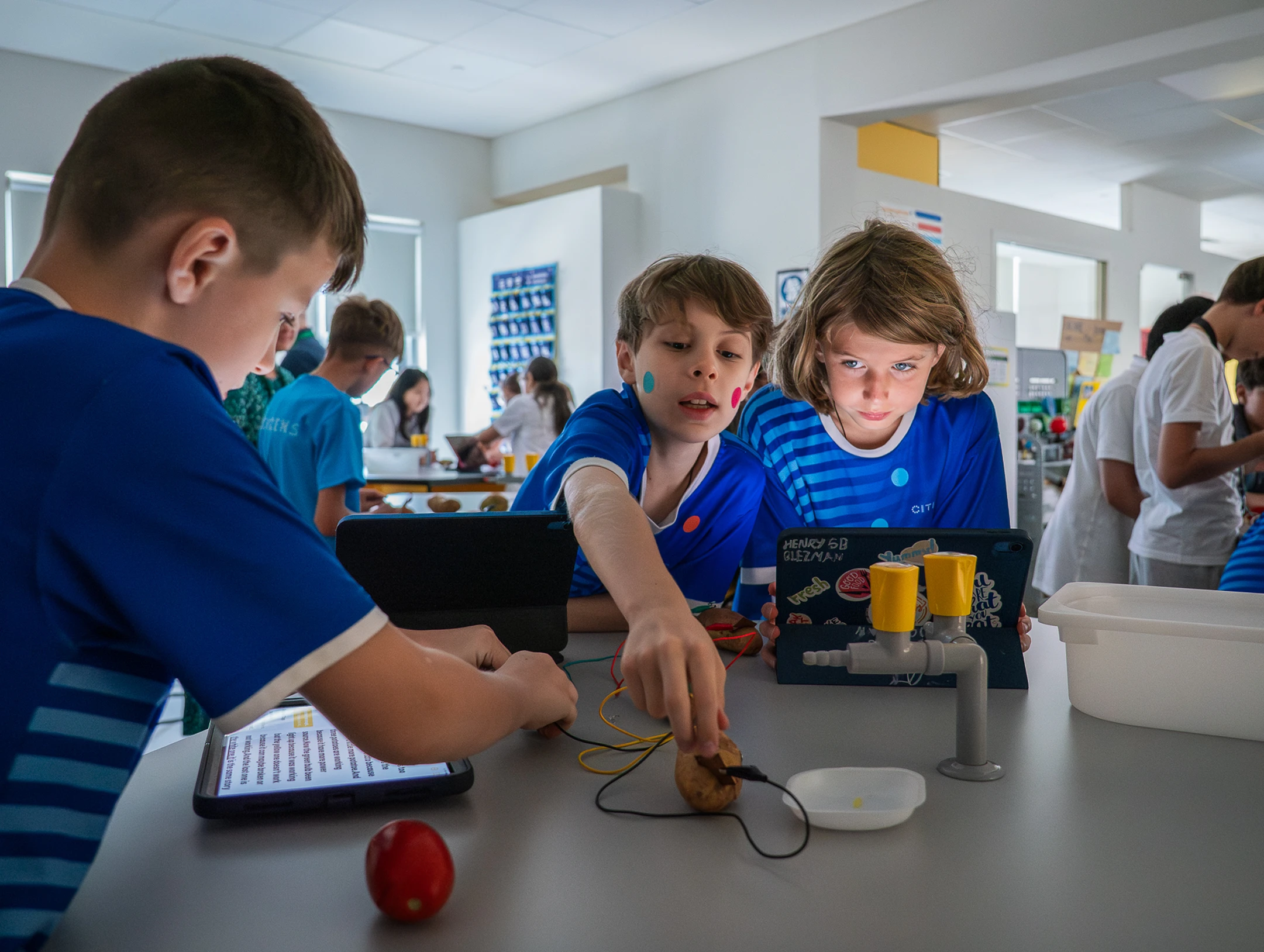
Learners follow a real process to get there: they empathise with the people affected by a problem, ideate possible responses, build a prototype, and test it with real users, not a hypothetical audience. Sometimes the first solution isn’t the best one. A prototype may fail. Feedback may challenge their assumptions. A new piece of information may force them to rethink the entire idea.
Instead of seeing this uncertainty as a barrier, learners begin to see it as part of the process. They learn to test possibilities, weigh evidence, make decisions, and adjust their thinking.
These are practical problem-solving habits that extend well beyond school. Whether they’re working in healthcare, technology, engineering, design, education, or the arts, future professionals will regularly face situations where there isn’t a single correct answer.
Venture building gives children an opportunity to practise navigating that uncertainty while the stakes are still low.
When Failure Becomes Feedback, Resilience Grows
What if getting it wrong wasn’t the end of the process, but the start of a better idea?
Venture building makes that mindset tangible structurally. After learners pitch their idea, they evaluate what worked and what didn’t and the cycle doesn’t stop there. It loops back: refine, iterate, and restart from wherever the idea needs the most work, whether that’s back at empathise, ideate, or prototype. The first attempt doesn’t have to be perfect. In fact, it often shouldn’t be.
A prototype that doesn’t work can reveal something important. A pitch that falls flat can show where the message needs to be clearer. A piece of feedback that initially feels disappointing might point towards a much stronger solution.
This gives children a practical way to understand resilience. Rather than simply being told to “keep trying”, they experience why iteration matters.
They learn to ask, ‘What didn’t work?’ ‘Why?’ ‘What can we change?’
Over time, this can build persistence without making failure feel like a personal judgement. The focus shifts from being right the first time to being willing to learn, adapt, and try again.
That’s a useful mindset far beyond venture building. In a world where problems, technologies, and career paths continue to change, the ability to respond constructively when things don’t go to plan may be one of the most valuable skills a child can develop.
Collaboration and Communication Become Essential
Venture building requires learners to work with people who may have different ideas, strengths, and working styles.
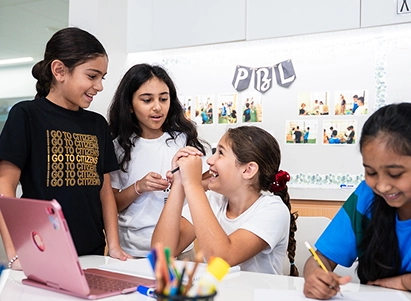
One learner might be good at research. Another may have a strong design instinct. Someone else may be comfortable presenting. Making the project work means learning how those strengths can fit together.
That involves listening, negotiating responsibilities, explaining decisions, resolving disagreements, and giving constructive feedback.
Then there’s the pitch.
Presenting a venture to an authentic audience requires more than speaking confidently. Learners need to explain the problem, justify their solution, respond to questions, and defend their thinking when challenged.
These experiences develop communication in a context where it actually matters.
Venture Building Develops Skills That Travel Across Careers
The most useful skills aren’t tied to one job title. A learner who can identify a problem, research it, develop an idea, explain it clearly, and adapt when circumstances change is building capabilities that can travel across industries.
Venture building can strengthen skills such as:
- Critical thinking: evaluating information before deciding what to do.
- Creativity: developing new approaches rather than relying on the obvious answer.
- Leadership: taking responsibility and helping a team move forward.
- Communication: presenting ideas clearly to different audiences.
- Adaptability: changing direction when evidence or feedback demands it.
- Financial awareness: understanding costs, value, resources, and trade-offs.
- Digital literacy: using technology thoughtfully to research, create, and solve problems.
These capabilities can be useful in technology and engineering, but also in medicine, education, architecture, science, media, design, the arts, and countless other fields.
The point isn’t to predict what a child will become. It’s to give them the capacity to navigate whatever comes next.
How Citizens Connects Venture Building to Real-World Pathways
At Citizens, venture building doesn’t stop at creating an idea for a classroom project. It connects learning with the people, qualifications, and decisions that shape the world beyond school.
The connection to real-world pathways goes further.
From Year 10, BTEC pathways sit alongside IGCSEs, giving learners access to industry-recognised qualifications that reflect more applied approaches to learning and assessment. Through the National Bonds partnership, learners also gain experience with genuine financial decision-making, including managing an actual savings account and, by Year 9, participating in a real investment committee rather than simply working with simulated money.
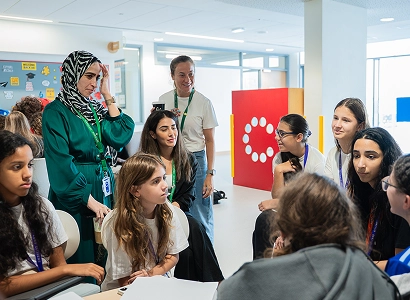
Learners are also exposed to mentors and professionals who can help them understand how careers and industries operate beyond the classroom. From Foundation Stage onwards, opportunities to present ideas to authentic audiences help children practise pitching, explaining their thinking, and responding to questions with confidence.
Citizens School has also officially secured a licence from the Government of Dubai to establish a dedicated Venture Building Studio. The Studio will give learners a real-world environment to develop ideas into viable ventures, moving from ideation and prototyping through to testing, pitching, and fundraising – extending the Venture Development discipline beyond the classroom and into an actual practical ecosystem, where learners can experience first-hand how ideas are developed, validated, funded, and transformed into real ventures.
This is where Citizens’ approach becomes distinctive: venture building connects learning to real qualifications, real financial decisions, real professional relationships, and real audiences.
The emphasis remains on developing the learner, not producing a miniature businessperson.
Conclusion: Preparing Children to Create Their Own Opportunities
No school can predict exactly what careers today’s children will enter. But it can help them develop the habits they’ll need when the path isn’t obvious.
Venture building gives learners the chance to practise those habits early: spotting opportunities, making decisions, working with others, handling setbacks, and turning ideas into action.
The real measure of success isn’t whether a child launches a business. It’s whether they leave school feeling capable of creating opportunities, not simply waiting for them.
That confidence can travel with them into almost any career, industry, or challenge that comes next.