



With so many schools to choose from, how do you know which one is right for your child?
It’s one of the biggest decisions parents make, and in Dubai, it can feel especially overwhelming. With more than 225 private schools offering different curricula, teaching styles, and learning environments, it’s easy to get caught up comparing rankings, fees, and facilities.
But those only tell part of the story.
The best school isn’t necessarily the most expensive or the highest rated. It’s the one where your child feels supported, challenged, and genuinely excited to learn.
Before making your decision, here are 9 things every parent should compare because what children experience every day matters far more than what’s written in a brochure.
How do School Learning Philosophies in Dubai compare?
One of the first things parents ask is, “Which curriculum does the school follow?” It’s an important question, but not the only one.
A curriculum defines what children are expected to learn. A school’s teaching philosophy shapes how they learn it.
Two schools can follow the same curriculum and still offer completely different learning experiences. Some schools follow a more traditional, teacher-led approach, while others use inquiry-based, project-based, or blended learning to encourage exploration, collaboration, and critical thinking. The difference is reflected in what a typical school day feels like.
During a school visit, you should look beyond the curriculum guide. Are learners asking questions? Working together? Applying their knowledge in meaningful ways? Understanding how children experience learning each day often tells you far more than the curriculum itself.
How Well Does the School Know Each Child?
Children are more likely to thrive when they’re known for more than their grades.
Schools that prioritise personalised learning take time to understand each learner’s strengths, interests, goals, and areas where they may need additional support. That might include mentoring programmes, individual goal-setting, regular check-ins, and strong academic and pastoral guidance.
When speaking to a school’s admissions team, ask how they monitor each learner’s progress and how they respond when a child needs more support or faces more challenges.
Strong relationships create confident learners. And when children feel understood, they’re more willing to participate, take risks, and grow.
Is Success Measured by More Than Grades?
The world your child will graduate into is changing rapidly. While academic achievement remains important, employers and universities are placing increasing value on skills such as critical thinking, creativity, communication, collaboration, and adaptability.
That’s why the strongest schools look beyond exam performance. They help learners develop confidence, emotional intelligence, leadership, digital literacy, innovation, and AI readiness alongside a strong academic foundation.
According to the World Economic Forum’s Future of Jobs Report 2025, analytical thinking, resilience, and technological literacy are among the fastest-growing skills for the future workforce.
When comparing schools, ask yourself, What kind of person will my child become here; not just what grades will they achieve?
Will Your Child Feel Safe, Supported, and Happy?
A supportive school creates an environment where learners feel valued, respected, and confident to participate. That includes strong pastoral care, emotional wellbeing programmes, effective safeguarding practices, inclusive classrooms, and thoughtful support during key transitions.
As you visit schools, pay attention to more than dedicated wellbeing spaces. Observe how teachers interact with learners. Do children seem comfortable sharing ideas? Are relationships warm and respectful? Does the atmosphere feel calm and welcoming?
When children feel safe and supported, they’re more likely to engage in learning, build resilience, and develop the confidence to reach their full potential.
Do Children Get Opportunities to Apply What They Learn?
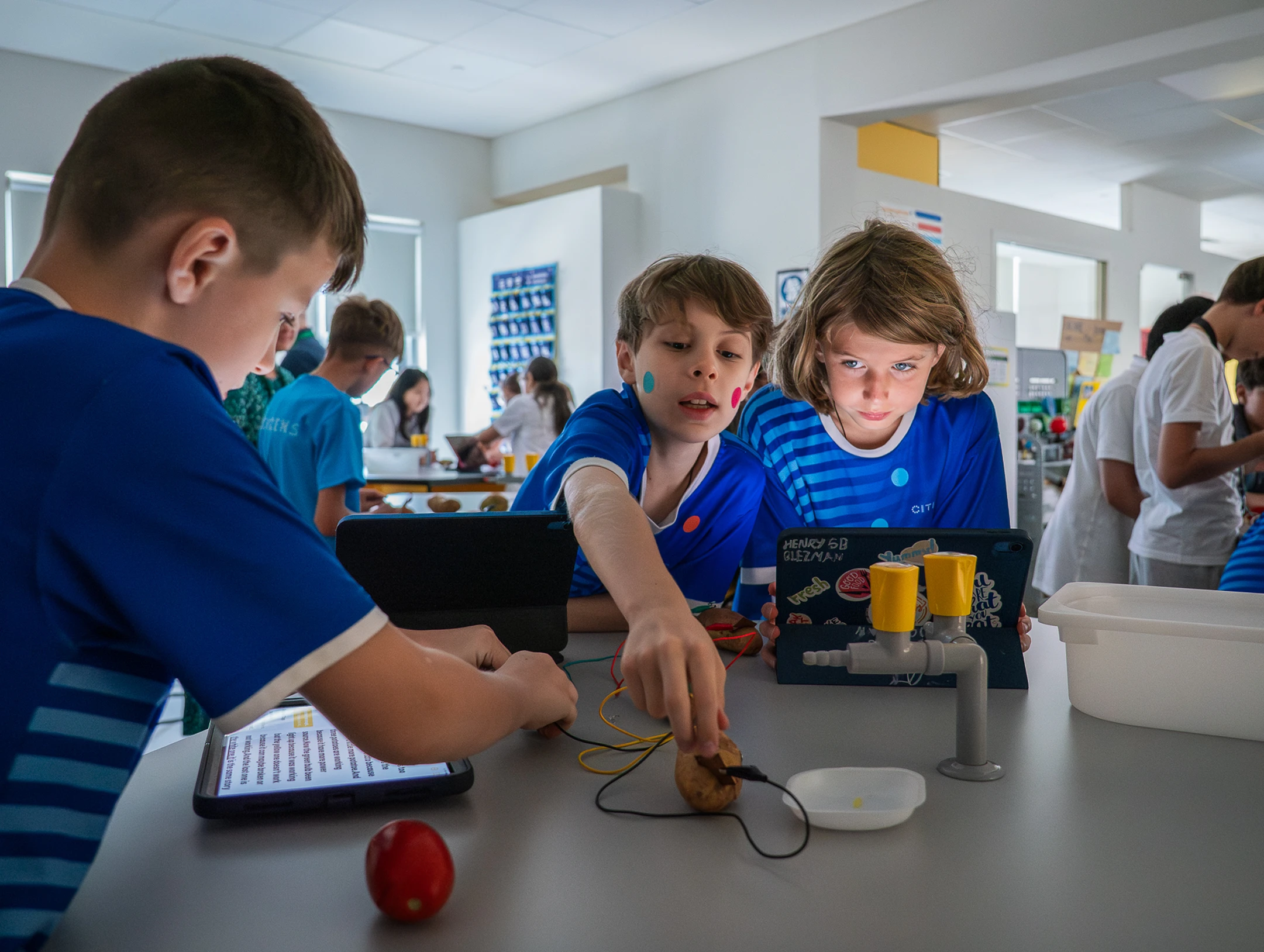
The best learning goes beyond a lesson taught. It comes alive when children apply their knowledge to solve real problems, test ideas, use their independent thoughts, and create something meaningful.
Look for schools that go beyond textbooks through project-based learning, design thinking, community engagement, and opportunities to tackle authentic challenges.
At Citizens School, this happens through venture-building. It is the practical expression of the Citizens Future Framework. Drawing on Design Thinking, Entrepreneurship, Financial Literacy, and AI & Digital Literacy, learners work in teams to develop products, services, campaigns, digital solutions, or community initiatives. Along the way, they research, prototype, test, refine, and pitch their ideas to real audiences.
Venture-building is an embedded learning journey that helps children connect classroom knowledge with real-world impact while building creativity, confidence, and problem-solving skills.
How Does the School Work With Parents?
A child will thrive when parents and teachers share the same goal: helping them grow with confidence.
The best schools keep families involved through open communication, regular feedback, and meaningful opportunities to engage in school life. Instead of waiting for parent-teacher meetings to discuss progress or concerns, they build ongoing relationships based on trust and transparency.
As you compare schools, ask how often teachers communicate with families, how learner progress is shared, and how parents can stay involved throughout the year.
When home and school work as partners, children receive consistent support, and that’s often where meaningful progress begins.
Does the School Community Feel Right?
Facilities and academics matter, but so does the sense of belonging children experience every day.
During a school visit, look beyond the classrooms and facilities. Notice how learners interact with teachers and each other. Do they seem confident, engaged, and comfortable expressing themselves? Does the school celebrate different backgrounds and encourage every child to have a voice?
A strong school community is built on inclusion, respect, and a genuine sense of belonging. When children feel accepted for who they are, they’re more likely to participate, build meaningful friendships, and enjoy coming to school.
Will the School Work for Your Family’s Everyday Life?
The right school should fit your family’s routine as well as your child’s learning needs. Even an outstanding school can become difficult if the daily logistics aren’t sustainable.
Consider the daily commute, school timings, transport options, extracurricular activities, holiday calendar, and how the school communicates with families. A schedule that fits comfortably into your routine can reduce stress and make school life more enjoyable for everyone.
Choosing a school isn’t just about what happens between the first and last bell. It’s about finding one that supports your child’s learning while fitting seamlessly into your family’s everyday life.
Imagine Your Child Here Five Years From Now
It’s easy to focus on the next academic year, but the best school choices are made with the future in mind.
As your child grows, their interests, strengths, and challenges will evolve. Look for a school that offers consistent opportunities to build confidence, independence, leadership, and a love of learning at every stage.
Ask yourself: Can I picture my child thriving here in five years? If the answer is yes, you’ve probably found a school that’s built for more than short-term success.
A great school doesn’t simply prepare children for the next grade. It helps them grow into capable, curious, and confident young people.
How Citizens School Brings These Elements Together
The best school experience happens when great teaching, wellbeing, and real-world learning work hand in hand. And, at Citizens School, these are part of one connected learning experience.
Learners follow the British Curriculum, enriched through the Citizens Future Framework and an inquiry-led approach that encourages learners to think deeply, ask meaningful questions, and apply their knowledge beyond the classroom. Through the Citizens Future Framework, venture-building, and design thinking, they develop future-ready skills such as creativity, collaboration, entrepreneurship, digital literacy, and critical thinking alongside strong academic foundations.
Just as importantly, every learner is supported as an individual. Personalised mentoring, strong pastoral care, and close partnerships with families help ensure children feel known, valued, and confident throughout their learning journey.
The result is a school where academic achievement, wellbeing, and future readiness aren’t treated as separate priorities; they come together to help every learner reach their full potential.
Conclusion
After visiting a few schools, you’ll probably notice that many offer impressive campuses, respected curricula, and strong academic results. The real difference often comes down to something much simpler: How will your child feel here every day?
Will they be known by their teachers? Encouraged to ask questions? Supported when things are difficult and challenged when they’re ready for more?
Those are the things that shape a child’s school experience long after the prospectus has been put away.
Because choosing the right school isn’t about finding the “best” school in Dubai. It’s about finding the place where your child can learn with confidence, grow with purpose, and truly belong.
Want to know more? Reach out to us today.
Frequently Asked Questions
1. How many private schools are there in Dubai?
Dubai has more than 225 private schools offering a wide range of international curricula, including British, IB, American, Indian, French, and others. Together, they educate more than 390,000 learners, making Dubai one of the world’s most diverse education hubs.
2. Can I visit a school before applying?
Yes. Most schools encourage prospective families to book a campus tour or attend an open day. Visiting allows you to observe classrooms, meet educators, ask questions, and get a genuine feel for the school’s culture before making a decision.
3. Can I apply while I’m living outside the UAE?
Absolutely. Many Dubai schools support international families by offering virtual tours, online applications, digital assessments where appropriate, and remote admissions meetings. This allows families to begin the admissions process before relocating.
4. What should I ask during a school tour?
Beyond fees and curriculum, ask how the school supports wellbeing, personalises learning, communicates with parents, develops future-ready skills, and helps new learners settle into the community. These conversations often reveal more than brochures or rankings.
5. How long does the admissions process usually take?
The timeline varies depending on the school, year group, and seat availability. Some applications are completed within a few weeks, while others may take longer if assessments or waiting lists are involved. Starting your search early gives you the greatest choice and flexibility.