

• Skip to primary navigation
  • Skip to main content
  • Skip to footer
Citizens School

مدرسة سيتيزنز

  • من نحن
    • نبذة عن سيتيزنز

      من نحن

    • فريق القيادة العليا
    • مجلس الأمناء

      مجلس الأمناء

    • التوجه التعليمي لدولة الإمارات العربية المتحدة

      التوجه التعليمي لدولة الإمارات العربية المتحدة

    • مستقبل مُخصص لتنمية قدرات المتعلمين
  • جولة في
    • حرم مدرسة سيتيزنز

      حرم مدرسة سيتيزنز

    • البيت الزجاجي

      البيت الزجاجي

    • الـمقـصـف

      الـمقـصـف

    • مركز التجمعات

      مركز التجمعات

    • المكتبة

      المكتبة

    • غرفة الموسيقى

      غرفة الموسيقى

    • ملعب البادل

      ملعب البادل

    • استوديو الإنتاج

      استوديو الإنتاج

    • سوشيال جِيم

      سوشيال جِيم

    • مرافقنا الرياضية

      مرافقنا الرياضية

    • مختبرات العلوم والتكنولوجيا والهندسة والرياضيات

      مختبرات العلوم والتكنولوجيا والهندسة والرياضيات

    • مركز الرفاهية لدينا

      مركز الرفاهية لدينا

    • بيئة التعلم

      بيئة التعلم

  • البرامج التعليمية
    • البرامج التعليمية

      البرامج التعليمية

    • الاستدامة

      الاستدامة

    • برنامج ريادة الأعمال

      برنامج ريادة الأعمال

    • الرياضة

      الرياضة

    • الفنون والثقافة

      الفنون والثقافة

    • الموسيقى

      Music Programme

    • الصحة والرفاهية

      الصحة والرفاهية

  • سياسة
    • ابدأ من هنا

      سياسة

    • الرسوم الدراسية

      الرسوم الدراسية

    • سياسة القبول

      سياسة القبول

    • النقل

      النقل

    • الأسئلة الشائعة

      الأسئلة الشائعة

  • المركز الإعلامي
    • المركز الإعلامي

      المركز الإعلامي

    • البودكاست

      البودكاست

    • مدونة

      مدونة

  • الفعاليات
  • الحضانة
  • اتصل بنا
العربيةالعربية
العربيةالعربية
English
Citizens School تسجيل الدخول Citizens School Citizens School
Zenda Toddle تسجيل الدخول
  • من نحن
    • نبذة عن سيتيزنز

      من نحن

    • فريق القيادة العليا
    • مجلس الأمناء

      مجلس الأمناء

    • التوجه التعليمي لدولة الإمارات العربية المتحدة

      التوجه التعليمي لدولة الإمارات العربية المتحدة

    • مستقبل مُخصص لتنمية قدرات المتعلمين
  • جولة في
    • حرم مدرسة سيتيزنز

      حرم مدرسة سيتيزنز

    • البيت الزجاجي

      البيت الزجاجي

    • الـمقـصـف

      الـمقـصـف

    • مركز التجمعات

      مركز التجمعات

    • المكتبة

      المكتبة

    • غرفة الموسيقى

      غرفة الموسيقى

    • ملعب البادل

      ملعب البادل

    • استوديو الإنتاج

      استوديو الإنتاج

    • سوشيال جِيم

      سوشيال جِيم

    • مرافقنا الرياضية

      مرافقنا الرياضية

    • مختبرات العلوم والتكنولوجيا والهندسة والرياضيات

      مختبرات العلوم والتكنولوجيا والهندسة والرياضيات

    • مركز الرفاهية لدينا

      مركز الرفاهية لدينا

    • بيئة التعلم

      بيئة التعلم

  • البرامج التعليمية
    • البرامج التعليمية

      البرامج التعليمية

    • الاستدامة

      الاستدامة

    • برنامج ريادة الأعمال

      برنامج ريادة الأعمال

    • الرياضة

      الرياضة

    • الفنون والثقافة

      الفنون والثقافة

    • الموسيقى

      Music Programme

    • الصحة والرفاهية

      الصحة والرفاهية

  • سياسة
    • ابدأ من هنا

      سياسة

    • الرسوم الدراسية

      الرسوم الدراسية

    • سياسة القبول

      سياسة القبول

    • النقل

      النقل

    • الأسئلة الشائعة

      الأسئلة الشائعة

  • المركز الإعلامي
    • المركز الإعلامي

      المركز الإعلامي

    • البودكاست

      البودكاست

    • مدونة

      مدونة

  • الفعاليات
  • الحضانة
  • اتصل بنا

فيديا ساتيش

يونيو 6, 2024 by فيديا ساتيش

The ability to innovate is not just an advantage; it is a necessity. At Citizens School, we  meet this challenge head-on by integrating innovation skills into our curriculum, fostering creativity and adaptability in our learners. By thinking laterally and exploring new ideas, we aim to create a culture where creative thinking thrives. This process begins with equipping our mentors with the tools they need to allow children the freedom to experiment and take risks.

Providing opportunities for creativity leads to ideas or inventions, which can then be developed into innovations. Through projects, prototypes, or new methods, learners inventive activities bridge the gap between imagination and practical application, and learners also understand the importance of embracing failure as part of the learning process. These inventions then become the foundation for broader innovations, influencing how we solve problems, improve processes, and enhance everyday life.

We encourage our teachers, who we call mentors, to incorporate creativity into the classroom. I recently ran an innovation workshop highlighting a range of creativity tools, specifically focusing on De Bono’s Six Thinking Hats and Design Thinking. Both methods adopt a human-centered, empathetic approach to problem-solving, crucial for developing emotional intelligence and diverse perspectives.

The mentors were split into groups and given a challenge to solve. Each member was given a hat, representing a different mode of thinking: factual (White Hat), emotional (Red Hat), critical (Black Hat), positive (Yellow Hat), creative (Green Hat), and managerial (Blue Hat). When employed in the classroom, this technique enhances learners’ ability to think comprehensively and collaboratively, enabling them to address complex problems by considering multiple perspectives. It also develops their ability to switch thinking styles, improving cognitive flexibility and teamwork.

Design thinking incorporates the stages of empathising, defining, ideating, prototyping, and testing. It encourages learners to understand user needs deeply, fostering empathy and promoting innovative solutions tailored to real-world problems while helping them develop essential entrepreneurship skills. This iterative process develops resilience and adaptability, reacting to feedback and continuously improving ideas.

Understanding the balance between innovation and consolidation is critical, as illustrated in Clayton Christensen’s “The Innovator’s Dilemma.” This concept teaches that while it is essential to pursue groundbreaking innovations, it is equally important to consolidate and strengthen the existing systems. Schools must decide when to innovate, stay ahead and when to consolidate to maintain stability. By recognising the right moments to embrace disruptive changes and to reinforce current practices, educators can create a balanced environment that nurtures sustained growth and innovation. This delicate balance ensures that educational institutions remain dynamic and forward-thinking while providing a stable foundation for student development.

The innovation workshop was the first in a series of professional development sessions to ensure that we deliver on our promise to ‘Reimagining Education’. We are committed to integrating cutting-edge technologies and fostering a culture of continuous innovation to prepare our students for the challenges of the future. This dedication to technological advancement and innovative practices ensures that our learners are ready to face the future and equipped to shape it.

By Dr. Terry McAdams

نائبة المدير
Filed Under: مدونة

يونيو 6, 2024 by فيديا ساتيش

في خطوة بارزة، تقدم مدرسة سيتزنز بالتعاون مع شركة إنسايت إنترناشيونال والدكتور ستيفن هوكينز، دبلوماً متقدماً في الإرشاد والتوجيه في البيئات التعليمية لأعضاء هيئتها التدريسية. عند الانتهاء من البرنامج، سيحصل المشاركون على دبلوم متقدم في الإرشاد والتوجيه في البيئات التعليمية، معتمد من الهيئة الدولية للإرشاد والتوجيه المهني (IAPCM) كمؤهل يعادل المستوى الرابع. 

اقرأ المزيد

Filed Under: المركز الإعلامي, بيان صحفي

يونيو 3, 2024 by فيديا ساتيش

The purpose of education has changed significantly over the years. In the past, it focused on teaching basic skills that workers needed in an industrial age. However with rapid technological advancements and AI, the skills needed to succeed in the workplace are changing, and so should our approach to education as schools increasingly focus on developing future skills for children such as critical thinking, creativity, and adaptability.

Citizens School was built with the vision of Reimagining Education education to align with global changes. The goal is to provide children with a holistic experience that prepares them for future success. This is done through Citizens’ Future Framework, a custom framework  based on the World Economic Forum that emphasises creativity, problem-solving, global understanding, and business skills. The framework revolves around project-based learning and hands-on activities to promote collaboration and communication among learners. By focusing on real-world application of knowledge and skills, Citizens School prepares learners for success and well-being in the future.

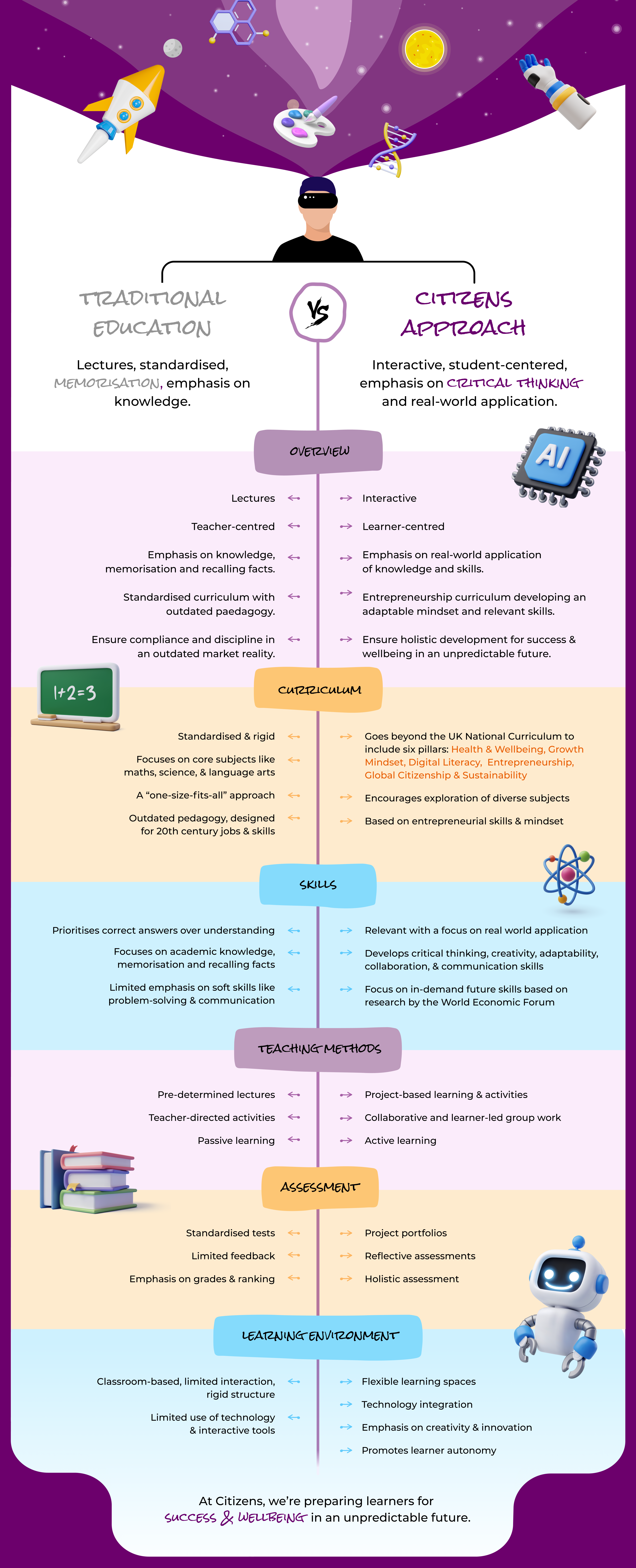
An Overview of the Traditional Approach and Citizens’ Approach

The Traditional Approach
Traditional education focuses on imparting basic skills and knowledge through lecture-based teaching. The classroom is teacher-centred and the emphasis is on memorisation and recalling facts. Students are evaluated primarily through standardised tests and grades, with a rigid curriculum designed for the traditional workforce. 

The Citizens Approach
At Citizens School, we take a learner-centred approach that goes beyond the traditional curriculum. Our approach emphasises the real-world application of knowledge and skills, with the goal of preparing learners for success and well-being in an unpredictable future. We help learners develop a resilient and adaptable mindset through hands-on experiences and collaborative projects, and we focus on critical thinking, creativity, and adaptability.

Key Differences Between the Traditional and Citizens’ Approach

Teaching Methods
Traditional education relies on teacher-directed instruction and passive learning. In contrast, the Citizens Approach promotes active learning through project-based activities and collaborative group work, reflecting principles of inquiry-based learning that foster creativity and innovation.

Assessment
Traditionally, students are evaluated with standardised tests and grades. At Citizens School, we assess learners through project portfolios, presentations, and reflective assessments. We focus on celebrating growth and learning from our mistakes.

بيئة التعلم
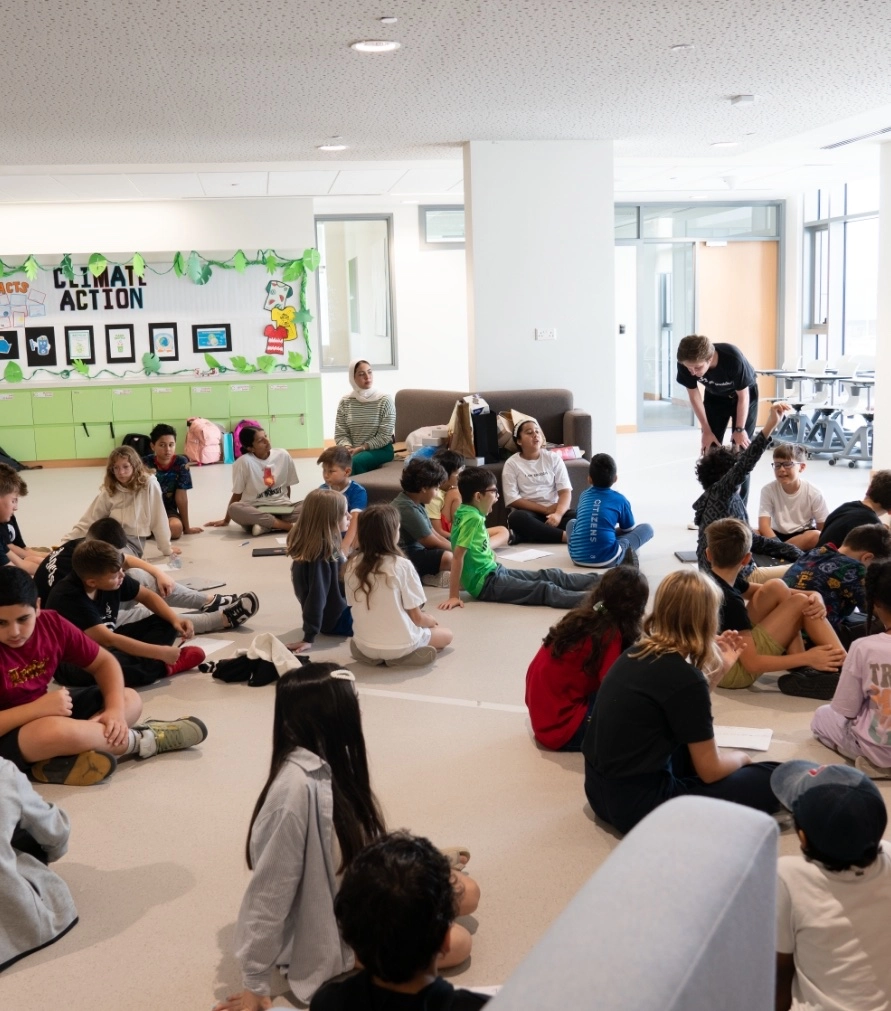
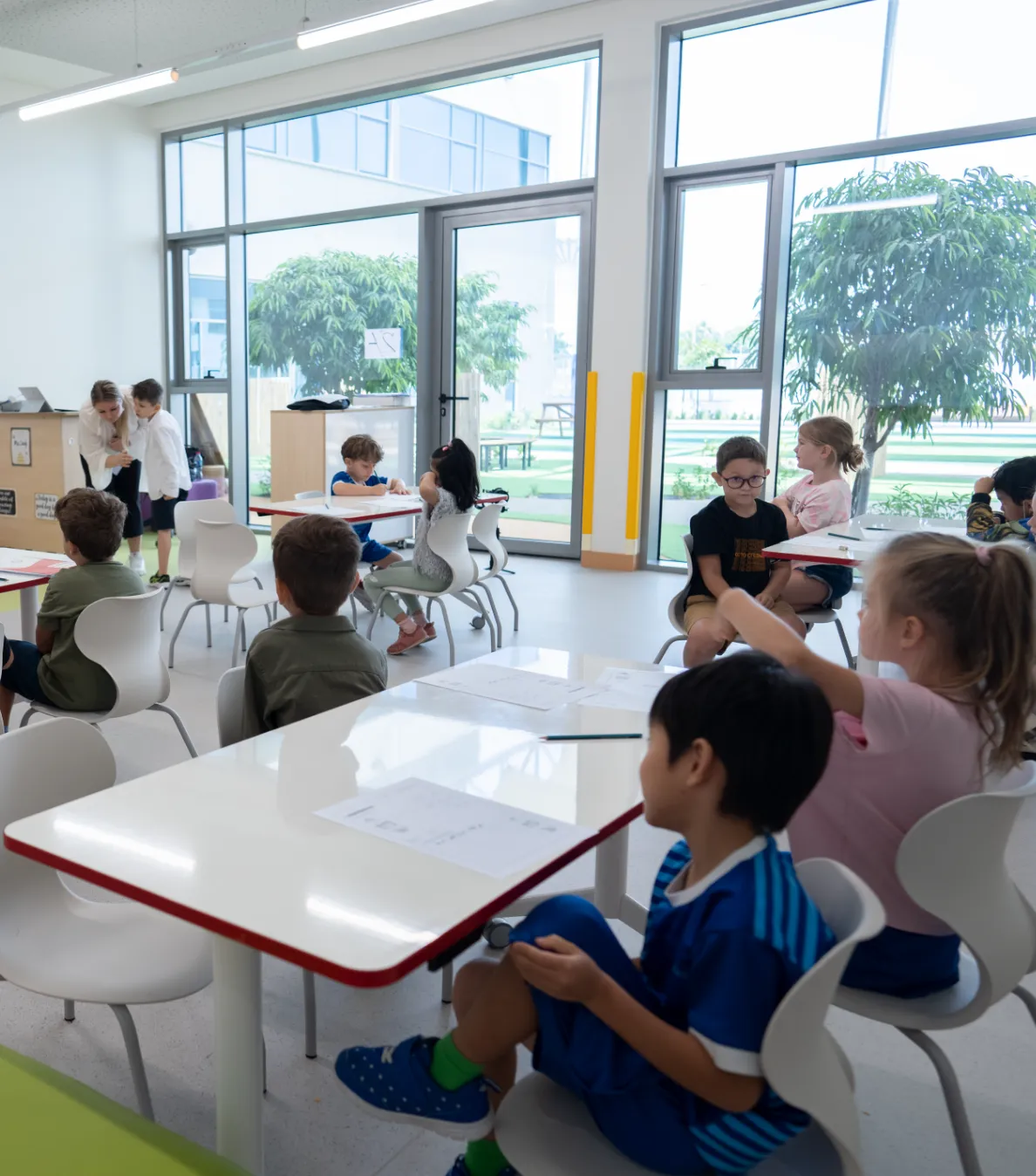
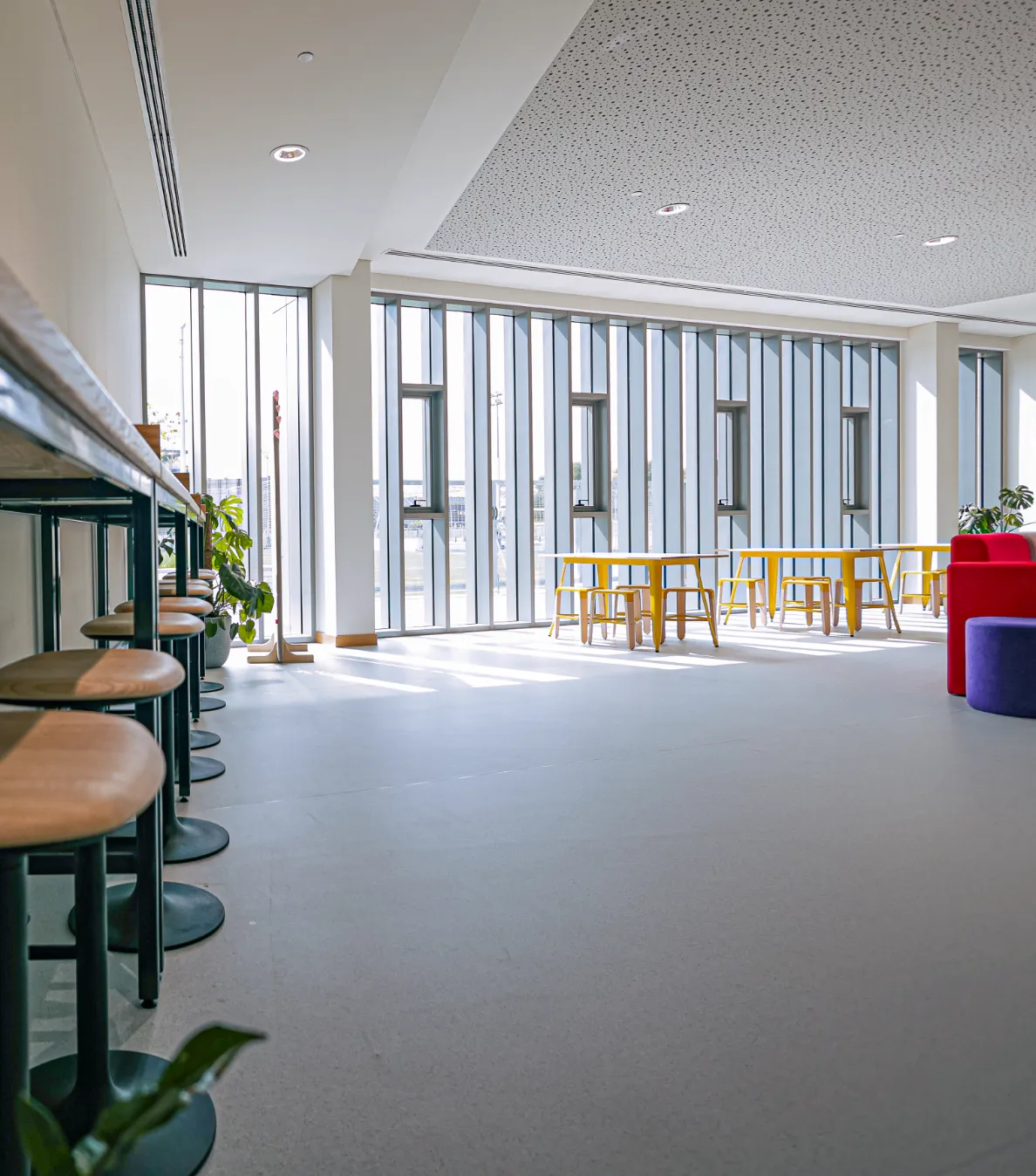
Traditional classrooms are usually set up with limited interaction and a rigid structure. At Citizens School, we provide flexible learning spaces that integrate technology, and we emphasise creativity, innovation, and learner autonomy.

Subject Matter
Traditional education focuses on core subjects like maths and language arts. The Citizens Approach extends beyond the core subjects to include the six pillars of the Future Framework: Health and Wellbeing, Growth Mindset, Digital Literacy, Entrepreneurship, Global Citizenship, and Sustainability. Learners engage in entrepreneurship projects where they gain valuable skills in communication, teamwork, and innovation, reflecting the growing importance of Entrepreneurship in Education in our approach.

Building the Future
The Citizens Approach represents a new direction in education. By focusing on relevant skills and preparing learners for real-world challenges, Citizens School is redefining education for the future.

To see how the Citizens Approach in action, contact us at +971 50 237 7273 أو future@citizens.me.

Filed Under: مدونة

مايو 26, 2024 by فيديا ساتيش

في عالم اليوم الذي تقوده الرقمنة، تدفعنا التكنولوجيا إلى الأمام بسرعة غير مسبوقة. هذه التطورات تُحدث تحولاً في جميع مجالات الحياة، وخاصة في الطريقة التي نعمل بها.

وفقاً لدراسة أجرتها شركة Dell Technologies ومعهد المستقبل عام 2018، فإن 85٪ من الوظائف التي من المتوقع أن توجد بحلول عام 2030 لم تُنشأ بعد. والآن ونحن في عام 2024، في منتصف الطريق إلى ذلك الموعد، فإن التغيرات المتسارعة التي شهدناها خلال السنوات الست الماضية تدفعنا للتأمل في ملامح سوق العمل المستقبلي.

اقرأ المقال كاملاً على صحيفة الخليج تايمز

Filed Under: مقال مميز, المركز الإعلامي

مايو 14, 2024 by فيديا ساتيش

As C.S. Lewis once said, “Failures are finger posts on the road to achievement.” Successful entrepreneurs persevere after failure, knowing that mistakes lead to innovation.

According to the U.S. Bureau of Labor Statistics (BLS), the failure rate for new businesses is significant—20% fail within the first two years, 45% within the first five years, and 65% within the first 10 years. These statistics underscore the mindset and character required for entrepreneurial success.

History is filled with examples like Steve Jobs, Walt Disney, Vera Wang, and Richard Branson, who faced failures before achieving great success. Sir James Dyson spent 15 years making over 5,000 prototypes to perfect his bagless vacuum. The key lesson from these entrepreneurs is the importance of resilience and the willingness to take risks.

At Citizens School, we aim to instil an entrepreneurial mindset in learners and believe in creating an environment where failure is not just tolerated but encouraged. This philosophy aligns closely with Entrepreneurship in Education, where initiative, resilience, and calculated risk-taking are embedded into the learning experience. Our approach is based on the idea that failure is a crucial part of learning, growth, and eventual success, helping to build a strong growth mindset in kids.

Encouraging Perseverance

In many traditional schools, mistakes are seen as something to avoid. However, we see mistakes as an important step towards innovation and success. When learners are empowered to take risks, try new ideas, and persevere even after failure, they develop resilience and learn valuable lessons that cannot be taught in a textbook.

Developing Resilience

By embracing failure, our goal is to develop resilience in our learners. Resilience means being able to bounce back from setbacks, adapt to challenges, and keep going when things get tough. When learners experience failure in a supportive environment, they learn to see setbacks as opportunities for growth, rather than roadblocks.

Cultivating Innovation and Creativity

Innovation often comes from trying new things and taking calculated risks. By encouraging learners to become risk-takers, we encourage a culture of innovation where learners are encouraged to think outside the box, challenge norms, and explore unconventional solutions. Failure becomes a natural part of the creative process, leading to breakthroughs and new ideas.

Learning from Mistakes

At Citizens School, we see mistakes as valuable learning opportunities. When learners fail, we encourage them to reflect on what went wrong, find ways to improve, and plan for future success. This reflective practice helps build self-awareness, critical thinking, and personal growth.

Building Confidence

By normalising failure, we help learners gain confidence in their abilities. When they understand that failure is a normal part of learning, not a judgement of their worth, they become more willing to take risks, pursue their interests, and set ambitious goals.

Encouraging a Growth Mindset

Our approach aligns with the concept of a growth mindset, developed by psychologist Carol Dweck. A growth mindset emphasises the belief that skills and intelligence can be developed through effort and persistence. By embracing failure, we promote a growth mindset among our learners, empowering them to tackle challenges and keep going despite setbacks. This philosophy reflects the broader shift From Students to Learners at Citizens School, where adaptability, curiosity, and lifelong growth are prioritised over perfection.

At Citizens School, we recognise setbacks are stepping stones for growth, resilience, and innovation. By creating a supportive environment that encourages risk-taking and embracing lessons from failure, we empower learners to become confident, resilient, and innovative thinkers who are prepared to thrive in an ever-changing world.

Filed Under: مدونة

مارس 12, 2024 by فيديا ساتيش

تشتهر مدرسة سيتزنز بنهجها المبتكر في التعليم، حيث تؤكد على أهمية إعادة تصور المناهج التقليدية من أجل إعداد المتعلمين لمتطلبات المستقبل.

اقرأ المزيد

Filed Under: المركز الإعلامي

  • « Go to Previous Page
  • Page 1
  • Interim pages omitted …
  • Page 11
  • Page 12
  • Page 13
  • Page 14
  • Page 15
  • Go to Next Page »

Footer

Get in touch

إرسال

استفسر الآن

إرسال

احجز جولة ميدانية

إرسال

قدّم الآن

إرسال

From Nursery to Year 10
سياسة
مفتوح الآن

يرجى تعبئة النموذج أدناه لمعرفة المزيد عن العام الدراسي 2025-2026.

سجل الآن
احجز جولة phone

Join our newsletter for events, school updates, and community stories.
روابط سريعة
  • من نحن
  • جولة في
  • البرامج التعليمية
  • الفعاليات
  • سياسة
  • المركز الإعلامي
  • البودكاست
  • التوظيف
  • اتصل بنا
المجتمع المدرسي
  • طلابنا
  • أولياء الأمور
  • معلمونا
  • فريق القيادة العليا
  • مجلس الإدارة
  • حماية المتعلمين
  • الرعاية التربوية
  • الدمج
  • المجموعة الاستشارية لأولياء الأمور
  • KHDA Calendar
تحديد موقع الحرم المدرسي
  • COBIS
  • dubai-knowledge
  • COBIS
  • dubai-knowledge
سياسة المدرسة (هيئة المعرفة والتنمية البشرية) سياسة الخصوصية سياسة الوصول الشروط والأحكام هذا الموقع مملوك لشركة مدرسة سيتيزنز ذ.م.م.

WhatsApp us