Citizens School















 English


How Outdoor Play Shapes Early Learning at Citizens Nursery
Did you know that early childhood experts recommend at least three hours of outdoor play every day for young children? Research shows that children learn best when they move freely, explore openly, and engage their senses. Outdoor play in early years isn’t a break from learning; it is the learning.
At Citizens Nursery, this understanding underpins our approach: children grow cognitively, socially, emotionally, and physically as your child touches, observes, and experiments with the world. Outdoor play is, therefore, a vital part of our daily curriculum.
Each outdoor activity sparks excitement, builds optimism, and strengthens well-being. Whether jumping, digging, balancing, or discovering something, children develop essential skills that shape their understanding of themselves and the world.
This reflects Citizens Nursery’s core values, such as curiosity, wellbeing, and holistic development, helping young learners grow into confident explorers.
The Science Behind Outdoor Learning
Research shows that outdoor play is critical to early brain and emotional development. Global studies highlight how nature enhances sensory growth, strengthens concentration, and improves problem-solving in young children.
Unstructured outdoor time also plays a key role in developing executive functions such as planning, focused attention and emotional regulation.
Through new activities, children learn to take safe risks, make independent choices, and adapt to new situations.
At Citizens Nursery, these benefits shape purposeful outdoor experiences designed to nurture key life skills:
i) Intrigue & Creativity: Encouraging observation, questioning and open-ended creativity.
ii) Resilience & Independence: Helping them take manageable risks and learning through trial.
iii) Social & Emotional Growth: Fostering empathy, teamwork, and communication through group activities.
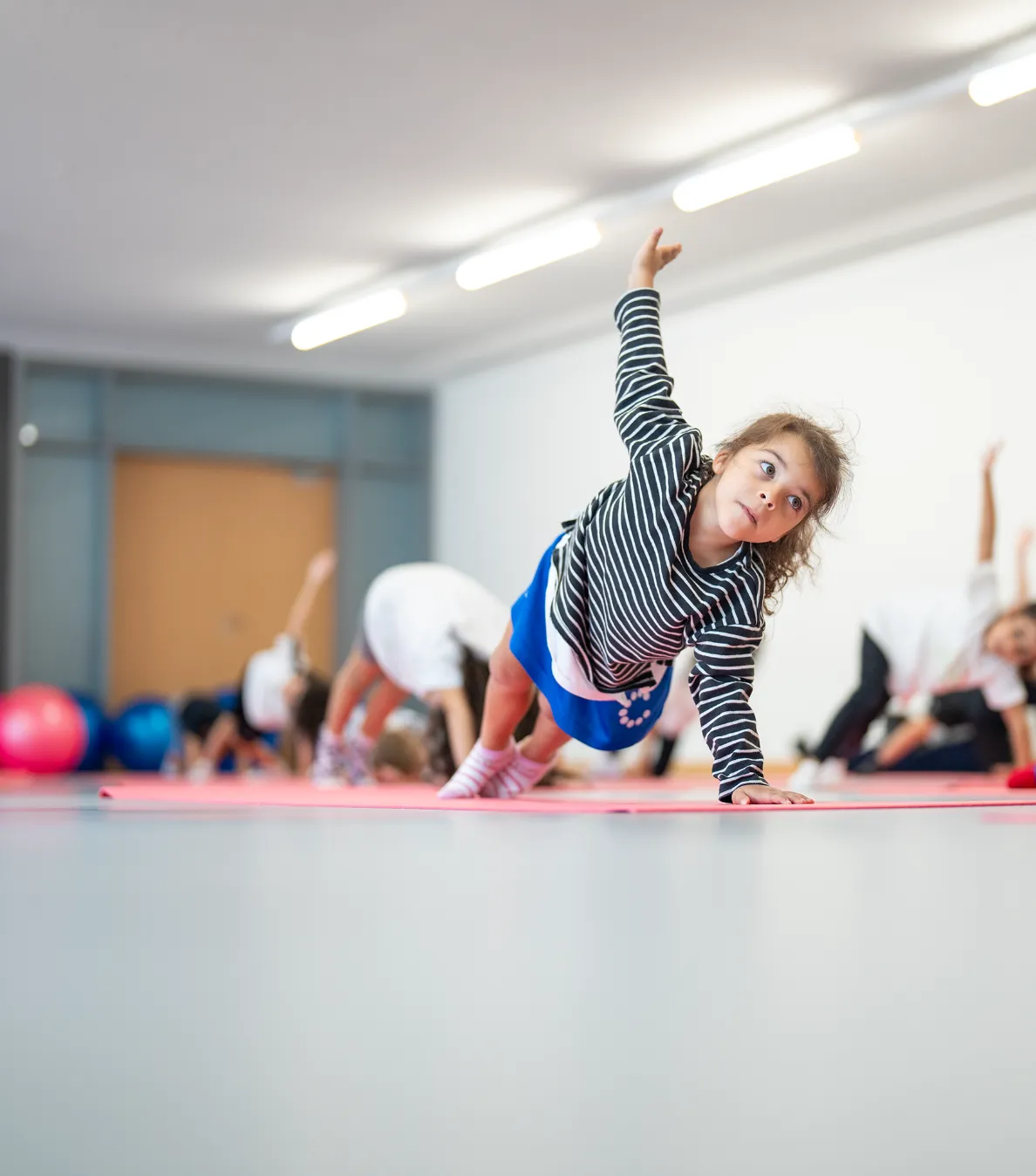
iv) Physical Esteem: Building balance, strength, and motor skills through active play.
These experiences help children become self-assured, joyful learners who see endless possibilities in the world.
Learning in Action: What Outdoor Play Looks Like at Citizens Nursery
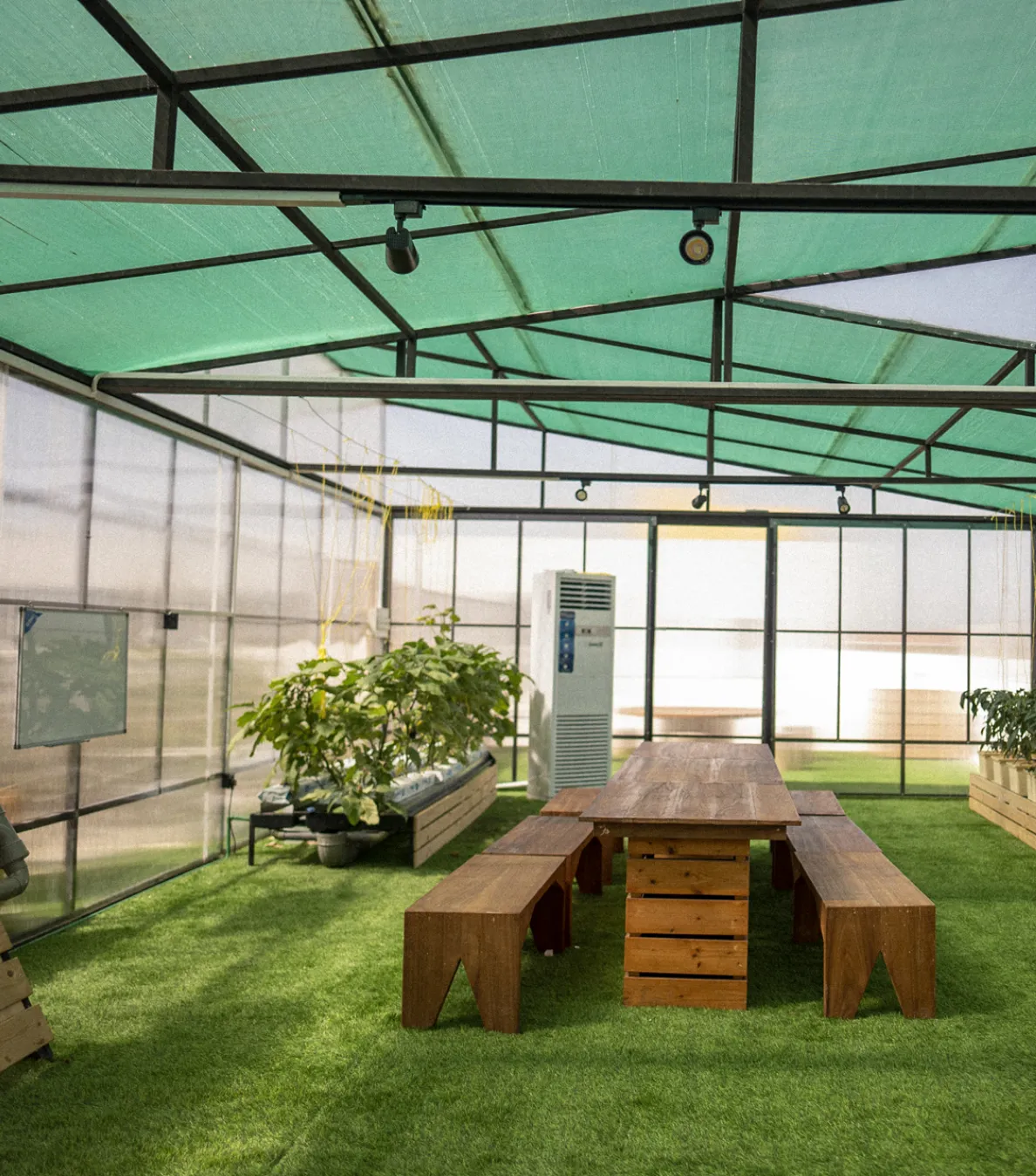
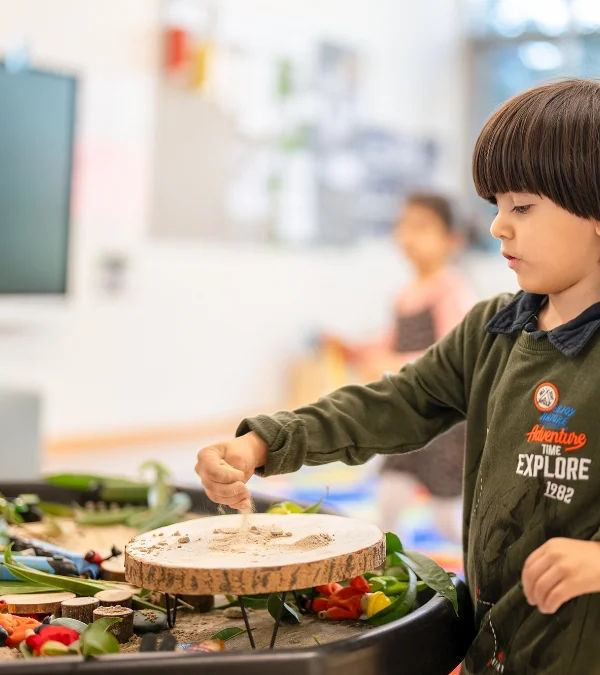
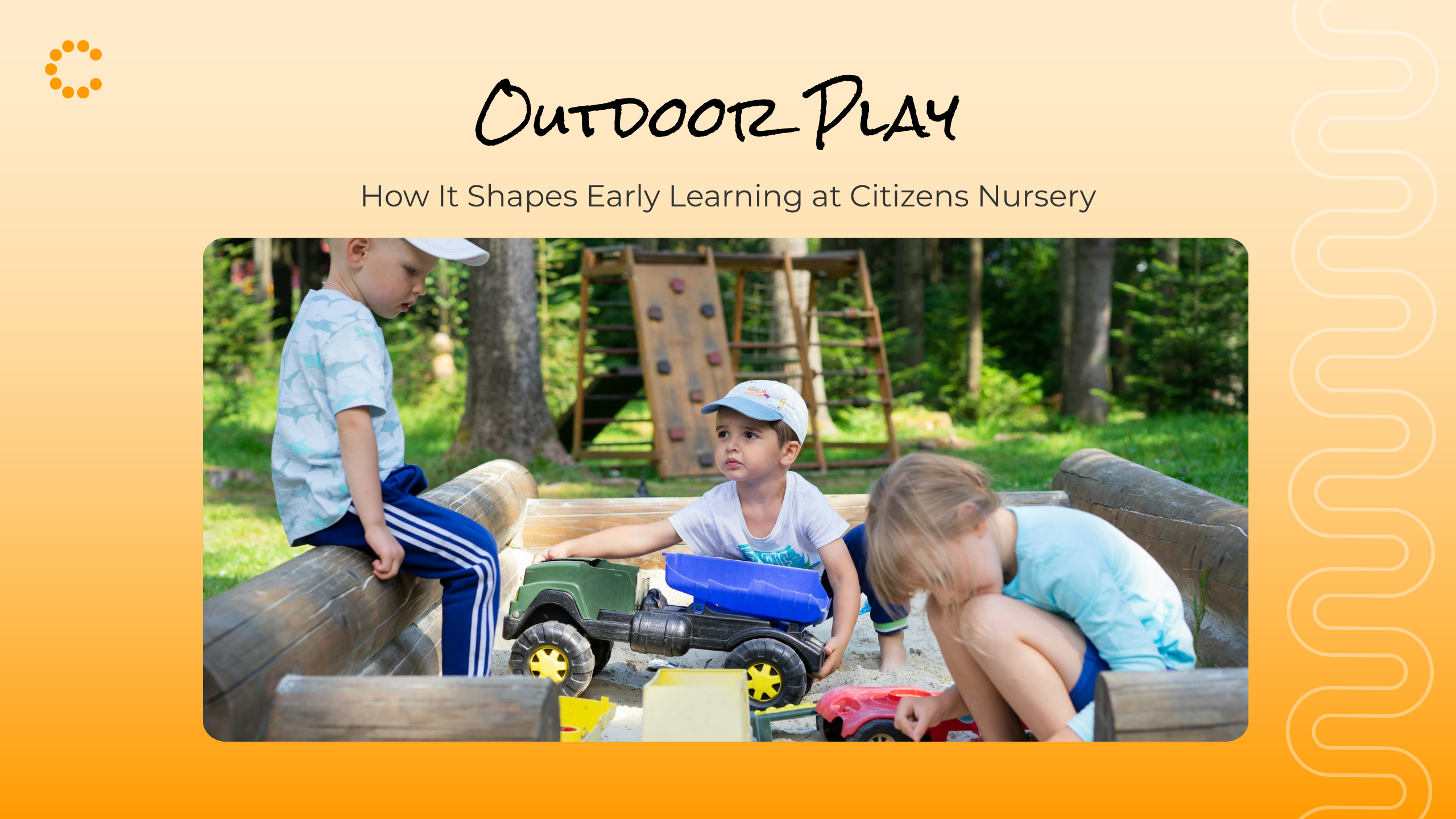
Our outdoor environment extends the classroom into an imaginative, discovery-rich area with sensory gardens, sand and water play zones, creative construction corners, and nature trails, , reflecting the philosophy behind a nursery’s exploratory learning environment.
i) Children might begin their morning with nature walks or nature hunts. This could involve spotting a particular colour, identifying animals, recognising shapes, or simply listening to the sounds around them.
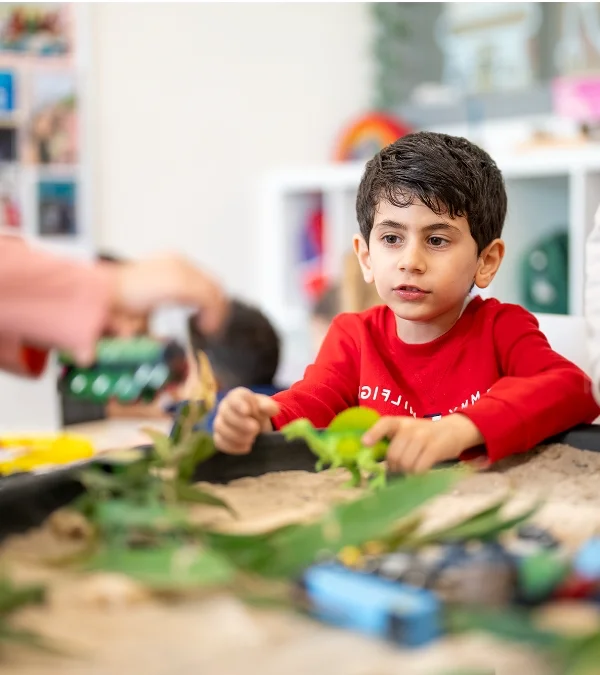
ii) In the sand and water zones, they measure, pour, and compare, unknowingly developing early maths and science skills.
iii) During nature walks, learners observe patterns, count petals, or describe colours and sounds, building vocabulary and competence in expression.
Each experience is thoughtfully linked to EYFS (Early Years Foundation Stage) learning goals:
i) Language Development: Storytelling circles under the sky encourage children to describe what they see and feel, strengthening communication skills.
ii) Math & Science Exploration: Sorting pebbles, observing shadows, or experimenting with water flow introduces real-world problem-solving.
iii) Collaboration & Social Learning: Group games and shared outdoor projects teach teamwork, turn-taking, and respect for others’ ideas.
Outdoor time naturally connects to classroom learning as mentors guide children’s play, helping them make sense of what they find and linking it back to what they’re learning. The result is a vibrant, hands-on learning environment where exploration leads and joy follows.
The Citizens Difference: Purposeful Play in a Safe, Stimulating Environment
What sets Citizens Nursery apart is its purposeful integration of play, safety, and discovery. Every outdoor zone is thoughtfully designed to support exploration while maintaining the highest safety standards, encouraging children to feel confident, curious and happy as they learn.
Educators act as facilitators , and the expertise of qualified level mentors helps guide children to make connections between play and real-world understanding. They observe children’s interests, extend conversations, and introduce new challenges that spark critical thinking, creativity and a love of learning.
As one of the nursery’s mentors notes, “When children play outdoors, they’re not just having fun, they’re developing interest, self-reliance, and the ability to make sense of the world around them.”
This philosophy ensures that play remains joyful yet meaningful, structured yet spontaneous, fostering not only growth and learning but also a genuine sense of wonder and belonging.
Partnering with Parents: Extending Play Beyond School
Learning flourishes when home and school work together. Parents are encouraged to extend outdoor learning with simple, enjoyable activities such as:
i) Family nature walks where children can collect leaves or stones and discuss their shapes or colours.
ii) Gardening together to teach patience and responsibility.
iii) Outdoor storytelling to build imagination and vocabulary.
Additionally, balancing screen time with outdoor play is essential. The World Health Organisation (WHO, 2024) recommends at least three hours of active play daily for preschool-aged children, underscoring the importance of movement and sensory engagement for healthy development.
Together, Citizens Nursery and parents build a foundation for curiosity, well-being, and lifelong learning.
Conclusion: Learning That Grows Beyond the Classroom
At Citizens Nursery, outdoor play forms a core part of the curriculum. Exploring nature, building with peers, and testing new ideas contribute to a child’s growth in confidence, creativity, and curiosity.
With thoughtfully designed outdoor spaces, with caring and responsive educators, and family partnerships, children are encouraged to discover, wonder, and flourish. At Citizens Nursery, every day is an opportunity for little learners to grow, explore, and feel proud of their achievements – to be inspired, empowered, and thrive.
Footer

From Nursery to Year 10
Admissions
Open Now
Fill out the form below to find out more for the 2025-26 academic year.