A more relevant
Curriculum delivery
The academic core at Citizens is the British National Curriculum, a rigorous framework recognised by universities and employers worldwide. Learners are prepared for IGCSEs, A Levels, and beyond.
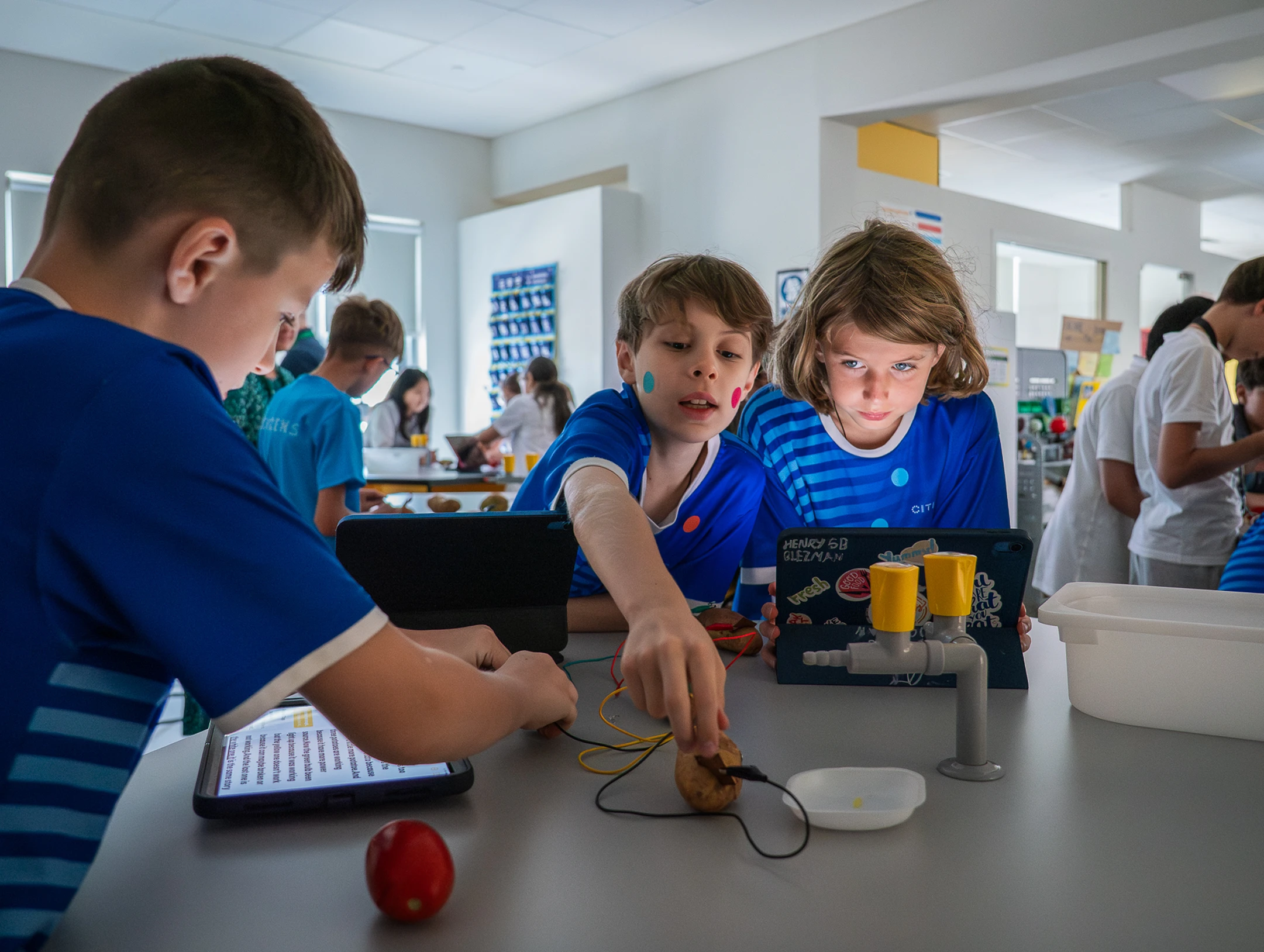
What makes Citizens different is how we deliver the curriculum. More specifically, the curriculum is delivered through enquiry, through projects, through collaboration, and through application to real situations learners will actually encounter.





Quick Facts
- Programmes are stage-appropriate
learners are supported where they are. - Arabic is introduced from FS
alongside a strong focus on local citizenship and global awareness. - Homework is intentional
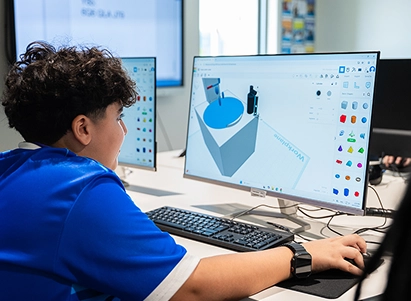
less rote, more retrieval and project-based work. - Technology is introduced from Year 1
as a tool for creation, not consumption.
Introducing citizens
future Framework
The five pillars of the Citizens Future Framework bring the curriculum to life, shaping every lesson.
While many schools add skills as an extra layer, at Citizens the framework runs through every classroom, every subject, every day.
There’s no separate “skills lesson.” Critical thinking happens in English. Empathy happens in Maths. Entrepreneurship happens when we learn something new.
Learning Outcomes year by year
Most curriculum overviews tell you what your child will cover. We’d rather show you who they’re becoming.
Below is Citizens’ proprietary year-by-year view of what real progress looks like. From the moments you notice at home, the habits mentors see in class, to the small shifts that show a learner is thriving.
FS1


FS2
Year 1
Year 2
Year 3
Year 4
Year 5
Year 6
Year 7
Year 8
Year 9
Year 10
FS1 is where curiosity begins.
Starting to try
Tries when something is hard, with a mentor close by, instead of giving up at the first stumble.
Making it their own
Combines materials and ideas in their own way. A block tower becomes a rocket. A scribble becomes a story.
Noticing feelings
Begins to name their feelings and recognise them in others. Sees when a friend is upset and offers a small gesture of care.
FS2 is where independence takes shape.
Creating with purpose
Pulls together materials, words, and experiences into something their own — moving from play to intentional making.
Sticking with tricky things
Stays with a task without needing a mentor to step in. This is the start of independence parents hope to see before Year 1.
Reading the room
Understands that their actions affect other children, and starts adjusting how they behave in group play.
Year 1 is where the foundations get built.
Shaping ideas
Creates something original and keeps adapting it as new ideas come, rather than rushing to finish.
Backing up their thinking
Begins to back up what they say with what they’ve actually observed. This is the start of evidence-based reasoning.
Offering help without being asked
Notices when a classmate needs help and offers it on their own. Early evidence they’re being seen, and learning to see others.
Year 2 is where reasoning takes root.
Solving on their own
Tackles age-appropriate problems independently and walks a mentor through their thinking, rather than waiting to be told.
Choosing with intent
Makes creative choices and can explain why, showing the reasoning behind the work.
Seeing it differently
Recognises that others may feel differently and adjusts how they respond, even with classmates they don’t know well.
Year 3 is where perspective is developed.
Holding other views
Consider different perspectives in conversations and group work, even when there is disagreement.
Justifying with evidence
Uses evidence from texts and tasks to justify conclusions, instead of repeating what others say.
Pushing through
Perseveres through challenges on their own and reflects on what mistakes taught them and how to adapt.
Year 4 is where thinking sharpens.
Building with others
Builds on classmates’ ideas and adds their own depth — neither dominating nor disappearing in group work.
Weighing options
Compares ideas or solutions and explains which is stronger and why, rather than picking the first answer that comes to mind.
Working with feedback
Sustains effort across longer tasks and treats feedback as a tool for getting better, not as criticism.
Year 5 is where learners take ownership.
Adapting when stuck
Adjusts strategies independently when something isn’t working, instead of repeating what failed or waiting to be rescued.
Refining over time
Develops creative work across multiple sessions, and shows true ownership of a project.
Reading evidence carefully
Uses evidence to support conclusions and explains reasoning clearly, including when evaluating online content and AI output.
Year 6 is where character is tested.
Holding steady under pressure
Reflects on mistakes, adjusts strategy, and keeps going under real pressure. This is the resilience they need before secondary.
Owning the quality
Plans, develops, and improves work with high independence, taking real ownership of quality rather than waiting for instruction.
Weighing sources
Compares sources and viewpoints and evaluates how reliable each one is — preparing them for the thinking secondary demands.
Year 7 is where the stakes get real.
Generating better solutions
Generates multiple solutions, evaluates each, and chooses the most effective instead of defaulting to the first idea.
Acting responsibly
Anticipates how their actions affect others and acts responsibly, even when no one is watching.
Building an argument
Makes claims and supports them with relevant, specific evidence rather than opinion alone.
Year 8 is where original thought takes a leap.
Work with their voice
Demonstrates their own mind and voice. Produces creative work with originality, depth, and sustained development.
Changing their mind well
Revises their thinking when new evidence challenges it, and can explain what changed and why.
Engaging ethically
Demonstrates empathy beyond their immediate friendships and engages with ethical questions thoughtfully, rather than following the loudest voice.
Year 9 is where they come into their own.
Leading by example
Mentors peers through sustained academic and personal challenge, learning by doing and leading by example.
Driving the work
Leads creative initiatives and brings vision to group projects, taking ownership of outcomes rather than waiting for direction.
Synthesising the picture
Synthesises evidence from multiple sources and evaluates arguments for reliability and bias, which is academically essential.
Year 10 is where learners begin shaping the future they want to create.
Leading their own journey
Takes increasing responsibility for their learning, demonstrating resilience, organisation, and ambition as academic expectations grow.
Building knowledge that matters
Applies classroom learning to real-world contexts, using evidence and inquiry to solve problems and communicate with clarity.
Acting with empathy and purpose
Demonstrates integrity, collaboration, and social awareness, understanding that meaningful success means creating positive impact for others.
For Curious Parents
Read the outcomes above. Then come and see how we get there for yourself.
How a Lesson Actually works
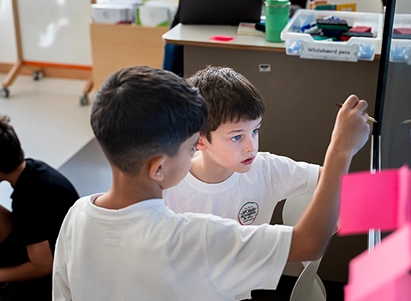
Every lesson at Citizens follows the same deliberate rhythm Inspire, Empower, Thrive. It changes how learning unfolds.
Inspire
Lessons begin with a question, a problem, a real-world hook.
Mentors don’t model the answer first. The point is genuine curiosity before any content lands.
Empower
Learners work together, teach each other, even teach the mentor.
Empowering is the learners taking ownership of their own thinking and supporting their peers.
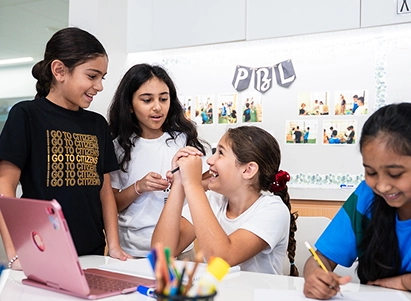
Thrive
By the end, learners apply what they’ve built independently.
Mentors check in throughout and adjust groupings, pace and stretch in real time across subjects and projects.
A Citizens progress report answers these questions, and shows parents the whole child. Academic assessment at Citizens meets and exceeds British Curriculum standards. Learners are benchmarked against UK national expectations through internal and external assessments (GL, NGRT, CAT4) so progress is visible, year on year.
Alongside academic attainment, mentors track six essential skills from the Citizens Future Framework.
How is your child doing in Maths?
How do they handle setbacks?
6 Essential skills
Each skill is tracked on a research-backed 1-to-9 scale. 4–5 means on track for age, 8-9 means exceeding, and lower scores trigger targeted support.
inclusion Pathways
Citizens is a fully inclusive school, rated Good for inclusion of students of determination by KHDA in our first rating.
Every learner, whether they need additional support, are gifted and talented, or are learning English as an additional language, has a pathway designed around them, with the Inclusion Team coordinating closely with mentors and parents.
Three differentiated learning pathways ensure every learner accesses what’s right for them. From full mainstream curriculum with targeted support, through to a specialised pathway focused on functional academics and life-readiness. Support isn’t separate from learning. It’s designed into how learning happens.