Category: Blog

  • A Parent’s Guide to School Admission in Dubai

    A Parent’s Guide to School Admission in Dubai

    Choosing a school in Dubai isn’t just an academic decision; it’s a deeply personal one. For many families, it’s a journey filled with hope, questions, and aspirations for their child’s future. With over 200 private schools and 17+ curricula to choose from, the Dubai school admission process can feel a little overwhelming, which is why many parents explore resources like the Top 10 Best Schools in Dubai for 2025 to simplify their search. But know this: you’re not alone.

    This guide is here to walk beside you, step by step, helping you make a decision rooted in what truly matters to your family.

    Understanding the Dubai School Landscape

    Dubai offers a diverse education ecosystem, each school telling its own story, each curriculum supporting a different path. Public schools are primarily designed for UAE nationals, while expat families often choose from a variety of private schools that align with international standards.

    You’ll find options like:

    • British Curriculum (UK National Curriculum)
    • Indian Curriculum (CBSE, ICSE)
    • American and IB Curricula
    • French, German, and other European boards

    Choosing a curriculum often depends on where your family is from, how your child learns best, and future educational goals. But beyond the academics, what truly makes a school right is whether your child feels known, encouraged, and inspired to grow.

    KHDA-Regulated Schools: What Parents Need to Know

    Every private school in Dubai is licensed and monitored by the Knowledge and Human Development Authority (KHDA). This ensures a consistent level of quality and safety for all learners, no matter where they come from or what curriculum they choose.

    KHDA ratings help you compare schools based on transparent criteria: teaching quality, learners’s outcomes, well-being, and leadership. Reports are published publicly, so you can feel confident and informed. Schools rated ‘Good’ or higher usually have strong support systems and a focus on holistic development and not just academics.

    Citizens School is one such KHDA-compliant institution that not only meets these standards but also expands the vision of what schooling can be. Through its five core pillars- entrepreneurship, transdisciplinary project-based learning, everyone known & known well, inquiry-based learning, and digital literacy, Citizens nurtures children to grow with empathy, curiosity, and resilience.

    Age Criteria for Admission in Citizens School

    To ensure developmental readiness, the Citizens sets strict guidelines for the Dubai school admission process in the 2024–25 academic year:

    • Age Requirements
      Citizens School accepts learners based on age-appropriate year levels as determined by the Dubai Ministry of Education guidelines.
    • Parent/Guardian Commitment
      The commitment of parents or guardians to support their child’s education and collaborate with the school is an important element to ensure every learner thrives.
    • Potty Training Policy for FS Classes
      Mandatory Potty Training – Parents and guardians are expected to have their children fully potty trained before the commencement of FS classes.

    Admissions Procedure

    • Application Submission
      Parents or guardians are required to complete and submit the official application form along with all necessary documents, including previous academic records, a copy of the child’s passport and residence visa, a recent passport-sized photograph, and any relevant medical information.
    • Entrance Observations
      Depending on the year level, applicants are required to participate in an entrance observation with the Citizens academic team. This process allows us to assess each child’s baseline skills and development, enabling us to identify the appropriate support they may need upon joining the school.

    Priority Considerations

    • Siblings
      Priority is given to siblings of our current learners and to ensure they have the right criteria to be supported during their admissions process.
    • Diversity and Inclusivity
      Citizens School values diversity, and we accept everyone from all nationalities, backgrounds and abilities to promote a fully inclusive learning environment.

    Notification and Acceptance

    • Notification
      Once the application process is complete, the school will notify parents or guardians of the admission decision via email or official correspondence.
    • Acceptance and Enrolment
      Parents or guardians of accepted learners must confirm acceptance within the specified period and complete the enrolment process, including payment of applicable fees, submission of required documents, and signing of the enrolment agreement.
    • Uniform Policy
      At Citizens, our uniform policy balances individuality with a sense of community. All learners are required to wear items from our Citizens clothing line, which can be purchased online.

    Citizens School is committed to providing a high-quality educational experience to its learners

    KHDA Registration and Final Confirmation

    Once accepted, the school submits the learner’s data to KHDA. Parents must then verify details via the KHDA Parent Portal, and they are required to sign the KHDA parent contract. Final admission is confirmed only after this step.

    Fees, Scholarships, and Financial Considerations

    Education is an investment, and one that parents rightly consider carefully. Tuition varies across schools and curricula, but other costs may include:

    • Transportation fees (ranging between AED 8,000 and 12,000/year)
    • Uniforms (ranging between AED 300 to 800/year)
    • Meals (ranging between AED 200 to 500/month)
    • Learning materials and technology fees (ranging between AED 200 to 500/year)
    • Optional extracurriculars (ranging between AED 80 to 200/per class)
    • iPad (if the parent paid)

    Given that Education is an investment, many schools offer installment plans and discount options, such as the following:

    • Term-wise or monthly payment plans
    • Early-bird, bank discount or sibling discounts (5–15%)
    • Corporate tie-ups offering fee subsidies

    If parents are worried about yearly incremental increases in the fee, you can relax. The increasing fees are tightly regulated based on the Education Cost Index (ECI) and school rating. For 2025–26, only schools rated ‘Good’ and above may apply for incremental hikes.

    Settling In: Supporting Your Child’s First Weeks at School

    Transitions take time. Whether it’s a new classroom, a new mentor, or a new group of friends, your child may feel a little unsure in the beginning, and that’s completely normal. Schools across Dubai create welcoming spaces through:

    • Orientation sessions
    • Classroom walkthroughs
    • ‘Meet the Mentor’ days
    • Buddy systems and parental support groups

    At Citizens, every child is truly known and known well. This philosophy ensures learners feel seen, heard, and valued from day one.

    1. Building Parent-School Partnerships

    Strong collaboration between schools and families benefits everyone. KHDA encourages schools to maintain open, ongoing communication. You’ll often find:

    1. Parent portals and apps
    2. Weekly updates
    3. Workshops and feedback channels

    Citizens takes it a step further, such as engaging parents in curriculum conversations, community projects, and school-wide decision-making.

    2. Retention and Progression in KHDA-Licensed Schools

    KHDA requires schools to track academic and emotional progress. Promotion to the next grade not only includes marks, it includes overall growth. If your family relocates to another emirate or abroad, most Dubai schools issue globally accepted transcripts and learning assessments, making transitions smoother.

    3. Transferring to Other Emirates or Countries

    Most schools provide globally recognised transcripts and standardized assessments, easing future relocations. It’s important to ensure curriculum continuity if a transfer is anticipated.

    We, at Citizens School, foster critical thinking, resilience, and real-world competencies. Its curriculum blends academics with future-ready skills, an essential edge in today’s dynamic world.

    Final Thoughts

    School admissions in Dubai are more than just a formality; they’re a pathway to your child’s academic and personal growth. Parents can make well-informed decisions with the right research, an understanding of school registration requirements in the UAE, clarity on how to apply for schools in Dubai, and engagement with the school community. Institutions like Citizens School exemplify how modern education in Dubai is evolving, not just complying with regulations but redefining them to meet the needs of tomorrow’s learners.

  • Understanding KHDA Ratings: How Citizens Builds on the Framework for a Deeper Educational Impact

    Understanding KHDA Ratings: How Citizens Builds on the Framework for a Deeper Educational Impact

    In Dubai, where educational standards are rigorously upheld, the Knowledge and Human Development Authority (KHDA) plays a pivotal role in maintaining transparency and consistency. The KHDA inspection process provides a structured approach to evaluating private schools, helping parents make informed decisions. However, as the world of education evolves, it’s essential to look beyond conventional metrics.

    Citizens School recognises the value in what KHDA brings, but it also believes that children are more than data points. At Citizens, the focus is not only on what children know, but also on how that knowledge is utliized, while pursuing their passion. Citizens’ school is built to place the learner at the centre.

    What is the KHDA Framework?

    KHDA governs and evaluates over 200 private schools in Dubai, affecting more than 300,000 learners. How KHDA rates schools in Dubai often shapes parental choices and even determines a school’s eligibility to increase fees.

    These ratings also have practical implications. A school’s ability to increase tuition, for example, often hinges on its KHDA rating. In this way, the KHDA helps maintain quality and fairness across a diverse educational landscape with its inspections. The KHDA school evaluation criteria focus on the following seven questions:

    1. How good is the students’ progress?
    2. How good is the students’ personal and social development?
    3. How good are the teaching and learning?
    4. How well does the curriculum meet the educational needs of all students?
    5. How well does the school protect and support students?
    6. How good are the leadership and management of the school?
    7. How well does the school perform overall?

    Schools are then ranked as KHDA outstanding quality, good quality, acceptable, and unsatisfactory. These categories provide a standardised view of school performance, offering a familiar comparison tool for families. Yet, while the KHDA inspection process is data-rich, it may not fully capture a child’s creativity, well-being, or emotional growth.

    Citizens School Philosophy: Going Beyond Compliance

    At Citizens School, our belief is simple: education should fit the child, not the other way around.

    The Citizens Future Framework is built around five core pillars – Entrepreneurship, Transdisciplinary Project-Based Learning, Everyone Known and Known Well, Inquiry-Based Learning, and Digital Literacy.

    These aren’t just buzzwords to gain your attention; they represent a deep commitment to helping children become thoughtful, creative, and confident individuals.

    These pillars are supported by core values such as empathy, curiosity, resilience, inclusivity, well-being, and a growth mindset. All these qualities are essential for thriving in a complex, rapidly changing world.

    Our Motto: From Grades to Growth

    Success at Citizens isn’t only measured by test scores or rankings. Instead, learners are encouraged to discover who they are, explore what excites them, and grow into capable, caring individuals. This approach respects each child’s pace and passions while still fostering excellence through meaningful challenges.

    Education at Citizens is not about filling in the right answers; it’s about asking the right questions. Learners are mentored, not managed. Collaboration, emotional literacy, and real-world application are embedded into everyday learning, creating an environment where children feel seen, safe, and supported to challenge and progress into the unknown.

    How Citizens Complements the KHDA Framework

    While the KHDA provides a strong regulatory foundation for ensuring academic standards and operational governance across Dubai schools, Citizens School builds on this foundation with a learner-centric philosophy that champions individuality, wellbeing, and future readiness. The goal is not just to meet expectations but to empower children to thrive in a rapidly changing world.

    Curriculum Design and Implementation

    At Citizens, the curriculum is not a fixed route; it’s a flexible journey shaped by each learner’s passions and questions. If a learner expresses interest in environmental issues, this could spark an interdisciplinary project that spans science, technology, visual arts, and civic engagement.

    The curriculum is built to be purposeful and personal, drawing on international frameworks while ensuring relevance to the learner’s world. Learning outcomes are mapped thoughtfully, but the route to achieving them is co-designed with learners. This allows education to move from being merely informative to truly transformative.

    Assessment Practices

    Assessment at Citizens goes beyond traditional testing. It is grounded in portfolios of work, continuous formative assessments, and meaningful projects that reflect real-world understanding. Learners showcase their growth through exhibitions and student-led conferences, demonstrating not only what they know but how they apply that knowledge.

    Summative assessments, both internal and external, are used strategically to support academic rigour. However, the emphasis remains on reflective, authentic evaluation that nurtures learner confidence, resilience, and self-direction.

    Teacher Role and Professional Development

    Educators at Citizens are seen not just as instructors but as co-designers of the learning experience. They work alongside students to create modules that spark curiosity, build critical thinking, and encourage creative exploration.

    Professional development is ongoing and embedded into the school culture, with mentors (teachers) encouraged to experiment with pedagogy, adopt new technologies, and reflect regularly on their practice. This creates a dynamic environment where our mentors grow alongside their learners while constantly evolving to meet the needs of the future.

    Leadership and School Governance

    Leadership at Citizens is deeply collaborative. Rather than top-down decision-making, the school embraces dialogue with learners, parents, and staff, creating an inclusive ecosystem where everyone has a voice.

    Governance is grounded in the school’s values of empathy, ethics, and co-creation. Leaders model adaptability and vision, creating a culture where innovation is encouraged and relationships are prioritised. It’s a model of school leadership that places human connection at the centre of every decision.

    Mentoring and Community Connection

    Every learner at Citizens is supported by a personalised mentoring programme that reflects the school’s foundational pillar: Everyone Known and Known Well. This isn’t just pastoral care, it’s a relationship-driven approach to education where each child is seen, supported, and challenged.

    Mentors guide learners academically, socially, and emotionally, helping them set goals, reflect on progress, and navigate challenges. These mentoring relationships deepen the sense of belonging and ensure that education is rooted in trust, empathy, and purpose.

    The Parent Perspective: What This Means for Your Child

    KHDA’s rating system offers families a trusted, structured way to assess school performance across Dubai. Citizens builds upon this by integrating creativity, emotional growth, and learner-driven experiences, providing a well-rounded complement to established educational standards. At its core, Citizens puts the child first, offering a learning journey that is shaped around the individual rather than the system.

    School Experience and Outcomes for Learners

    Parents often speak of how Citizens changes not just how children learn, but how they see themselves. By honouring each learner’s passions and designing flexible pathways that evolve with their interests, Citizens fosters a sense of ownership and joy in learning. With its focus on digital fluency, entrepreneurial thinking, and inclusive values, the school prepares children to be confident contributors to a future that will demand flexibility and purpose—skills that may not always be visible through inspection outcomes but are essential for lifelong success.

    Future Outlook: A New Standard for Education in Dubai

    Education today must prepare children not just to pass but to persevere. Citizens embrace that responsibility. It builds a learning experience grounded in compassion, innovation, and relevance, where every child is valued for who they are becoming and supported to grow through real-world, purpose-driven learning.

    Citizens is not just another school; it’s part of a movement. A movement shaped by the Citizens Future Framework—rooted in five powerful pillars: learner agency, inquiry-based core curriculum, transdisciplinary project-based learning, digital literacy, and a deep sense of being known and known well. These are lived every day through values of curiosity, resilience, empathy, well-being, inclusivity, and a growth mindset.

    In doing so, Citizens is helping shift the conversation from compliance to transformation. In the end, every parent wants the same thing: a school where their child will thrive. Citizens offers a place where learners are prepared not just for the next exam but for the world that awaits them, with all its beauty, complexity, and opportunity, grounded in the values and skills that truly matter.

    Want to know more? Contact us today.

  • British vs IB Curriculum – and How Both Compare to the Citizens Future Framework

    British vs IB Curriculum – and How Both Compare to the Citizens Future Framework

    Choosing the best curriculum for expats in Dubai, for your child isn’t just about academics; it’s about shaping the way they think, grow, and engage with the world. In Dubai, two of the most popular options are the British Curriculum and the International Baccalaureate (IB). Each has its strengths, focus areas, and philosophies. However, as education evolves to meet the demands of a fast-changing world , the importance of a future-ready curriculum becomes increasingly clear. Citizens School introduces a future-focused alternative, the Citizens Future Framework.

    This article compares the British school curriculum vs international curriculum to help parents make a decision that aligns with their child’s strengths, values, and aspirations.

    Understanding the Basics: British Curriculum, IB Curriculum, and the Citizens Offering

    It is important for parents to understand what different curricula offer for their child and the benefits of each.

    What is the British Curriculum?

    The British Curriculum, also known as the UK National Curriculum, is built around clearly defined learning outcomes at every stage.

    • Structure: Divided into Key Stages (KS1 to KS5), it provides a structured and sequential academic journey.
    • Assessment Style: Emphasises high-stakes, standardised testing, including GCSEs and A-Levels.
    • Focus: Academic rigour, subject mastery, and cumulative knowledge. Students are assessed based on predefined objectives.

    This model is ideal for learners who thrive in structured environments and plan to pursue higher education in the UK or Commonwealth countries.

    What is the IB Curriculum?

    The International Baccalaureate is globally recognized for its emphasis on conceptual learning and global engagement.

    • Programme Breakdown:

      • Primary Years Programme (PYP): Designed for learners aged 3 to 12, the PYP nurtures curiosity and builds foundational skills through inquiry-based learning. It integrates subject areas into thematic units, encouraging students to explore ideas from multiple perspectives.

      • Middle Years Programme (MYP): Aimed at learners aged 11 to 16, the MYP deepens academic engagement while promoting interdisciplinary thinking. It emphasizes intellectual challenge, service as action, and skills development that spans across traditional subjects.

      • Diploma Programme (DP): For students aged 16 to 19, the DP is academically rigorous and internationally recognized for university admissions. It combines in-depth subject study with core components like the Theory of Knowledge (TOK), the Extended Essay (EE), and Creativity, Activity, Service (CAS), fostering independent research, critical reflection, and social responsibility.

    • Learning Approach: The transdisciplinary nature of IB encourages students to make connections across subjects. This model cultivates learners who are not only knowledgeable but also capable of seeing the bigger picture and applying what they learn to the world around them.
    • Assessment Philosophy: The IB replaces one-size-fits-all testing with a balanced approach to assessment. Continuous assessments, extended essays, and personal projects replace rote memorisation with inquiry and analysis. The focus is on deep comprehension and meaningful learning rather than rote memorisation.

    What is the Citizens Offering?

    Citizens School offers a distinctive blend of the British Curriculum’s academic structure with the inquiry-driven approach of the IB, creating a balanced, dynamic framework tailored to today’s learners.

    • Framework Pillars: Built on the core pillars of agency, innovation, ethics, and global citizenship, the Citizens Future Framework fosters both personal and academic growth.
    • Approach: Learning is interdisciplinary, personalised, and purpose-driven, allowing children to explore their interests while connecting knowledge across subjects in meaningful ways.
    • Outcomes: The focus is on equipping learners with future-ready competencies, critical thinking, collaboration, ethical decision-making, and real-world problem-solving.

    At Citizens, education goes beyond textbooks and tests. It’s about nurturing confident individuals, lifelong learners, and responsible leaders prepared to shape a changing world.

    Teaching and Learning Approaches: Traditional vs Future-Oriented

    The way students interact with learning in the classroom has a profound impact on their ability to understand, retain, and apply knowledge meaningfully.

    Traditional education systems often follow a structured, syllabus-oriented model where teachers guide instruction through textbooks and predetermined objectives , a contrast that becomes clearer when looking at traditional vs inquiry-based learning approaches. This offers consistency and depth in core subjects but can limit opportunities for interdisciplinary exploration or creative application.

    Other modern frameworks focus more on inquiry and thematic exploration. Learners are encouraged to ask questions, investigate, and make connections across different domains. This fosters engagement and ownership, shifting the learning experience from passive reception to active construction of knowledge.

    Citizens School builds on this shift by embedding purpose into every aspect of learning. Education becomes a platform for impact, where learners explore challenges like food security by integrating science, digital technology, ethics, and social studies into one cohesive project. Students don’t just acquire knowledge; they use it to design change.

    Assessment Process in Different Curricula

    Assessment practices also reflect evolving understandings of student growth. In many systems, standardised exams serve as the primary measure of achievement. Others combine internal assessments, reflection, and final evaluations to capture a broader picture of progress.

    At Citizens, assessment is integrated throughout the learning journey. Students develop portfolios, build prototypes, and present their work publicly, making learning visible, personal, and purposeful. Continuous formative feedback supports this process, complemented by structured internal and external evaluations to ensure rigour and transparency.

    The Teacher’s Role in a Changing Learning Landscape

    How educators engage with students shapes the entire learning environment. In more traditional settings, teachers are often content deliverers, focusing on structured instruction. In more progressive environments, educators act as facilitators, guiding students through inquiry and exploration.

    At Citizens, the teacher’s role is redefined as that of a coach and co-designer. Educators collaborate with learners to co-create projects that align with personal interests and real-world contexts. This relationship fosters trust, nurtures curiosity, and promotes long-term motivation, laying the foundation for lifelong learning.

    Skills for the Future in Each Curriculum

    In a world defined by rapid change, education must prepare learners for more than exams. It must equip them with the tools to think critically, adapt quickly, and create confidently.

    Many curricula prioritise foundational knowledge in literacy, numeracy, and core subjects. While essential, these competencies need to be paired with creativity, collaboration, and applied problem-solving. Some frameworks address this through reflective assignments, interdisciplinary projects, and community engagement, aiming to develop the whole child.

    Citizens integrates these principles into every facet of the learning experience. The Citizens Future Framework centres on systems thinking, ethical reasoning, and innovation, while also nurturing entrepreneurial thinking in learners. Students work on real-world challenges through design sprints, simulations, or collaborative explorations that build resilience and creativity. Learners here don’t just study problems; they become solution creators.

    Additionally, technology and leadership are not taught in isolation. Learners develop digital fluency by building apps, designing solutions, or presenting multimedia research. Leadership is embedded in experience, whether through project management, pitching to external stakeholders, or leading initiatives within their community.

    The difference between British and international schools is their focus on authentic application. Learners intern with social enterprises, partner with non-profits, or lead sustainability campaigns. The outcomes are more than academic; they include confidence, agency, and a sense of purpose that extends far beyond the classroom.

    Student Wellbeing, Identity, and Global Citizenship

    Academic success cannot be isolated from emotional well-being and a strong sense of identity. An effective education model must address the intellectual, emotional, and social dimensions of student growth.

    Some school systems such as include pastoral care and reflective practices, but the degree of emphasis on wellbeing can vary. Citizens places wellbeing at the centre of its philosophy. Every learner is supported by a dedicated mentor who guides not only academic progress but also personal growth and emotional resilience. This mentoring framework reflects the school’s foundational pillar, Everyone Known and Known Well, ensuring that every child feels seen, supported, and empowered.

    When it comes to personal identity and belonging, the learning journey at Citizens is built around student voice and self-agency. Learners have the opportunity to shape their pathways, express their values, and engage with content that resonates with their passions. This emphasis on individual purpose cultivates self-awareness and inner confidence.

    At Citizens, global citizenship is embedded in the culture, not just as a concept but as a lived practice. Learners participate in service projects, sustainability efforts, and global collaborations that teach them to act with empathy, integrity, and responsibility. They’re not just prepared to live in a globalised world; they’re prepared to lead in it.

    Conclusion: Best Curriculum for Expats in Dubai.

    For parents making curriculum choices, the question is no longer “Which system gets my child the best grades?” but rather, “Which learning environment prepares them best for the world ahead?” Because the reality is, it’s not about British school curriculum vs international curriculum; it is that the future will belong to those who can adapt, empathise, lead, and innovate, not just memorise.

    The Citizens Future Framework acknowledges this shift. It’s built on the understanding that education must go beyond content mastery and foster curiosity, resilience, and creative problem-solving. It prepares learners not just for university but for life.

    For parents, the decision ultimately comes down to alignment. Does the school reflect your child’s values and aspirations? Does it nurture their strengths while preparing them for the world they’ll inherit?

    The Citizens Future Framework is more than a curriculum; it’s a commitment to personalised growth, purposeful learning, and global readiness. For many families, that may be exactly what education should be.

  • Citizens School is Taking on the 30×30 Dubai Fitness Challenge

    Citizens School is Taking on the 30×30 Dubai Fitness Challenge

    Citizens School is ready to take on the 30×30 Dubai Fitness Challenge (DFC), encouraging the entire Citizens community – from mentors to learners and their families – to make fitness a daily habit.

    Since 2017, the 30×30 DFC has motivated millions of participants to embrace a healthier lifestyle by encouraging them to engage in 30 minutes of exercise for 30 days.

    Citizens School is taking participation to the next level this year, introducing different daily activities across the campus and to do at home to help inspire a fitness-focused mindset in our learners and the community for years to come. Our range of daily activities promise to bring fun and enjoyment to every age group while also promoting teamwork, movement and overall better wellbeing.    

    We’re looking forward to seeing the entire Citizens community come together to make fitness a priority at this year’s 30×30 DFC! Check out our calendar of daily activities, post your activities on Instagram and be sure to tag us @citizensschoolme.

    To download our 30×30 DFC calendar, click here.

  • Reimagining Education: From Students to Learners at Citizens School  

    Reimagining Education: From Students to Learners at Citizens School  

    Hi Everyone ! Welcome to my blog, delving into the future of education and specifically the distinction between students and learners and how at Citizens School Dubai we intentionally do things differently and are at the forefront of this educational revolution. This commitment to Rethinking Education for the Future reflects our shift from traditional, lecture-based models to a learner-centred approach built around adaptability, creativity, and real-world application.

    Let’s start by defining our terms. What is the difference between a student and a learner? 

    A  student is often seen as someone who attends classes, completes assignments, and passes exams. They follow a structured curriculum designed to impart a fixed body of knowledge. 

    A  learner, on the other hand, goes beyond this. A learner is someone who actively engages with the material, seeks out new knowledge, and applies what they have learned in real-world situations. Learners are curious, adaptable, and self-motivated. 

    Learners are motivated by an intrinsic desire to learn, to grow, to discover. Students do what they are told when they are told (mostly!) 

    Learners strive and often have a number of ‘messy’ attempts, failures and hit deadends that cause them to re-evaluate, think critically and problem solve, that then leads them to greater insights. Students on the other hand strive for perfection. 

    Learners chafe at overly restrictive directions. They revel in the fuzzy boundaries and uncharted territory. This spirit of exploration is actively nurtured through Innovation at Citizens School, where creative thinking and structured problem-solving approaches empower learners to transform ideas into meaningful solutions. Students minimize risks by following directions. The clearer the directions, the better. 

    The learner sees mastery as a continual and deepening practice, with mastery an elusive but worthwhile pursuit. The student associate’s mastery with passing the test. 

    The Need for Learners in Today’s World: 

    The world we live in today is characterised by rapid technological advancements and ever-evolving industries. According to studies, the technical knowledge we gain today has an increasingly short half-life. This means that much of what students learn in traditional settings becomes obsolete quickly. 

    In this dynamic environment, it is not enough to simply know; one must learn how to learn, unlearn, and relearn. The world demands quick adaptation and creative problem-solving. Known answers are in short supply, and the ability to think critically and innovate is paramount. This is where Entrepreneurship in Education becomes essential, as it nurtures initiative and confidence to turn ideas into meaningful action.

    At Citizens School , we recognize that each child is unique, with their own strengths, interests, and learning styles. At Citizens School, we recognize that each child is unique, with their own strengths, interests, and learning styles. This personalised approach is supported by Reimagining the Role of Educators, where teachers act as mentors who guide, question, and coach learners to think critically and grow independently. 

    Our curriculum integrates the latest technological tools and innovative teaching methods. This not only keeps our learners up to date with current trends but also prepares them for future technological advancements, including developing entrepreneurship skills such as adaptability, leadership, resilience, and critical thinking.

    We encourage a growth mindset in our learners, fostering resilience and a love for continuous learning. Mistakes are seen as opportunities for growth, and challenges are embraced as part of the learning journey. 

    We are creating a school culture in which being a learner is more valuable than being a student. We engage and facilitate ways for learners to learn anyplace anytime and remove the concept that you only learn in a classroom environment. This broader vision aligns with Holistic Child Development, where intellectual growth is balanced with emotional well-being, physical health, creativity, and social development.

    At Citizens we achieve this by active collaboration and feedback from others, designing learning experiences based on our learner’s passions and interests.  

    So, as we move further into the 21st century, the demand for learners, not just students, is more critical than ever. Citizens School Dubai is not just preparing students for exams; we are cultivating learners who will thrive in an ever-changing world. 

    Thank you for taking the time to read this. 

    By David Lees
    Head of Secondary – Vice Principal

  • Reimagining the Role of Educators: Mentors at Citizens School 

    Reimagining the Role of Educators: Mentors at Citizens School 

    At Citizens School, we are committed to transforming education by redefining the role of teachers as mentors. In a world that is constantly evolving, knowledge is now easily accessible to all, thanks to the internet and digital resources. Therefore, we view teachers not merely as transmitters of knowledge but as dynamic mentors who guide learners to effectively utilise the abundant information. 

    With the rise of AI and the overwhelming amount of information accessible, it is crucial for learners to become critical thinkers. Our mentors help learners develop the ability to question, evaluate, and synthesize information, ensuring they know what to use and what to leave behind. They focus on teaching learners the skills to analyse and interpret data, and to make informed decisions.  

    Our mentors prepare learners to navigate through complexities of the modern world by cultivating these critical thinking skills. They equip learners with the necessary tools to harness the power of knowledge, apply it effectively, and adapt to new challenges. In alignment with our vision and ethos, this approach equips learners to thrive in a rapidly changing environment, ready to contribute thoughtfully and innovatively to their communities and beyond. 

    Mentors at Citizens School play a crucial role in empowering learners to take charge of their educational journey by adopting a coaching approach: they provide guidance, encouragement, and inspiration, to enable learners to set their own educational objectives and navigate their learning paths. This shift reflects the broader transition described in From Students to Learners at Citizens School, where education moves beyond passive instruction and encourages curiosity, independence, and real-world application of knowledge.  

    Mistakes are viewed as valuable learning opportunities, cultivating a growth mindset that emphasises perseverance and continuous improvement. Constructive feedback from mentors creates an inspiring classroom environment where learners feel safe to express their ideas and take risks. This feedback helps learners understand their strengths and areas for improvement, encouraging them to view obstacles as opportunities. By providing specific, actionable advice, mentors guide learners in developing their skills and confidence, creating a culture of continuous learning and self-improvement. This supportive atmosphere enhances academic performance whilst building resilience and a powerful sense of self-efficacy. 

    In our coaching-oriented educational paradigm, powerful questioning and active listening are essential skills mentors’ possess. Mentors use thought-provoking questions to ignite curiosity, encouraging learners to think critically and explore ideas independently,an approach closely aligned with Entrepreneurship in Education, where initiative, creativity, and problem-solving help learners turn ideas into meaningful action. Active listening, involves understanding emotions, identifying unspoken thoughts, and validating learner experiences. By practicing active listening, mentors understand learner’s unique perspectives, promoting a sense of validation and support. This transforms the classroom into a vibrant hub of exploration and discovery. 

    Empathy is another cornerstone of our mentoring approach. Empathetic questions address student concerns and goals, building trust, encouraging open dialogue and personal growth. This empathetic connection helps learners navigate their educational journey with confidence. 

    Our mentoring approach extends beyond the classroom, instilling a lifelong passion for learning. By embracing their roles as teachers and coaches, mentors at Citizens School inspire the thinkers and dreamers of tomorrow, shaping a bright and promising future in education. 

    By Nagham Naamani
    Vice Principal

  • A Paradigm Shift in Education

    A Paradigm Shift in Education

    Traditional methods of learning – textbooks, exams and lectures have long been the standard approach to education. In today’s rapidly changing world, the need for a more adaptable educational model has become evident.

    Citizens School represents a breath of fresh air for those seeking a dynamic, learner focused and experiential way of learning. Founded with a vision to offer students (learners) a transformative educational journey, we stand as a catalyst for change in UAE’s educational landscape.

    While traditional schooling has its merits, we believe in a more innovative approach that builds on the existing educational practises. Citizens School cultivates a flexible and adaptable learning environment that empowers learners to deepen their academic understanding and develop essential life skills while creating a lifelong passion for learning. Our curriculum promotes inclusive and engaging project-based learning that supports intellectual, social, and emotional development, preparing learners to thrive in the 21st century workforce.

    ‘One-size-fits-all’ has been the hallmark of traditional schooling, where teacher led instruction and passive student roles dominate the classroom. Heavy reliance on tests and exams as a measure of success has reinforced a culture of memorisation over critical thinking and problem-solving skills.

    In contrast, Citizens offers personalised learning pathways tailored to the unique needs, interests, and learning styles of each learner. By bridging classroom teaching with real world applications, our model encourages active engagement, practical knowledge application, and the development of critical thinking & problem-solving skills. At the heart of our curriculum lies a strong emphasis on Entrepreneurship. Through projects, experiments, hands on learning, we encourage learners to think critically, take calculated risks and develop a growth mindset. These essential skills help shape the innovators of tomorrow, ready to tackle challenges and embrace opportunities of the future.

    At Citizens we also recognise the invaluable role of Mentors, as architects of a holistic educational experience that goes beyond textbooks and academic success. They guide the overall development of our learners and create a learning environment that nurtures talent and moulds children with an adaptable, future-ready skills and mindset.

    Representing a fundamental shift in the approach to education, we offer a compelling alternative to the traditional learning model, one that could revolutionise the way we perceive education in the years to come. At Citizens, we take pride in reimagining education and empowering our learners to become responsible global citizens, adept problem solvers and innovative thinkers.

    By Nagham Naamani
    Vice Principal

  • Innovation at Citizens School

    Innovation at Citizens School

    The ability to innovate is not just an advantage; it is a necessity. At Citizens School, we  meet this challenge head-on by integrating innovation skills into our curriculum, fostering creativity and adaptability in our learners. By thinking laterally and exploring new ideas, we aim to create a culture where creative thinking thrives. This process begins with equipping our mentors with the tools they need to allow children the freedom to experiment and take risks.

    Providing opportunities for creativity leads to ideas or inventions, which can then be developed into innovations. Through projects, prototypes, or new methods, learners inventive activities bridge the gap between imagination and practical application, and learners also understand the importance of embracing failure as part of the learning process. These inventions then become the foundation for broader innovations, influencing how we solve problems, improve processes, and enhance everyday life.

    We encourage our teachers, who we call mentors, to incorporate creativity into the classroom. I recently ran an innovation workshop highlighting a range of creativity tools, specifically focusing on De Bono’s Six Thinking Hats and Design Thinking. Both methods adopt a human-centered, empathetic approach to problem-solving, crucial for developing emotional intelligence and diverse perspectives.

    The mentors were split into groups and given a challenge to solve. Each member was given a hat, representing a different mode of thinking: factual (White Hat), emotional (Red Hat), critical (Black Hat), positive (Yellow Hat), creative (Green Hat), and managerial (Blue Hat). When employed in the classroom, this technique enhances learners’ ability to think comprehensively and collaboratively, enabling them to address complex problems by considering multiple perspectives. It also develops their ability to switch thinking styles, improving cognitive flexibility and teamwork.

    Design thinking incorporates the stages of empathising, defining, ideating, prototyping, and testing. It encourages learners to understand user needs deeply, fostering empathy and promoting innovative solutions tailored to real-world problems while helping them develop essential entrepreneurship skills. This iterative process develops resilience and adaptability, reacting to feedback and continuously improving ideas.

    Understanding the balance between innovation and consolidation is critical, as illustrated in Clayton Christensen’s “The Innovator’s Dilemma.” This concept teaches that while it is essential to pursue groundbreaking innovations, it is equally important to consolidate and strengthen the existing systems. Schools must decide when to innovate, stay ahead and when to consolidate to maintain stability. By recognising the right moments to embrace disruptive changes and to reinforce current practices, educators can create a balanced environment that nurtures sustained growth and innovation. This delicate balance ensures that educational institutions remain dynamic and forward-thinking while providing a stable foundation for student development.

    The innovation workshop was the first in a series of professional development sessions to ensure that we deliver on our promise to ‘Reimagining Education’. We are committed to integrating cutting-edge technologies and fostering a culture of continuous innovation to prepare our students for the challenges of the future. This dedication to technological advancement and innovative practices ensures that our learners are ready to face the future and equipped to shape it.

    By Dr. Terry McAdams

    Vice Principal

  • Traditional Education Versus the Citizens Approach: Rethinking Education for the Future

    Traditional Education Versus the Citizens Approach: Rethinking Education for the Future

    The purpose of education has changed significantly over the years. In the past, it focused on teaching basic skills that workers needed in an industrial age. However with rapid technological advancements and AI, the skills needed to succeed in the workplace are changing, and so should our approach to education as schools increasingly focus on developing future skills for children such as critical thinking, creativity, and adaptability.

    Citizens School was built with the vision of Reimagining Education education to align with global changes. The goal is to provide children with a holistic experience that prepares them for future success. This is done through Citizens’ Future Framework, a custom framework  based on the World Economic Forum that emphasises creativity, problem-solving, global understanding, and business skills. The framework revolves around project-based learning and hands-on activities to promote collaboration and communication among learners. By focusing on real-world application of knowledge and skills, Citizens School prepares learners for success and well-being in the future.

    An Overview of the Traditional Approach and Citizens’ Approach

    The Traditional Approach
    Traditional education focuses on imparting basic skills and knowledge through lecture-based teaching. The classroom is teacher-centred and the emphasis is on memorisation and recalling facts. Students are evaluated primarily through standardised tests and grades, with a rigid curriculum designed for the traditional workforce. 

    The Citizens Approach
    At Citizens School, we take a learner-centred approach that goes beyond the traditional curriculum. Our approach emphasises the real-world application of knowledge and skills, with the goal of preparing learners for success and well-being in an unpredictable future. We help learners develop a resilient and adaptable mindset through hands-on experiences and collaborative projects, and we focus on critical thinking, creativity, and adaptability.

    Key Differences Between the Traditional and Citizens’ Approach

    Teaching Methods
    Traditional education relies on teacher-directed instruction and passive learning. In contrast, the Citizens Approach promotes active learning through project-based activities and collaborative group work, reflecting principles of inquiry-based learning that foster creativity and innovation.

    Assessment
    Traditionally, students are evaluated with standardised tests and grades. At Citizens School, we assess learners through project portfolios, presentations, and reflective assessments. We focus on celebrating growth and learning from our mistakes.

    Learning Environment
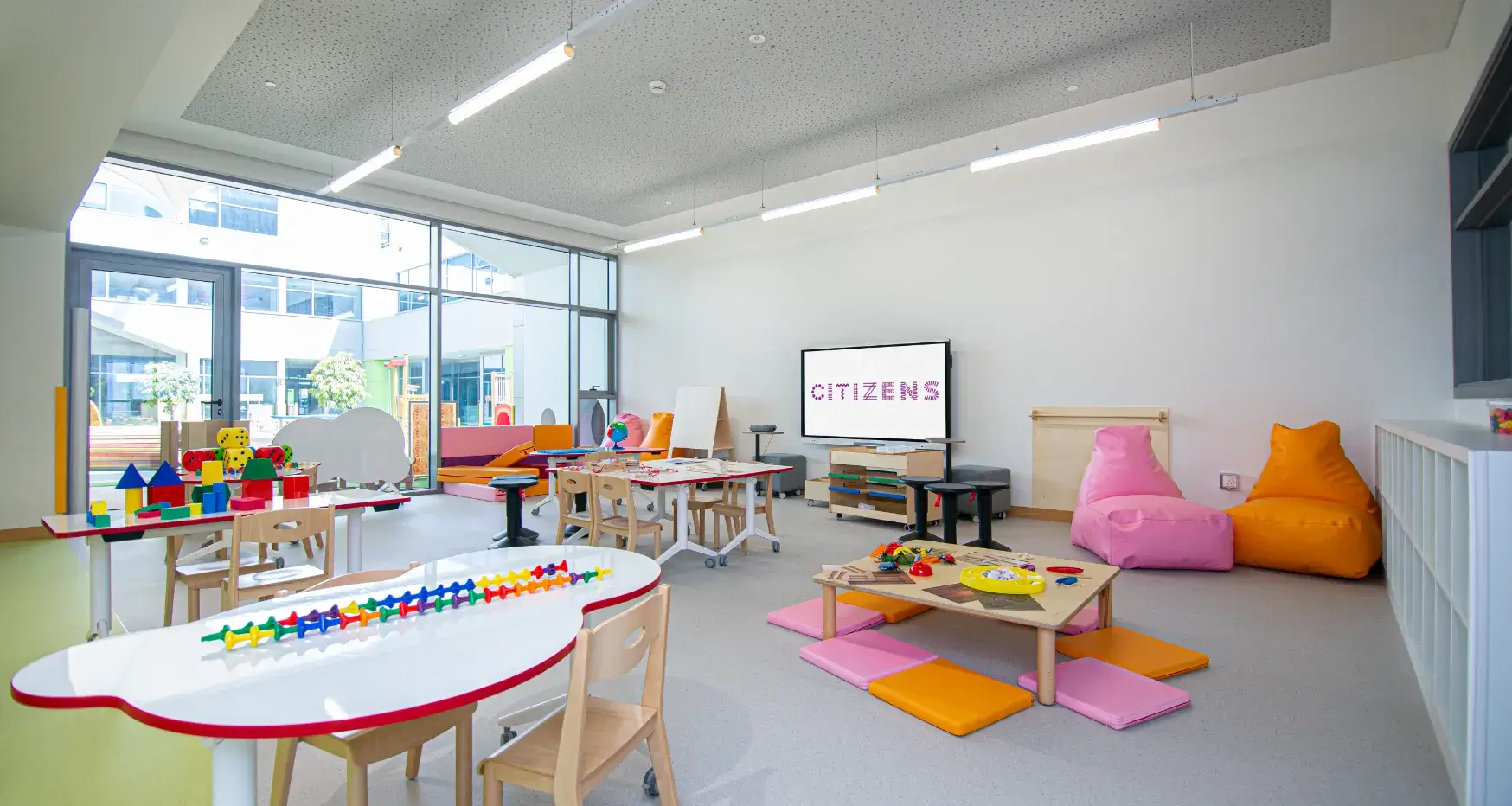
    Traditional classrooms are usually set up with limited interaction and a rigid structure. At Citizens School, we provide flexible learning spaces that integrate technology, and we emphasise creativity, innovation, and learner autonomy.

    Subject Matter
    Traditional education focuses on core subjects like maths and language arts. The Citizens Approach extends beyond the core subjects to include the six pillars of the Future Framework: Health and Wellbeing, Growth Mindset, Digital Literacy, Entrepreneurship, Global Citizenship, and Sustainability. Learners engage in entrepreneurship projects where they gain valuable skills in communication, teamwork, and innovation, reflecting the growing importance of Entrepreneurship in Education in our approach.

    Building the Future
    The Citizens Approach represents a new direction in education. By focusing on relevant skills and preparing learners for real-world challenges, Citizens School is redefining education for the future.

    To see how the Citizens Approach in action, contact us at +971 50 237 7273 or future@citizens.me.

  • Why Embracing Failure Develops Resilience and Innovation

    Why Embracing Failure Develops Resilience and Innovation

    As C.S. Lewis once said, “Failures are finger posts on the road to achievement.” Successful entrepreneurs persevere after failure, knowing that mistakes lead to innovation.

    According to the U.S. Bureau of Labor Statistics (BLS), the failure rate for new businesses is significant—20% fail within the first two years, 45% within the first five years, and 65% within the first 10 years. These statistics underscore the mindset and character required for entrepreneurial success.

    History is filled with examples like Steve Jobs, Walt Disney, Vera Wang, and Richard Branson, who faced failures before achieving great success. Sir James Dyson spent 15 years making over 5,000 prototypes to perfect his bagless vacuum. The key lesson from these entrepreneurs is the importance of resilience and the willingness to take risks.

    At Citizens School, we aim to instil an entrepreneurial mindset in learners and believe in creating an environment where failure is not just tolerated but encouraged. This philosophy aligns closely with Entrepreneurship in Education, where initiative, resilience, and calculated risk-taking are embedded into the learning experience. Our approach is based on the idea that failure is a crucial part of learning, growth, and eventual success, helping to build a strong growth mindset in kids.

    Encouraging Perseverance

    In many traditional schools, mistakes are seen as something to avoid. However, we see mistakes as an important step towards innovation and success. When learners are empowered to take risks, try new ideas, and persevere even after failure, they develop resilience and learn valuable lessons that cannot be taught in a textbook.

    Developing Resilience

    By embracing failure, our goal is to develop resilience in our learners. Resilience means being able to bounce back from setbacks, adapt to challenges, and keep going when things get tough. When learners experience failure in a supportive environment, they learn to see setbacks as opportunities for growth, rather than roadblocks.

    Cultivating Innovation and Creativity

    Innovation often comes from trying new things and taking calculated risks. By encouraging learners to become risk-takers, we encourage a culture of innovation where learners are encouraged to think outside the box, challenge norms, and explore unconventional solutions. Failure becomes a natural part of the creative process, leading to breakthroughs and new ideas.

    Learning from Mistakes

    At Citizens School, we see mistakes as valuable learning opportunities. When learners fail, we encourage them to reflect on what went wrong, find ways to improve, and plan for future success. This reflective practice helps build self-awareness, critical thinking, and personal growth.

    Building Confidence

    By normalising failure, we help learners gain confidence in their abilities. When they understand that failure is a normal part of learning, not a judgement of their worth, they become more willing to take risks, pursue their interests, and set ambitious goals.

    Encouraging a Growth Mindset

    Our approach aligns with the concept of a growth mindset, developed by psychologist Carol Dweck. A growth mindset emphasises the belief that skills and intelligence can be developed through effort and persistence. By embracing failure, we promote a growth mindset among our learners, empowering them to tackle challenges and keep going despite setbacks. This philosophy reflects the broader shift From Students to Learners at Citizens School, where adaptability, curiosity, and lifelong growth are prioritised over perfection.

    At Citizens School, we recognise setbacks are stepping stones for growth, resilience, and innovation. By creating a supportive environment that encourages risk-taking and embracing lessons from failure, we empower learners to become confident, resilient, and innovative thinkers who are prepared to thrive in an ever-changing world.